Da Parbatia
6th-Century Temple Remains, Tezpur
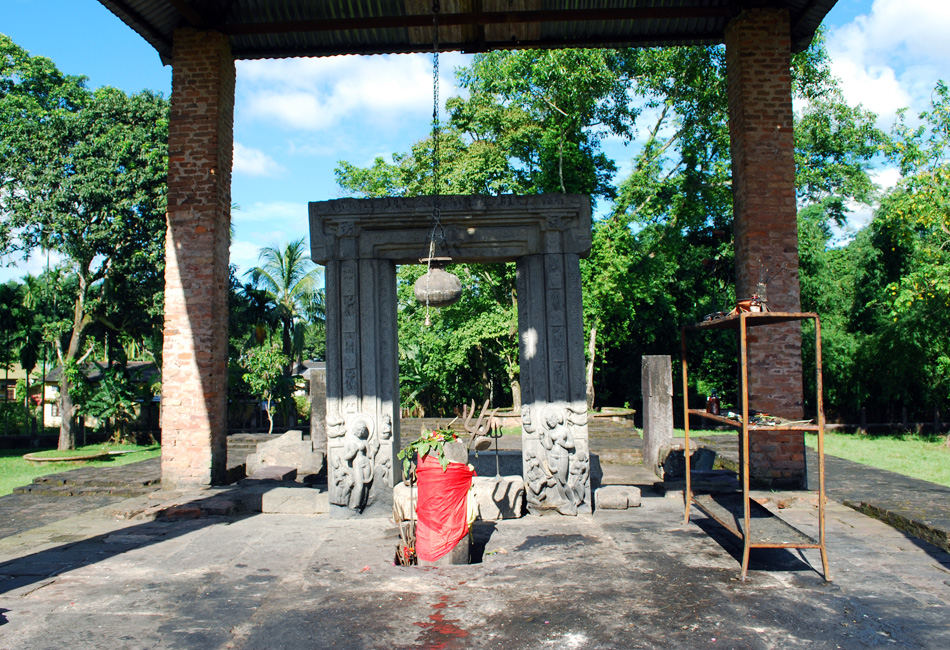
On the outskirts of Tezpur, a weathered stone doorway stands as a sentinel to a millennium and a half of history. This ornate portal, flanked by goddess figures and delicate floral motifs, are the last substantial remains of a brick temple complex at Da Parbatia, dating back to the early 6th century CE. It offers a tangible connection to the Gupta period, an era often regarded as a 'golden age' of Indian art and architecture, even in the far eastern reaches of the subcontinent.
History & Context
The remains at Da Parbatia are considered some of the finest examples of Gupta architectural style in Assam. Historians and archaeologists place the temple's construction firmly in the early 6th century CE, identifying it with the later Gupta period's artistic canon. The site was discovered in the early 20th century, with significant excavation work revealing the plinth and parts of the original brick temple, which was dedicated to Vishnu. The most striking discovery was the exquisitely carved stone door frame, a testament to the skill and aesthetic sensibilities of the artisans of that era. This door frame is now preserved and protected by the Archaeological Survey of India (ASI).
The Gupta Empire, though primarily centred in northern India, exerted significant cultural and artistic influence across a wide geographical area. The stylistic elements evident here – particularly the intricate foliage patterns (scrolls of kalpvriksha), the depiction of river goddesses Ganga and Yamuna at the base of the door jambs, and the general sophistication of the sculpture – strongly link it to Gupta-period art. The presence of such a finely crafted temple in ancient Pragjyotisha (the historical name for Assam) indicates a strong cultural exchange and the spread of artistic traditions from the Gangetic plains to the Brahmaputra valley.
What Makes It Distinctive
The defining feature of Da Parbatia is undoubtedly its stone door frame. While the brick superstructure of the original temple has largely disintegrated, this doorway has endured, offering a rare glimpse into the sculptural prowess of 6th-century artisans. The river goddesses, Ganga and Yamuna, are depicted in graceful postures, standing on their respective vehicles – a makara (mythical sea creature) for Ganga and a kurma (tortoise) for Yamuna. Above them, intricate floral patterns, flying Vidyadharas (celestial beings), and a panel depicting motifs related to Vishnu adorn the lintel. The precise execution and flowing lines of these carvings set it apart from many cruder contemporary works in the region. Unlike some other contemporary sites where carvings are more stylised or abstract, the figures at Da Parbatia possess a certain naturalism and classical elegance characteristic of the Gupta style. It’s also one of the earliest examples of an Indian temple with a decorative door frame that features anthropomorphic river deities prominently.
Best Time to Visit
The ideal time to visit is during the cooler, drier months from October to March. During this period, the weather in Tezpur is pleasant, with clear skies and moderate temperatures, making it comfortable for exploring the outdoor ruins. October and November provide a verdant landscape post-monsoon, while December to February can be cooler, especially in the mornings and evenings. Avoid the monsoon season (June to September) when heavy rainfall can make outdoor exploration difficult and humid. The summer months (April and May) are hot and muggy and are also best avoided.
How to Reach
Tezpur, in Sonitpur district, is well-connected. The Da Parbatia site is located approximately 5-6 kilometres west of Tezpur city centre.
- Nearest Airport: Tezpur Airport (TEZ) is the closest, about 10-12 km from the site. Alternatively, Lokpriya Gopinath Bordoloi International Airport (GAU) in Guwahati is the largest regional hub and is approximately 180 km away. From Guwahati, one can hire a taxi or take a bus to Tezpur (a journey of about 4-5 hours).
- Nearest Railhead: Tezpur Railway Station (TPZ) is situated within Tezpur town. However, a major railway junction is Rangiya Junction (RNY), roughly 140 km from Tezpur, or Guwahati Railway Station (GHY), about 180 km away. From these major stations, taxis or buses are available to Tezpur.
- Road: Tezpur is well-connected by road to major cities in Assam and the Northeast via National Highway 15 and other state highways. State-run and private buses operate regularly from Guwahati, Nagaon, Jorhat, and Itanagar to Tezpur. Taxis and auto-rickshaws are readily available within Tezpur to reach the site.
Permits & Entry
There are no specific permits required for Indian citizens or foreign nationals to visit Da Parbatia, as it is a protected archaeological site maintained by the Archaeological Survey of India (ASI). Information is not officially published or may change. Visitors are advised to confirm locally before travelling. However, generally, ASI sites have minimal entry fees for Indian citizens and foreign nationals. Photography is usually permitted without extra charges, but drone usage might require special permission.
Nearby Attractions
- Agnigarh Hill: A scenic viewpoint in Tezpur associated with a mythological love story, offering panoramic views of the Brahmaputra river.
- Cole Park (Chitralekha Udyan): A popular Tezpur park featuring paddle boating, a sprawling garden, and two massive stone pillars and sculptural remains moved from other sites.
- Bhairabi Temple: An ancient Shakti shrine on the banks of the Brahmaputra, frequented by devotees and offering spiritual solace.
- Kalia Bhomora Setu: An impressive 3 km long bridge over the Brahmaputra, connecting Sonitpur and Nagaon districts, offering significant engineering marvel views.
- Nameri National Park: A wildlife reserve known for its elephants, tigers, and rich avian diversity, offering river rafting and trekking experiences (approx. 35 km upstream).
- Orang National Park: Often called the 'mini Kaziranga,' this park is known for its one-horned rhinoceros population and diverse wildlife (approx. 65 km west).
Traveller Tips
- Footwear: Wear comfortable walking shoes as the site involves walking on uneven ground and grass.
- Hydration: Carry water, especially during the warmer months, as the site is uncovered.
- Guide Services: Consider hiring a local guide in Tezpur to understand the historical and mythological context of the carvings more deeply. Official ASI guides may not always be available on site.
- Photography Etiquette: While photography is allowed, be respectful of the ancient structure and avoid touching or climbing on the carvings.
- Combine with Tezpur Exploration: Allow time to explore other historical and natural sites within Tezpur town, as Da Parbatia can be covered in a relatively short period (1-2 hours).
- Insect Repellent: During certain seasons, particularly post-monsoon, insect repellent can be useful due to the surrounding vegetation.
- Local Cuisine: Try local Assamese dishes in Tezpur, such as fish preparations, aloo pitika, and khar, available at local eateries.
- Connectivity: Mobile network coverage is generally good in and around Tezpur and the site.
Frequently asked
Related
Plan Your Journey with Living Roots Expeditions
Travel Northeast India with a private guide, hand-picked hosts, and an itinerary shaped around your interests — culture, wildlife, festivals, or slow discovery. If this subject is why you are travelling, see our Northeast India tour packages.