Kangchenjunga
Sacred Sentinel of Sikkim: The Third Highest Mountain in the World
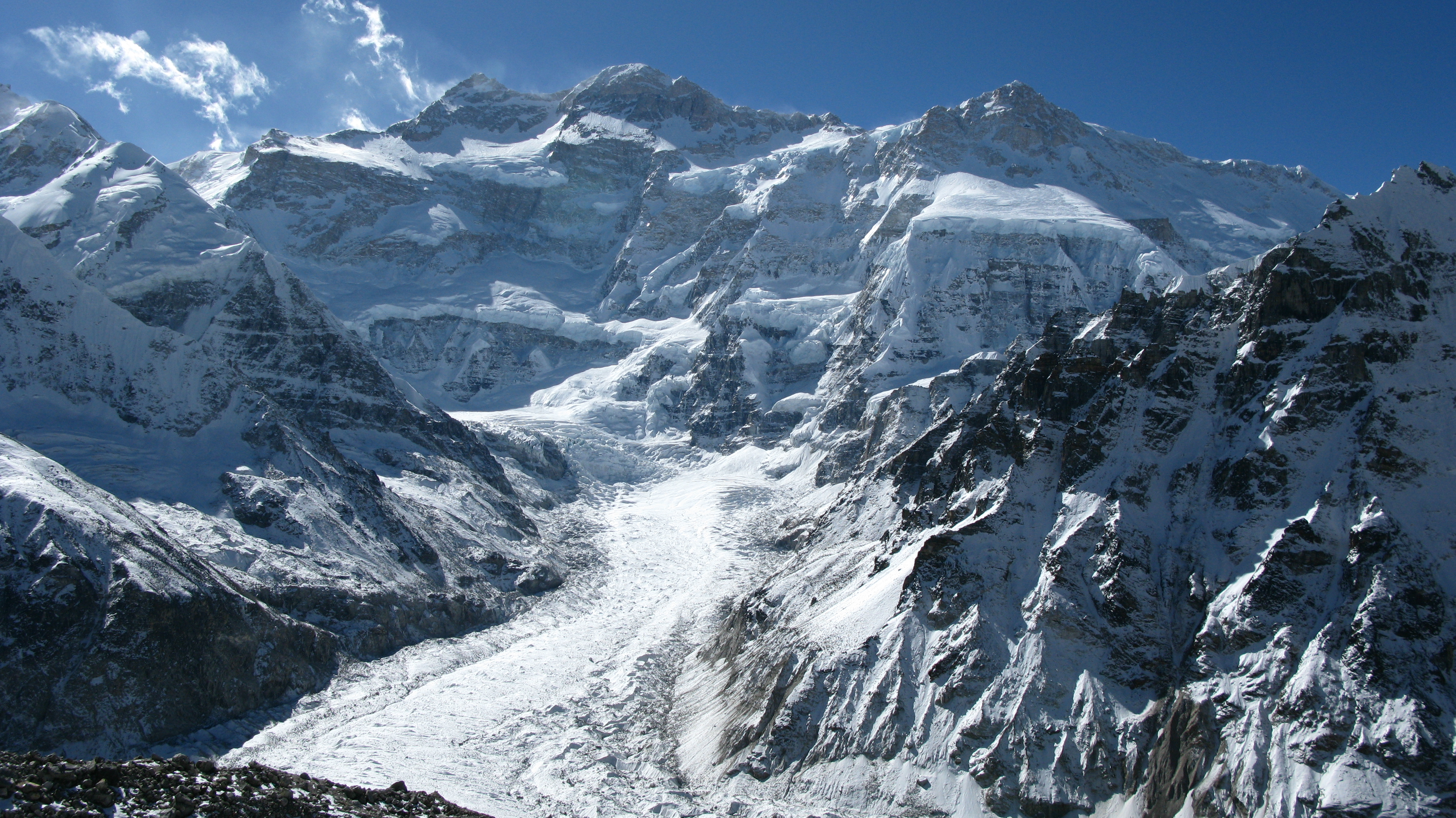
Kangchenjunga: The Sacred Sentinel of Sikkim
Mount Kangchenjunga, soaring to an elevation of 8,586 meters (28,169 feet) above sea level, is the third highest peak in the world and the highest in India. Located in the eastern Himalayas, it straddles the border between Sikkim, India, and Nepal, with its major mass lying within the North Sikkim district. The name Kangchenjunga is generally translated as "The Five Treasures of Snows," referring to its five towering peaks: Kangchenjunga Main, Kangchenjunga West (Yalung Kang), Kangchenjunga Central, Kangchenjunga South, and Kangbachen. These 'five treasures' are believed to represent the five repositories of God: gold, silver, gems, grain, and holy books.
Geography and Geology
Kangchenjunga is part of a vast mountain massif that includes several other prominent peaks. The mountain's geology is characterized by a complex structure of metamorphic and igneous rocks. Its immense glacial systems feed several rivers, including the Teesta River, which is a lifeline for Sikkim. The steep and rugged terrain, combined with heavy snowfall, makes the region largely inaccessible, contributing to its pristine natural state. The peak dominates the landscape of Sikkim, visible from various vantage points across the state, especially from areas like Darjeeling in West Bengal.
Cultural and Religious Significance
For the indigenous people of Sikkim, particularly the Lepchas, Bhutias, and Nepalis, Kangchenjunga is not merely a mountain but a sacred deity, revered as the protector of the land and its people. This reverence is deeply embedded in local folklore, traditions, and religious practices. Traditional beliefs hold that the mountain is home to a powerful spirit, and its sanctity has historically deterred attempts at conquest. Early mountaineering expeditions, out of respect for these beliefs, often pledged to stop short of reaching the absolute summit, leaving the uppermost few feet untouched. This tradition was largely adhered to until more recent ascents, though many still choose to honor it.
Ecological Importance
Kangchenjunga and its surrounding landscape are an area of immense biodiversity. It forms the core of the Kangchenjunga Biosphere Reserve, which encompasses the Kangchenjunga National Park in Sikkim, a UNESCO World Heritage Site. This protected area is a global biodiversity hotspot, home to a rich array of flora and fauna. The park features diverse ecosystems ranging from subtropical broadleaf forests at lower altitudes to alpine meadows and cold deserts at higher elevations. It is a critical habitat for numerous endangered species, including the snow leopard (Panthera uncia), red panda (Ailurus fulgens), musk deer (Moschus chrysogaster), and various species of highly endemic birds and medicinal plants.
The glaciers and snowfields of Kangchenjunga are vital sources of freshwater for millions of people in the Ganges and Brahmaputra river basins. The ecological integrity of this region is therefore crucial not only for local communities but also for the wider Gangetic plains.
Historical Ascents and Exploration
Prior to 1852, Kangchenjunga was believed to be the highest mountain in the world. This changed after calculations based on data from the Great Trigonometrical Survey of India confirmed Mount Everest's greater height. The first successful ascent of Kangchenjunga Main was made on May 25, 1955, by Joe Brown and George Band of a British expedition. In keeping with the promise made to the Chogyal of Sikkim, they deliberately stopped a few feet short of the actual summit out of respect for the sacredness of the mountain. Subsequent climbers have largely followed this tradition.
Conservation Efforts
The declaration of Kangchenjunga National Park as a UNESCO World Heritage Site in 2016 underscored its outstanding universal value. The site was recognized for both its exceptional natural beauty and its unique cultural traditions associated with the sacred mountain. Conservation efforts focus on protecting its fragile ecosystems, preserving its biodiversity, and promoting sustainable tourism practices that respect local cultures and the environment. This includes managing human-wildlife conflict, regulating trekking routes, and empowering local communities in conservation initiatives.
Visiting Kangchenjunga
While the summit itself is off-limits to most, the grandeur of Kangchenjunga can be experienced through various trekking trails in Sikkim. Popular viewpoints include Goechala (via the Dzongri-Goechala trek) and parts of West Sikkim like Pelling. Treks typically require permits and are often guided, providing an opportunity to experience the unique cultural and natural heritage of the region while maintaining respect for the sacred mountain. Access to the Kangchenjunga National Park is strictly regulated to protect its delicate ecosystem.
Frequently asked
Related
Plan Your Journey with Living Roots Expeditions
Travel Northeast India with a private guide, hand-picked hosts, and an itinerary shaped around your interests — culture, wildlife, festivals, or slow discovery. If this subject is why you are travelling, see our Northeast India tour packages.