Shilloi Lake
Natural Lake in Phek District
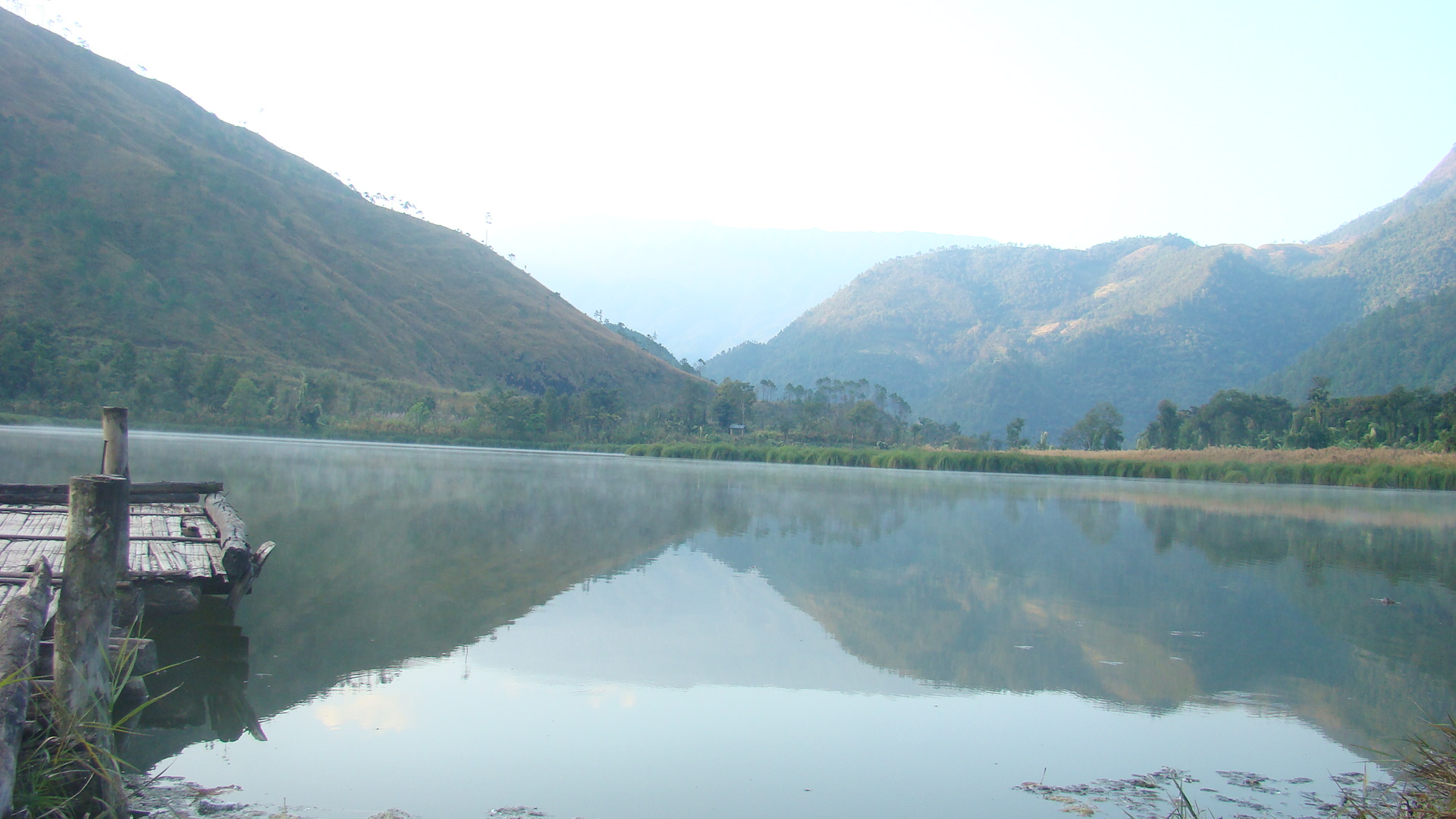
At the southern tip of Nagaland, in the Phek district, lies a natural lake shaped uncannily like a human footprint. This distinct geographical feature is Shilloi, nestled amidst rolling hills and dense forests. The lake is a significant landmark, not just for its physical form, but also for its ecological role and the cultural narratives woven around it by the local communities.
History & Context
Shilloi Lake's formation is attributed to natural geological processes over time, creating a fresh-water body that stretches approximately 0.25 to 0.30 kilometers in length. The surrounding region is predominantly inhabited by the Pochury Naga tribe, whose lives and traditions are deeply intertwined with the lake. Folklore passed down through generations speaks of the lake as sacred, believed to be the dwelling place of a guardian spirit. This spiritual reverence has historically contributed to the preservation of its pristine environment, with unwritten customs often dictating interaction with the lake's resources.
What Makes It Distinctive
Beyond its striking footprint shape, Shilloi is an important natural habitat. It supports a variety of aquatic life, including several species of fish and migratory birds that visit during colder months. The lake's waters are notably clear, reflecting the surrounding emerald hills. The unique folklore of the lake often prevents local fishermen from using traditional nets extensively, relying instead on simpler methods or refraining entirely during certain periods, a practice that aids in maintaining the ecological balance. This interplay of natural beauty and indigenous belief systems gives the lake a distinctive character, setting it apart from other water bodies in the region.
Best Time to Visit
The most favorable period to visit Shilloi Lake is during the cooler, drier months, from October to March. During this season, the weather is pleasant, with minimal rainfall, making outdoor activities and travel comfortable. The surrounding flora remains vibrant, and migratory bird populations are often at their peak, offering excellent opportunities for birdwatching. Summers (April to June) can be warm and humid, while the monsoon season (July to September) brings heavy rainfall, which can make roads challenging to navigate.
How to Reach
The nearest major airport to Shilloi Lake is Dimapur Airport (DMU) in Nagaland, approximately 300 km away. From Dimapur, one can hire a taxi or take a shared vehicle towards Phek town, which is roughly 245 km and a 9-10 hour drive. From Phek, Shilloi Lake is a further approximately 60-70 km, requiring another 3-4 hours of driving, often on winding mountain roads. The nearest significant railhead is also Dimapur. Regular bus services connect Phek with Kohima and Dimapur, but direct connectivity to the immediate vicinity of the lake is limited. Visitors usually hire local taxis from Phek to complete the journey.
Permits & Entry
Indian citizens who are not residents of Nagaland require an Inner Line Permit (ILP) to enter the state. This can be obtained online through the Nagaland government portal or offline from designated offices in major cities like Delhi, Kolkata, Guwahati, and Dimapur. Foreign nationals require a Protected Area Permit (PAP) to visit Nagaland. While the requirement for PAP for foreigners was relaxed in 2010, it is advisable for foreign visitors to confirm the latest regulations with the Ministry of Home Affairs or the Nagaland tourism department before travelling. There are no specific entry fees for the lake itself, but local community regulations or nominal charges for maintenance may apply, which visitors should confirm locally.
Nearby Attractions
- Kigwema: A historic Angami Naga village near Kohima, known for its unique traditional houses and role in the Battle of Kohima.
- Zunheboto: A town predominantly inhabited by the Sumi Naga tribe, recognized for its vibrant cultural traditions and distinctive architecture.
- Tseminyu district: Home to the Rengma people, offering insights into their specific cultural practices and agricultural methods.
- Mokukchung: A hub of the Ao Naga tribe, offering vibrant traditions, indigenous crafts, and a glimpse into their community life.
- Hornbill Festival: While not a perennial attraction, this annual festival in Kisama (near Kohima) in December showcases the diverse cultures of Nagaland's tribes.
Traveller Tips
- Connectivity: Mobile network coverage can be sporadic or non-existent around the lake; inform family/friends of limited contact. Jio and Airtel often have some coverage in broader Phek district, but not guaranteed at the lake itself.
- ATMs: Phek town has a few ATMs, but it is wise to carry sufficient cash as smaller villages and the lake area will not have these facilities.
- Accommodation: Options are sparse; guesthouses or homestays in Phek town or nearby villages are the primary choices. Book well in advance.
- Local Transport: Shared taxis are common in Nagaland but may not ply directly to the lake. Be prepared to hire a private vehicle from Phek.
- Respect Local Customs: The lake is culturally significant; inquire about local etiquette regarding swimming, fishing, or photography to avoid disrespecting beliefs.
- Pack Appropriately: Layers are recommended due to varying temperatures. Include rain gear if travelling during the shoulder seasons.
- Ethical Photography: Always seek permission before photographing people, especially in remote areas.
- Altitude: While not extremely high, the region involves hilly terrain. Take it easy on arrival if sensitive to altitude changes.
Frequently asked
Related
Plan Your Journey with Living Roots Expeditions
Travel Northeast India with a private guide, hand-picked hosts, and an itinerary shaped around your interests — culture, wildlife, festivals, or slow discovery. If this subject is why you are travelling, see our Northeast India tour packages.