Anini
The last township at the edge of India's Tibetan frontier
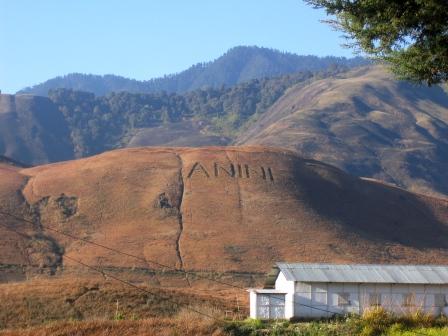
The journey to Anini is a filter. After crossing the Brahmaputra basin and the town of Roing, the road begins a winding, day-long ascent into the Mishmi Hills. It’s a rugged track, often carved into sheer cliffsides, that tests vehicles and resolve in equal measure. Arriving in the small, quiet administrative hub is less a destination reached and more a threshold crossed. The air is thinner here, the silence deeper, and the sense of isolation is absolute. This is the heart of the Dibang Valley, one of the most sparsely populated districts in India, and the homeland of the Idu Mishmi people.
History & Context
Designated as the headquarters of the Dibang Valley district, Anini primarily exists as an administrative outpost in a vast and challenging landscape. Its history is not one of great empires or monuments but of the quiet, resilient presence of the Idu Mishmi, a Tibeto-Burman group with a distinct animist faith. For centuries, this region was largely unmapped and left to its own devices, connected to the outside world only by arduous trekking trails. The modern road, a constant battle against landslides and the elements fought by the Border Roads Organisation (BRO), is a relatively recent development that has slowly begun to connect the valley to the rest of Arunachal Pradesh.
What Makes It Distinctive
The defining characteristic of the region is the Idu Mishmi's relationship with the natural world, particularly the tiger. In their cosmology, tigers are not mere animals but are considered elder brothers ('Aro'). This belief is so fundamental that killing a tiger is a major taboo, equivalent to killing a relative and requiring expensive, elaborate funeral rites to appease the spirits. This cultural conservation ethos has made the Dibang Valley an unintentional sanctuary. The shamans of the Idu, known as 'Igu,' play a vital role in mediating between the human and spirit worlds, conducting rituals for healing, harmony, and appeasing forest spirits. This intricate belief system, woven into daily life, makes a visit here a deep cultural immersion.
Best Time to Visit
Travel to the Dibang Valley is dictated entirely by weather and road conditions.
- Autumn & Winter (October to February): This is the ideal window. The monsoon has passed, leaving clear skies and spectacular views of the snow-capped mountains on the Indo-Tibetan border. Days are cool and sunny, while nights are cold, often dropping below freezing.
- Spring (March to April): A beautiful season when rhododendrons and other wildflowers are in bloom. The weather is pleasant, though haze can sometimes obscure distant mountain views. The pre-monsoon showers might begin towards the end of April, increasing the risk of travel disruption.
- Monsoon (May to September): Travel during this period is strongly discouraged. Heavy and incessant rainfall causes landslides, road blockages, and makes the journey extremely hazardous. The region is often cut off for extended periods.
How to Reach
Reaching this remote town is a significant undertaking.
- By Air: The nearest airport is Dibrugarh Airport (DIB) in Assam, well-connected to major cities like Delhi and Kolkata.
- By Rail: The nearest major railway station is New Tinsukia Junction (NTSK), approximately 5-6 hours drive from the entry point at Roing.
- By Road: From Dibrugarh, it's a 4-5 hour drive to Roing, the headquarters of the Lower Dibang Valley district. The journey from Roing to Anini is the most challenging leg. Covering a distance of about 235 km, it takes anywhere from 10 to 14 hours depending on road conditions. A sturdy 4x4 vehicle like a Sumo or Bolero is mandatory. The route involves steep ascents and navigating unpaved, landslide-prone sections.
Permits & Entry
- Indian Citizens: An Inner Line Permit (ILP) is mandatory for all domestic tourists. It can be applied for online at the official Arunachal Pradesh ILP portal or obtained from Arunachal Pradesh government offices in major cities.
- Foreign Nationals: Foreign tourists require a Protected Area Permit (PAP). The Dibang Valley is a sensitive border area, and obtaining a PAP may require special permission and is typically arranged through an authorized Indian tour operator. Information is not officially published or may change. Visitors are advised to confirm locally before travelling.
Nearby Attractions
Most attractions are not simple day trips but destinations for treks and require careful planning.
- Dri Valley: A stunningly beautiful valley a few hours from town, offering a glimpse into traditional Idu Mishmi villages and pristine landscapes.
- Mathun Valley: A destination for serious trekkers, known for its pristine forests and as a habitat for diverse wildlife, including the Mishmi takin.
- Athunli: A remote village that provides a deeper insight into the traditional lifestyle of the Idu people, accessible via a rugged road.
- Seven Lakes Trek: A challenging, multi-day high-altitude trek for experienced mountaineers, offering access to a series of glacial lakes near the Indo-Tibetan border.
- Dibang Wildlife Sanctuary: The vast, partially-notified sanctuary that encompasses much of the district, protecting an incredible range of biodiversity from lowland forests to alpine meadows.
Traveller Tips
- Carry Sufficient Cash: There are no reliable ATMs in Anini. Withdraw all the cash you will need for your entire trip in Roing or Dibrugarh.
- Connectivity is Minimal: Only BSNL mobile network functions, and even that is often patchy. Do not expect internet access.
- Book in Advance: Accommodation is limited to a few homestays and a basic government circuit house. Book well ahead of your travel dates.
- Hire a Robust Vehicle: A 4WD vehicle with good ground clearance is non-negotiable. Ensure your driver is experienced with the terrain.
- Be Prepared for Delays: Landslides can block roads for hours or even days. Pack extra food, water, and have a flexible itinerary.
- Pack in Layers: The weather can change quickly. Carry thermal wear, a fleece jacket, and a wind/waterproof outer layer, even outside of peak winter.
- Ethical Photography: Always ask for permission before photographing people, especially elders or during rituals.
- Learn a Local Greeting: A simple 'Kaya' (hello/thank you in Idu Mishmi) goes a long way in building rapport.
Frequently asked
Related
Plan Your Journey with Living Roots Expeditions
Travel Northeast India with a private guide, hand-picked hosts, and an itinerary shaped around your interests — culture, wildlife, festivals, or slow discovery. If this subject is why you are travelling, see our Northeast India tour packages.