Hajo
A pilgrimage town revered by three religions
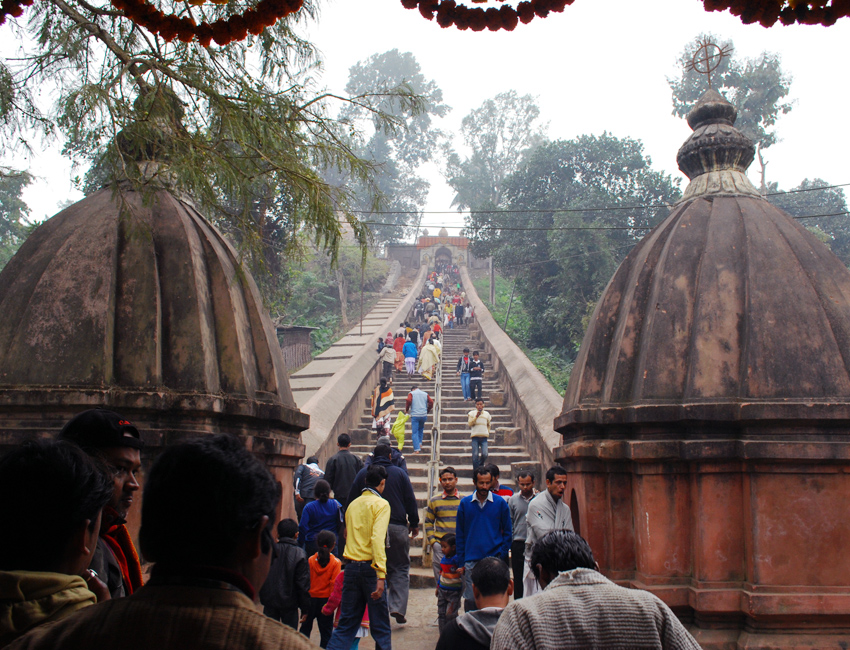
Hajo is a significant pilgrimage centre located on the banks of the Brahmaputra River, approximately 30 kilometres northwest of Guwahati in the Kamrup district of Assam, India. It is unique for being a revered site for Hindus, Buddhists, and Muslims, earning it the epithet 'Sangam of Faiths' or 'Rome of the East'.
History and Significance
A rich tapestry of historical narratives and legends surrounds Hajo, dating back centuries. The town served as an important administrative and religious hub during various eras, including the Kamarupa kingdom and the Ahom rule. Its most prominent historical and religious structures reflect this multi-religious heritage.
Hayagriva Madhava Temple
The Hayagriva Madhava Temple, situated atop Monikut hill, is perhaps the most famous and architecturally significant site in Hajo. Dedicated to Lord Vishnu in his Hayagriva avatar, the temple complex features intricate carvings and sculptures. While the current structure is believed to have been rebuilt in 1774 CE by Ahom King Rajeswar Singha, following the destruction of an earlier 10th-century temple, its origins are much older. Local legends and some scholars connect this site with the Mahamuni Buddha, suggesting that it was here that Gautama Buddha attained Mahaparinirvana, making it a sacred site for Buddhists from Bhutan and other regions. This belief stems from the idol of Hayagriva, which some adherents identify as a representation of the Buddha, particularly due to certain iconographic similarities and local traditions.
Powa Mecca
Another principal religious site in Hajo is Powa Mecca, a mosque of considerable historical and spiritual importance for Muslims. The name 'Powa Mecca' literally translates to 'one-fourth of Mecca', signifying its sanctity. It is believed to have been built in the 17th century by Mir Lutfullah-i-Shirazi during the reign of the Mughal Emperor Shah Jahan. The mosque houses the tomb of Pir Giasuddin Auliya, a Sufi saint who is credited with introducing Islam to the region. It is said that the mosque was built with soil brought from Mecca, further enhancing its spiritual significance for pilgrims.
Kedar Temple
Dedicated to Lord Shiva, the Kedar Temple is another ancient shrine in Hajo. The temple, located on Madanachala Hill, houses a self-manifested (svayambhu) Shiva lingam. Its architecture and sculptural elements reflect typical Assamese temple styles and it remains an active place of worship for Hindu devotees.
Geography and Context
Hajo is strategically located offering panoramic views of the surrounding plains and the Brahmaputra River. The town is nestled amidst small hills like Monikut, Madanachala, and Garuda, which collectively form a distinctive landscape. Its proximity to the capital city of Guwahati makes it accessible for both religious pilgrims and tourists interested in cultural heritage. The fertile lands surrounding Hajo support agriculture, and the region is characterized by its lush greenery, especially during the monsoon season.
Cultural Significance
The co-existence of these major religious sites underscores Hajo's profound cultural significance as a symbol of religious harmony and syncretism. It attracts pilgrims and visitors from diverse backgrounds, each finding spiritual resonance within its sacred precincts. The annual festivals and fairs held at these temples and mosques further animate the town, drawing large congregations and showcasing the vibrant traditions of Assam.
Frequently asked
Related
Plan Your Journey with Living Roots Expeditions
Travel Northeast India with a private guide, hand-picked hosts, and an itinerary shaped around your interests — culture, wildlife, festivals, or slow discovery. If this subject is why you are travelling, see our Northeast India tour packages.