Umrangso
The Reservoir Town on the Assam-Meghalaya Border
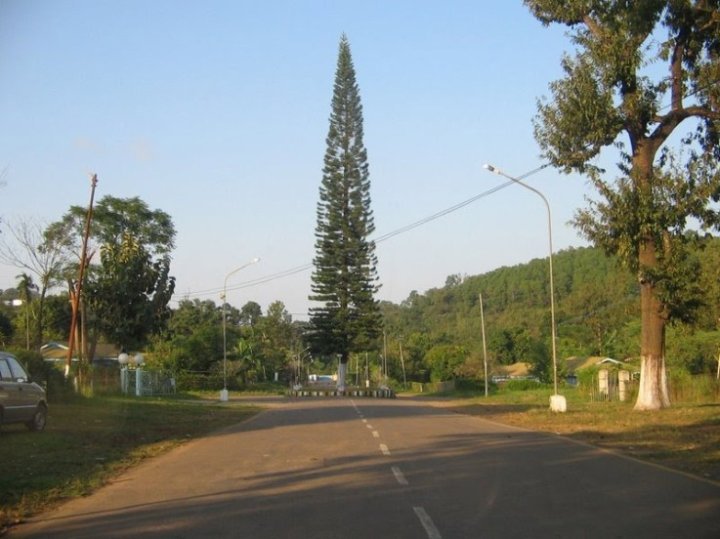
The air shifts on the approach. As you climb higher into the hills of Dima Hasao, leaving the plains of central Assam behind, the landscape becomes a dramatic composition of sharp folds and deep valleys. Then, the road crests a ridge and an impossible expanse of turquoise water appears, stretching to the horizon. This is the reservoir of the Kopili Hydro Electric Project, and the company town built on its banks is Umrangso. It’s an unusual settlement, born not from ancient migration or royal decree, but from the post-independence drive for energy, a concrete-and-steel imposition on a wild frontier.
History & Context
The town's identity is inextricably linked to the North Eastern Electric Power Corporation Limited (NEEPCO). Before the project's inception in the late 1970s, this was a sparsely populated area inhabited primarily by Karbi, Dimasa, and Biate communities. The construction of the dam on the Kopili River, a major south-bank tributary of the Brahmaputra, transformed the region. The project, commissioned in stages starting in 1984, created a vast man-made lake and drew a workforce from across the country, giving the town a uniquely mixed demographic character. It sits strategically at a tri-junction, where the borders of Dima Hasao (Assam), West Karbi Anglong (Assam), and East Jaintia Hills (Meghalaya) converge, making it a critical node for connectivity and commerce.
What Makes It Distinctive
Beyond its role as a power-generation hub, the Umrangso reservoir has unexpectedly become a significant avian habitat. The large, placid water body attracts a remarkable number of migratory waterfowl during the winter months. Birdwatchers have documented impressive congregations here, most notably of the Falcated Duck, a species that is otherwise rare in this part of India. The local conservation group, the Blue Hills Society, has been instrumental in documenting and advocating for the protection of these birds, turning an industrial site into an accidental bird sanctuary. This juxtaposition of heavy industry and delicate ecology is the town's most compelling feature.
Best Time to Visit
- October to February (Winter): This is the ideal period for a visit. The weather is cool, dry, and pleasant, with clear skies. It is also the peak season for birdwatching, as migratory species flock to the reservoir. Daytime temperatures are comfortable, while nights can be chilly.
- March to May (Spring/Summer): The weather begins to warm up considerably. While the landscape remains green, rising humidity and temperatures make extensive outdoor activities less comfortable.
- June to September (Monsoon): The region receives heavy rainfall during the monsoon. Landslides can be a risk on the hill roads, and travel plans may be disrupted. The reservoir and surrounding hills are lush, but travel is not recommended during these months.
How to Reach
- By Air: The nearest major airport is Lokpriya Gopinath Bordoloi International Airport (GAU) in Guwahati, approximately 230 kilometers away. The journey by road from Guwahati takes about 6-7 hours. Shillong Airport (SHL) is geographically closer but has limited flight connectivity.
- By Rail: The nearest major railway station is Lumding Junction (LMG), a significant hub in Assam, located about 85 kilometers away. From Lumding, one can hire a taxi for the 3-hour journey. The closer hill-section stations of Maibang and New Haflong have limited connectivity.
- By Road: Umrangso is well-connected by road. From Guwahati, the most common route is via Nagaon and Lanka, a journey of around 230 km. It can also be reached from Haflong, the district headquarters (112 km away).
Permits & Entry
For Indian citizens, no special permits like an Inner Line Permit (ILP) are required to visit Umrangso or any part of Dima Hasao district. Foreign nationals should carry their valid passport and visa; while Protected Area Permits (PAP) are not typically required for this part of Assam, rules are subject to change and it's wise to check the latest regulations before travel.
Nearby Attractions
- Panimur Falls: Located in the neighbouring West Karbi Anglong district, these powerful waterfalls on a tributary of the Kopili river are a spectacular sight, especially post-monsoon.
- Haflong: The headquarters of Dima Hasao district, known for Haflong Lake and its setting as the only proper hill station in Assam.
- Maibang: The former capital of the Dimasa Kachari kingdom, where you can see stone monoliths and carvings, including the famous 'Ramchandi' rock-cut temple.
- Jatinga: World-renowned for the mysterious phenomenon where birds, under specific weather conditions during late monsoon nights, are attracted to lights and disoriented.
- Shillong: The capital of Meghalaya is a feasible, albeit long, day trip or next stop, offering a completely different cultural and landscape experience.
Traveller Tips
- Carry sufficient cash. ATM services are available but can be unreliable.
- Mobile connectivity is patchy. BSNL and Airtel generally have the best coverage, but data speeds can be slow.
- Accommodation is limited, consisting mostly of basic hotels and guesthouses. The NEEPCO guest house is an option but may require prior arrangement.
- Pack layers of clothing, especially during winter, as temperatures can drop significantly after sunset.
- Respect local customs. The population is diverse, including Dimasa, Karbi, Biate, Nepali, and others. A friendly demeanor is always appreciated.
- For birdwatching, bring your own binoculars and a telephoto lens. Mornings are the best time to spot birds around the reservoir.
- The roads in the hill sections can be winding and rough in patches. If you are prone to motion sickness, take precautions.
- Enquire about local road conditions before starting your journey, especially if travelling during the shoulder seasons of monsoon.
Frequently asked
Plan Your Journey with Living Roots Expeditions
Travel Northeast India with a private guide, hand-picked hosts, and an itinerary shaped around your interests — culture, wildlife, festivals, or slow discovery. If this subject is why you are travelling, see our Northeast India tour packages.