Chapchar Kut
Mizoram's vibrant spring festival celebrating jhum cultivation and nature's renewal.
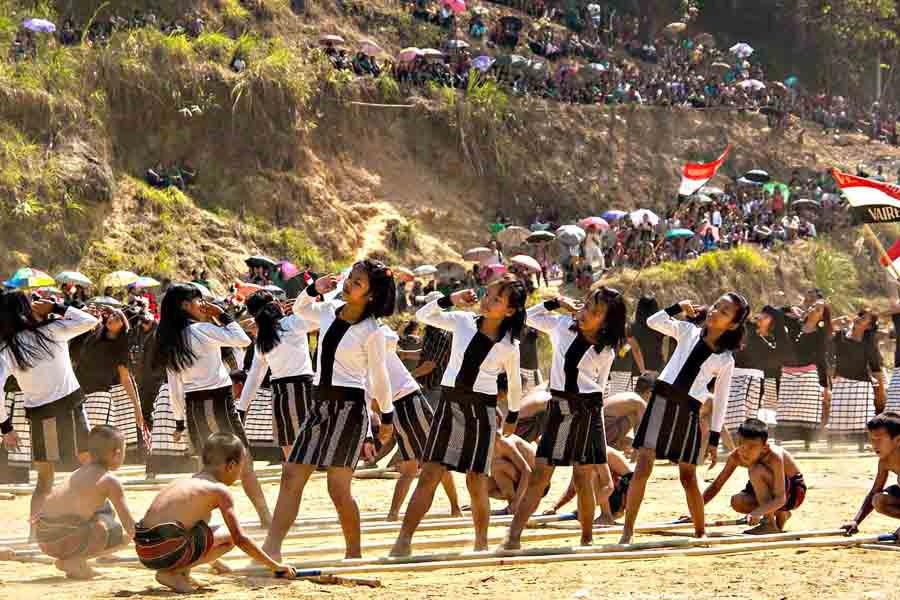
The air in Mizoram changes palpably when spring approaches, carrying the promise of a bountiful harvest and the energy of renewal. This anticipation culminates in Chapchar Kut, a significant festival marking the completion of the jhum (slash-and-burn) cultivation cycle. Unlike many harvest festivals that celebrate the ingathering of crops, Chapchar Kut is observed after the laborious task of clearing and burning the jhum fields, signifying a period of respite before the sowing begins.
History & Context
Chapchar Kut is one of the oldest festivals of the Mizo people, deeply intertwined with their traditional agricultural practices. Historically, the Mizo economy revolved around jhum cultivation. After the forests on hill slopes were cut down (chap) and left to dry, they were burned (char), preparing the land for sowing. The period between this burning and the actual planting was a time for relaxation, community gathering, and celebration – hence 'Kut,' meaning festival. While jhum cultivation practices have evolved, and sedentary agriculture is more common today, the cultural significance of Chapchar Kut endures as a vibrant expression of Mizo identity and heritage. It was initially celebrated annually but fell into disuse for about 90 years. Its revival in 1973 marked a conscious effort to preserve and promote Mizo culture and traditions.
What Makes It Distinctive
The festival's defining event is the Cheraw dance, often referred to as the 'bamboo dance.' This intricate performance involves male dancers moving bamboo staves rapidly on the ground, creating rhythmic beats, while female dancers, adorned in traditional Mizo attire (such as the 'puanchei'), step in and out of the clapping bamboos. The precision, coordination, and grace required make it a mesmerizing spectacle. Beyond the Cheraw, other traditional Mizo dances like Sarlamkai, Chheihlam, and Khullam are also performed. Traditional Mizo songs, often sung in chorus, narrate stories of bravery, love, and community life. Culinary delights, especially local meat preparations and rice-based dishes, are central to the celebration, fostering a strong sense of communal bonding. The festival also features indigenous games and traditional handicrafts, offering a glimpse into the broader Mizo cultural landscape.
Best Time to Visit
Chapchar Kut is typically celebrated in March, after the jhum fields have been cleared and burnt. The weather in Mizoram during March is generally pleasant, with temperatures ranging from 18°C to 28°C. The humidity is relatively low, making it an ideal time for travel and outdoor activities before the onset of the monsoon season. The specific date varies each year based on the Mizo calendar but usually falls on a Friday in the first or second week of March.
How to Reach
The primary gateway to Mizoram is Aizawl, the state capital. Lengpui Airport (AJL) is the nearest airport, located approximately 32 km from Aizawl. It has direct flights from Kolkata, Guwahati, and Imphal. From Lengpui, taxis are readily available to Aizawl, taking about 1.5 to 2 hours. The nearest major railhead is Silchar (Assam), about 180 km from Aizawl. From Silchar, shared sumos and private taxis connect to Aizawl, a journey of approximately 6-8 hours through hilly terrain. National Highway 54 (now NH6) connects Aizawl to Silchar and further to Guwahati.
Permits & Entry
Indian citizens residing outside Mizoram require an Inner Line Permit (ILP) to enter the state. This can be obtained online from the Mizoram government website or in person from Liaison Officers stationed in major cities like Kolkata, Guwahati, Shillong, or Silchar. Foreign nationals require a Protected Area Permit (PAP), which can be obtained through the Indian missions abroad or from the Immigration Officer, Lengpui Airport (Aizawl), or the Home Commissioner, Government of Mizoram, Aizawl. It is crucial to have these permits arranged before arrival.
Nearby Attractions
- Reiek: About 29 km from Aizawl, offering panoramic views of the Mizo hills and a traditional Mizo village reconstructed for cultural preservation.
- Durtlang Hills: Overlooking Aizawl, these hills provide excellent viewpoints and are home to the Durtlang Presbyterian Church, an iconic landmark.
- Solomon's Temple: A unique and grand church complex near Aizawl, known for its distinctive architecture and serene surroundings.
- Tamdil Lake: A natural lake approximately 85 km from Aizawl, ideal for boating and picnicking, surrounded by lush forest.
- Phawngpui National Park (Blue Mountain): Mizoram's highest peak and a biodiversity hotspot, known for its rhododendron forests and diverse wildlife (note: requires specific permits and is a longer journey, best planned as a separate trip).
Traveller Tips
- Permits First: Ensure your ILP (for Indian nationals) or PAP (for foreign nationals) is secured well in advance of your trip.
- Respectful Dress: While observing the festivities, dress modestly, especially when visiting religious sites or participating in cultural gatherings.
- Local Transport: Shared taxis (sumos) are the most common and economical way to travel between towns; confirm fares before starting your journey.
- Cash is King: ATMs are available in Aizawl and larger towns, but smaller villages may have limited or no ATM facilities. Carry sufficient cash for local purchases and smaller expenses.
- Language: Mizo is the local language, but English is widely understood in Aizawl and by educated locals. Learning a few basic Mizo phrases like
Chibai(hello) orKa lawm e(thank you) can enhance interactions. - Photography Etiquette: Always ask for permission before photographing people, especially during cultural events. Be discreet and respectful.
- Connectivity: Mobile network coverage is generally good in Aizawl but can be patchy in remote areas. Jio and Airtel are typically the most reliable providers.
- Accommodation: Aizawl offers various accommodation options, from budget guesthouses to mid-range hotels. Outside Aizawl, options are more limited, often to government-run tourist lodges or homestays; book in advance.
Frequently asked
Related
Plan Your Journey with Living Roots Expeditions
Travel Northeast India with a private guide, hand-picked hosts, and an itinerary shaped around your interests — culture, wildlife, festivals, or slow discovery. If this subject is why you are travelling, see specialist festival expeditions in Northeast India.