Tuirihiau Falls
Mizoram's distinctive double-decker waterfall, viewed from behind
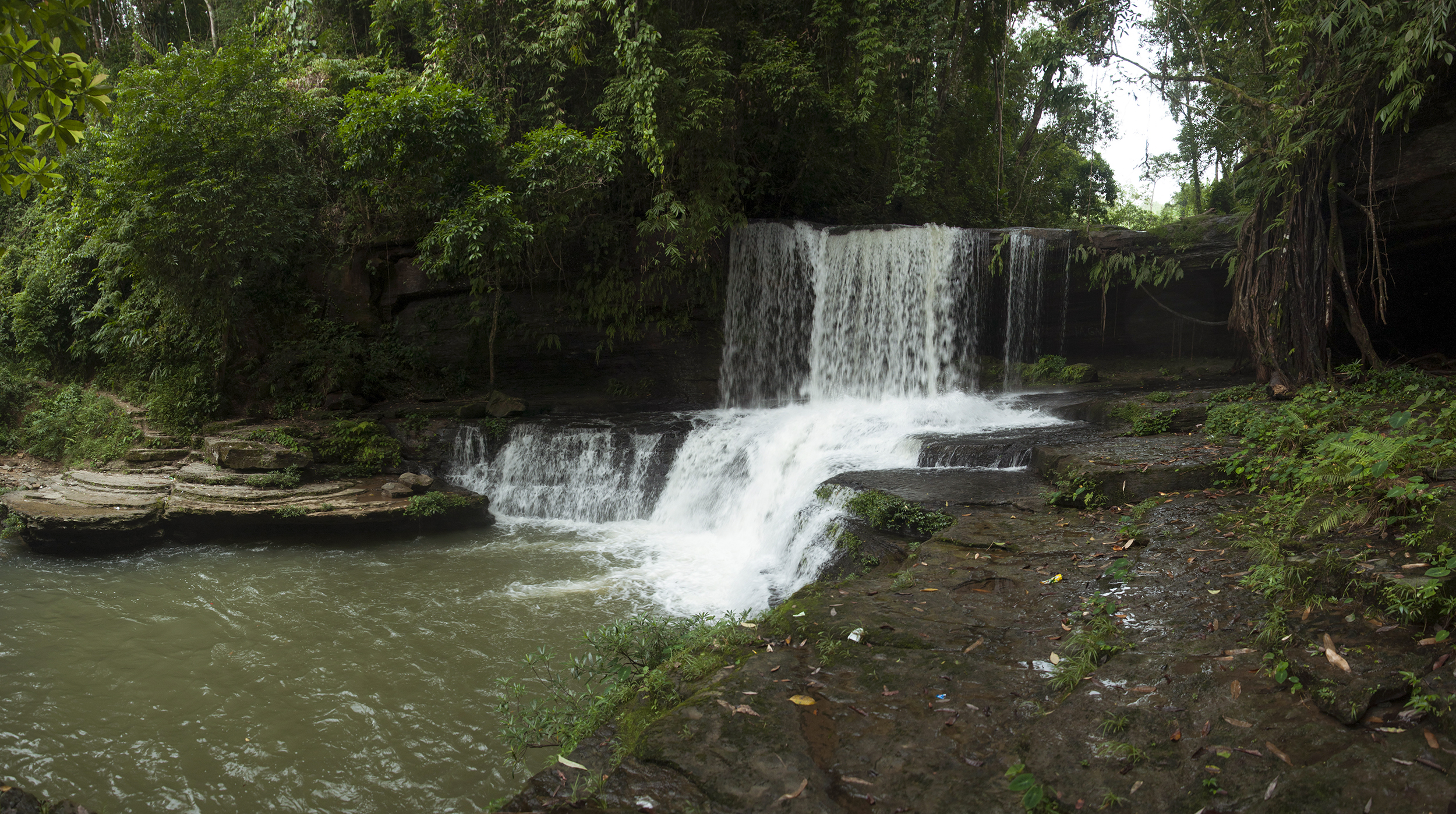
Amidst the deep green hills of Mizoram, where the Tuirihiau River carves its path, lies a waterfall with an unusual characteristic. Rather than a simple plunge, the water descends in two distinct tiers, forming a natural arch or cave behind the upper fall. This geological feature allows visitors the rare experience of walking directly behind the curtain of water, a perspective few waterfalls offer.
History & Context
The Tuirihiau Falls are a natural formation, sculpted over millennia by the erosion of the Tuirihiau River through the hilly terrain of Serchhip district. Unlike ancient fortifications or religious sites, it does not possess a documented historical narrative of human construction or specific cultural events tied to its formation, but it is deeply embedded in the natural heritage of the region. The area around it has long been part of the Mizo people's traditional lands, who have coexisted with and respected these natural wonders for generations. The name "Tuirihiau" itself is Mizo, though its precise etymology is not universally documented, it is locally understood to refer to the sound or appearance of the falls' flow.
What Makes It Distinctive
Tuirihiau Falls stands apart from many waterfalls due to its unique geological structure. The water does not simply drop over a cliff face; instead, it has carved a recess into the rock, allowing for a substantial space behind the upper tier of the fall. This natural cave offers a sheltered pathway where one can stand and view the cascade from an entirely different vantage point – from behind the falling water. The experience is both auditory, with the roar of the water, and visual, as sunlight filters through the transparent sheet of water, creating shifting patterns and colours. The second tier then descends into a pool below. The surrounding vegetation is typically dense, contributing to the feeling of being immersed in an untouched natural environment. This walk-through capability is not common among waterfalls in India and makes it a sought-after natural spectacle.
Best Time to Visit
The optimal time to visit Tuirihiau Falls is during the monsoon and post-monsoon months, specifically from June to November. During this period, the Tuirihiau River is full, ensuring a powerful and spectacular flow of water over both tiers. The surrounding landscape is also at its most vibrant green. While the monsoon brings lushness, it also means potentially slick trails and heavier rainfall. The immediate post-monsoon weeks (October-November) often offer the best balance of strong water flow and clearer weather. Outside of these months, particularly during the dry winter and spring (December to May), the water volume can significantly decrease, diminishing the grandeur of the falls.
How to Reach
Tuirihiau Falls is located near Thenzawl in Serchhip district.
- Nearest Airport: Lengpui Airport (AJL) near Aizawl, Mizoram. Lengpui Airport is approximately 110 km / 4-5 hours from Tuirihiau Falls.
- Nearest Railhead: Bairabi Railway Station, which is roughly 160 km / 6-7 hours. Alternatively, Silchar Railway Station in Assam is a more significant railhead, about 240 km / 9-10 hours.
- Road Route:
- From Aizawl: Tuirihiau Falls is approximately 90-100 km / 3-4 hours from Aizawl by road. The route typically involves travelling south on NH54 (which becomes Mizoram State Highway 2). Thenzawl is a key town on this route.
- From Thenzawl: The falls are a short drive of about 5-7 km from Thenzawl town. Local taxis or hired vehicles from Thenzawl can take you to the falls.
Permits & Entry
For Indian citizens, an Inner Line Permit (ILP) is required to enter Mizoram. This can be obtained from Liaison Officers of the Government of Mizoram in major Indian cities like Kolkata, Guwahati, Shillong, or from the Deputy Commissioner's office at the entry points to Mizoram, such as Lengpui Airport. Foreign nationals require a Protected Area Permit (PAP), which must be obtained in advance. These permits are typically arranged through registered tour operators or the Mizoram Home Department. There is no specific entry fee mentioned for the falls themselves, however, visitors are always advised to confirm locally with the district administration or tourism department regarding permit procedures and any potential entry charges, as regulations can change.
Nearby Attractions
- Thenzawl Deer Park (Serchhip): A habitat for deer, offering a chance to see them in a semi-natural environment, located very close to the falls.
- Vantawng Falls (Serchhip): Mizoram's highest waterfall, often visited in conjunction with Tuirihiau, though it lacks the 'behind-the-fall' pathway.
- Chhingpuii Thlan (Serchhip): A memorial stone associated with a local legend of love and tragedy, providing a cultural historical insight.
- Handloom Centre, Thenzawl (Serchhip): Offers a glimpse into the Mizo traditional weaving industry, where handloom products are made and sold.
- Saitual district: A newly formed district offering serene landscapes and glimpses into Mizo village life, about an hour drive away.
Traveller Tips
- Footwear: Wear sturdy, non-slip footwear, especially during the monsoon, as paths around the falls can be muddy and slippery.
- Rain Gear: Even outside peak monsoon, unexpected showers can occur; a light rain jacket or umbrella is advisable.
- Connectivity: Mobile network coverage can be intermittent or weak in some remote areas around the falls, though Thenzawl generally has better connectivity.
- Local Transport: Pre-arrange your return transport from the falls if you're taking a local taxi from Thenzawl, as options might be limited later in the day.
- Photography: Be cautious with electronics due to the spray from the falls if attempting to photograph from behind the water curtain. Waterproof covers are recommended.
- Respect Local Culture: Mizoram is a largely Christian state; dress modestly, especially when visiting villages, and be respectful of local customs. The Mizo people are known for their hospitality.
- ILP/PAP Always Handy: Keep your Inner Line Permit or Protected Area Permit readily accessible as checks can occur at various points. Make sure to carry multiple photocopies.
Frequently asked
Related
Plan Your Journey with Living Roots Expeditions
Travel Northeast India with a private guide, hand-picked hosts, and an itinerary shaped around your interests — culture, wildlife, festivals, or slow discovery. If this subject is why you are travelling, see our Northeast India tour packages.