Yumthang
The Valley of Flowers
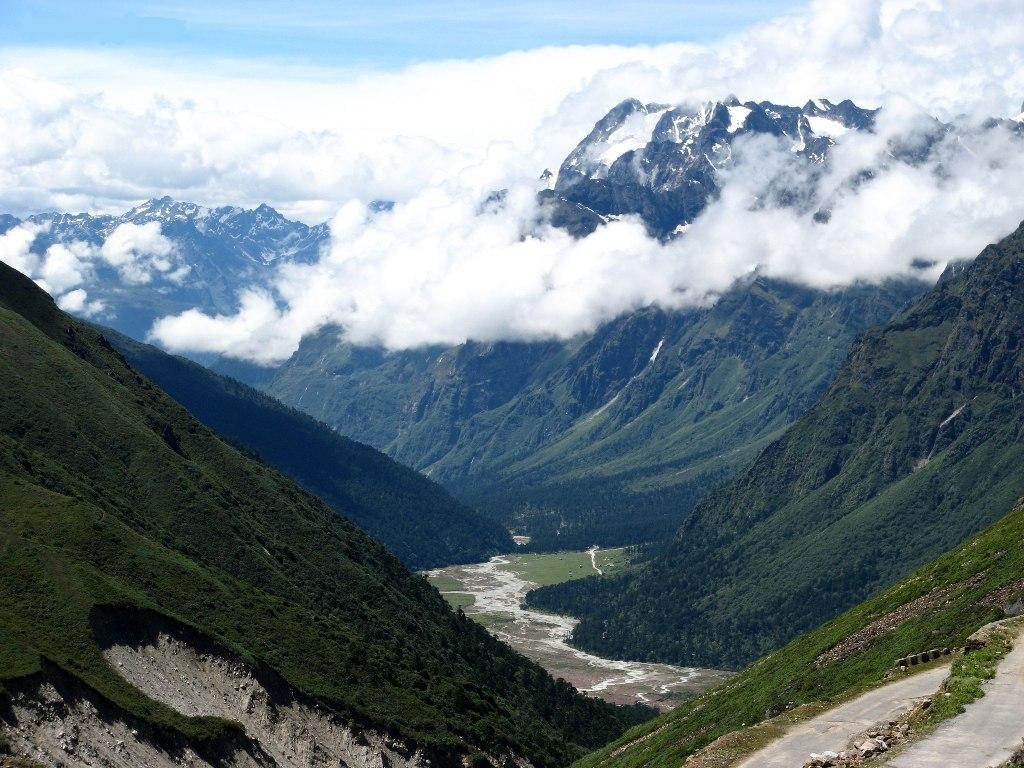
Yumthang Valley
Yumthang Valley, often referred to as the "Valley of Flowers," is a picturesque alpine valley situated in North Sikkim, India. Located at an altitude of approximately 3,564 meters (11,800 feet) above sea level, it is renowned for its diverse flora, particularly its vibrant rhododendron forests, which burst into bloom during the spring months.
Geography and Climate
Yumthang Valley is nestled in the Himalayan range, surrounded by towering peaks and fed by the Teesta River. The valley floor is largely flat, covered with meadows that transform into a carpet of flowers in spring and summer. The climate is alpine, characterized by cold winters with heavy snowfall and relatively mild summers. Temperatures can drop well below freezing in winter, while summer temperatures typically range from 10°C to 15°C. The valley remains closed to tourists for several months during winter due to heavy snow.
Flora and Fauna
Botanically, Yumthang Valley is significant for its rich biodiversity. It is home to a Sanctuary with over 24 species of rhododendrons, which flower from late February to mid-June, creating a breathtaking spectacle of colors. Besides rhododendrons, the valley hosts primulas, poppies, iris, and a variety of other high-altitude flowers. The valley's ecosystem also supports various animal species, including yaks, Himalayan marmots, and several bird species adapted to the alpine environment, although direct sightings of larger mammals are generally uncommon for visitors.
Cultural Significance and Local Life
The region around Yumthang is primarily inhabited by the Lepcha and Bhutia communities. While Yumthang itself is largely uninhabited due to its high altitude and harsh winter conditions, nearby villages like Lachung serve as cultural hubs. Local traditions and Buddhist practices deeply influence the lifestyle of the inhabitants. Yaks are an integral part of the local economy and culture, used for milk, wool, and as pack animals.
Tourism and Accessibility
Yumthang Valley is a prominent tourist destination in Sikkim. Its blooming season, typically from March to June, attracts a large number of visitors. Access to the valley usually involves traveling from Gangtok to Lachung, an overnight stay, and then a short drive to Yumthang. Beyond Yumthang, further north is the picturesque Zero Point (Yumesamdong), which often has snow even in summer and offers stunning views. Due to its proximity to the international border with China, a Protected Area Permit (PAP) is required for both Indian and foreign nationals to visit Yumthang Valley. These permits are typically arranged through registered tour operators.
Conservation Efforts
The delicate ecosystem of Yumthang Valley requires careful management. Efforts are focused on preserving its unique flora, particularly the rhododendron species, and maintaining the ecological balance. Responsible tourism practices are encouraged to minimize environmental impact and ensure the long-term sustainability of this natural wonder.
Frequently asked
Related
Plan Your Journey with Living Roots Expeditions
Travel Northeast India with a private guide, hand-picked hosts, and an itinerary shaped around your interests — culture, wildlife, festivals, or slow discovery. If this subject is why you are travelling, see our Northeast India tour packages.