Apatani people
Guardians of Ziro Valley's Ancient Traditions
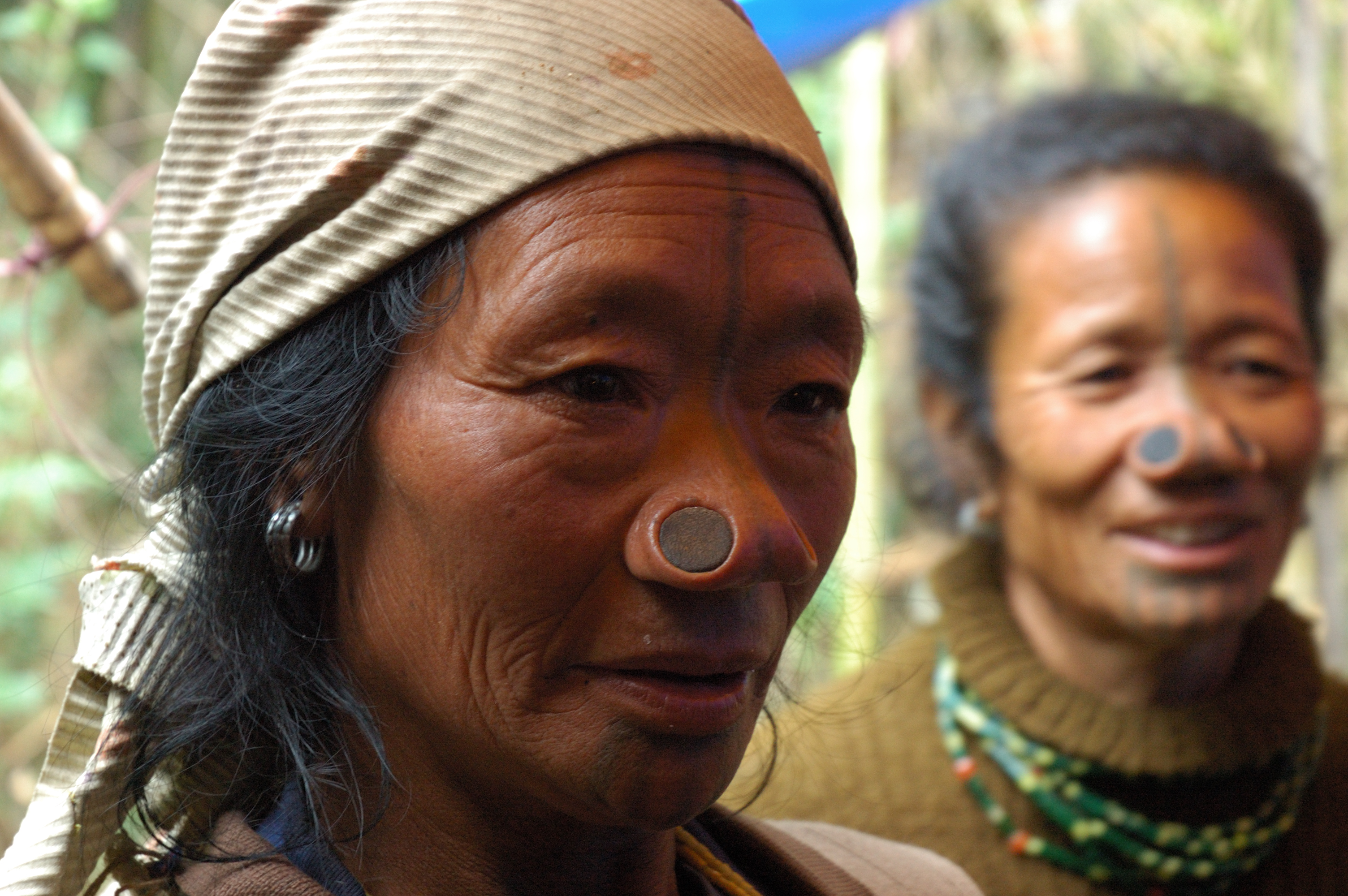
The Apatani People
The Apatani are an indigenous community inhabiting the Ziro Valley in the Lower Subansiri district of Arunachal Pradesh, Northeast India. Renowned for their distinctive culture, elaborate traditional attire, and innovative sustainable agricultural practices, the Apatani offer a profound insight into human-environment interaction.
History and Origins
The Apatani trace their origins to ancestral migrations, though specific documented accounts are limited. Oral traditions and folklore play a crucial role in transmitting their history through generations. It is believed they settled in the Ziro Valley centuries ago, establishing a unique system of land management and social organization that has largely persisted to this day.
Geography and Settlement
The Ziro Valley, their ancestral home, is a high-altitude plateau characterized by its fertile plains and surrounding forested hills. The Apatani have ingeniously adapted to this landscape, developing a sophisticated wet rice cultivation system that integrates aquaculture and forestry without the use of irrigation channels or draught animals. Their villages, such as Hong, Hari, and Dutta, are distinctive for their close-knit communal structures and traditional Apatani houses constructed from bamboo and wood.
Ziro Valley's Unique Agricultural System
The Apatani's agricultural system, particularly their method of growing rice in terraced fields, is considered a World Heritage Site Tentative List entry by UNESCO. This system involves cultivating fish (primarily common carp) alongside rice in flooded paddies. The water requirement is minimal because of the valley's natural springs and efficient water harvesting techniques. This integrated farming approach ensures perennial food security and maintains ecological balance, demonstrating a deep understanding of agroecology. The fields are also interspersed with pine groves, which play a role in soil fertility and fuel wood supply.
Cultural Significance and Traditions
The Apatani culture is rich with festivals, rituals, and artistic expressions. Their traditional belief system, known as Donyi-Polo, involves the worship of the Sun (Donyi) and the Moon (Polo) as primary deities, along with other nature spirits. Important festivals like Myoko and Murung involve elaborate community gatherings, sacrifices, and traditional performances aimed at ensuring prosperity, good harvests, and well-being. These festivals reinforce community bonds and cultural identity.
Historically, Apatani women were recognized by their distinctive nose plugs (yaping hullo) and facial tattoos, and men by their top-knots (apadang). While these practices have largely diminished among younger generations, they remain a powerful symbol of Apatani identity and are visible in older community members. This tradition, according to Apatani oral history, was adopted to protect women from being abducted by men from other rival tribes who found them beautiful.
Socio-Political Structure
The Apatani society is characterized by a strong sense of community and an egalitarian ethos. Traditional village councils, known as 'Buliang', play a significant role in local governance, dispute resolution, and managing common resources. This traditional system highlights their self-sufficiency and well-organized social order.
Conservation Efforts and Modern Challenges
The Apatani's sustainable practices have garnered international attention, particularly for their potential as a model for sustainable development. However, like many indigenous communities, they face challenges from modernization, cultural erosion, and the need to balance tradition with contemporary development. Efforts are underway by both the community and external organizations to preserve their unique heritage and sustainable practices.
Visiting the Apatani People
Visiting the Apatani heartland, the Ziro Valley, offers a unique opportunity to witness a living cultural landscape. The valley is known for its scenic beauty, especially during the rice cultivation season. Visitors are encouraged to respect local customs, particularly during festivals, and engage with the community in a culturally sensitive manner. Prior permits (Inner Line Permit for Indian nationals, Protected Area Permit for foreign nationals) are mandatory for entry into Arunachal Pradesh.
Frequently asked
Related
Plan Your Journey with Living Roots Expeditions
Travel Northeast India with a private guide, hand-picked hosts, and an itinerary shaped around your interests — culture, wildlife, festivals, or slow discovery. If this subject is why you are travelling, see our tribal tours of Northeast India.