Lotha people
Guardians of the Falcon Sky in Nagaland's Wokha District
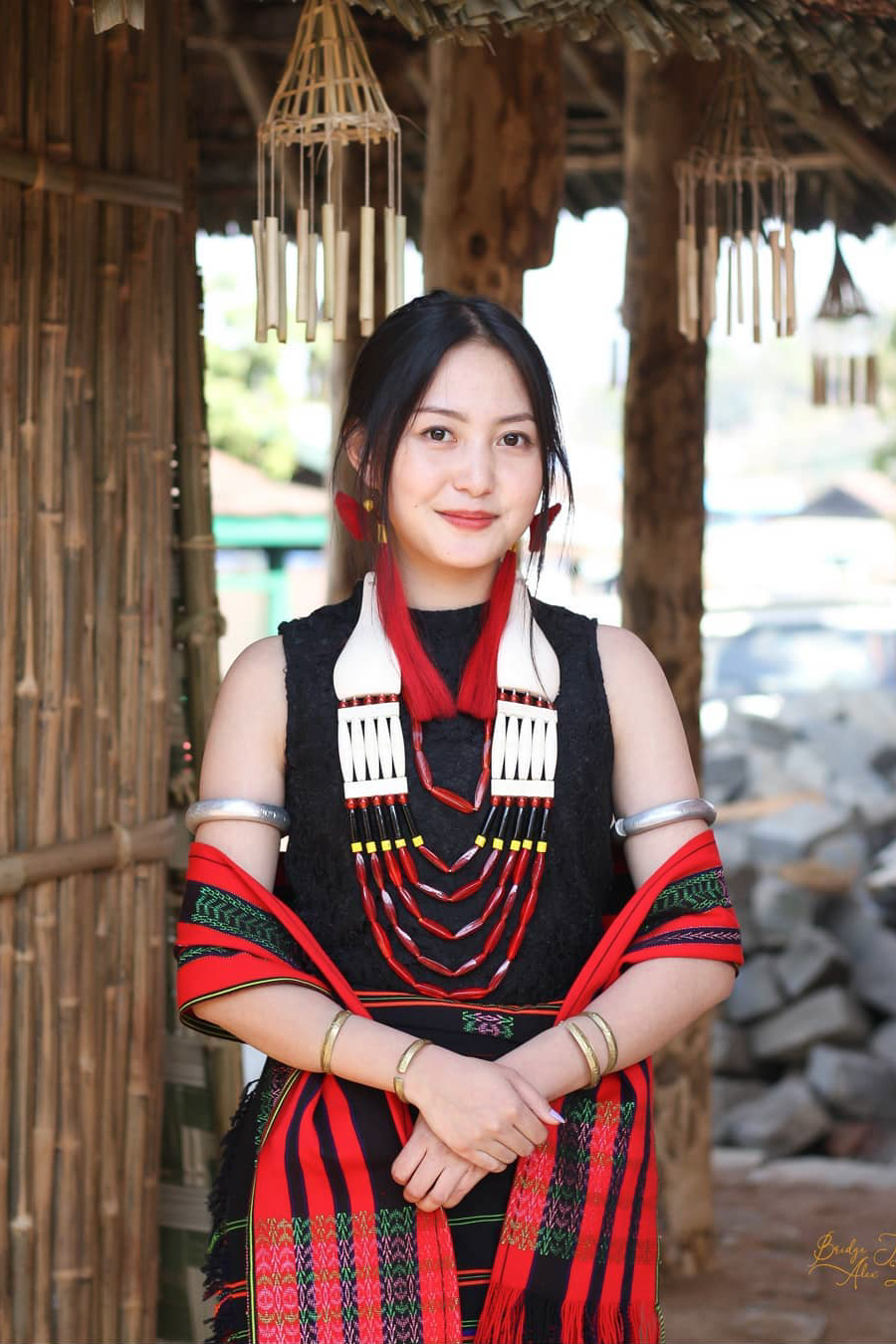
In the first week of November, a quiet descends on the terraced fields surrounding Wokha. The last of the harvest is in, and a period of rest and celebration, known as Tokhu Emong, begins. It is a festival of reconciliation and gratitude, where old disputes are settled, and the community comes together. The air fills with the sounds of traditional songs, recounting ancestral journeys and heroic deeds, a powerful auditory backdrop to the striking visual of men and women dressed in their magnificent, hand-woven shawls.
History & Context
The oral history of the Lotha, like many Naga groups, speaks of a long migration from the east. A pivotal point in this journey is marked by a monolith at Piphima in present-day Kohima district, where it is believed the ancestors of the Lotha, Angami, Sema, and Rengma tribes paused together before dispersing. The Lotha eventually settled in the mountains and valleys of what is now Wokha district. They were known historically as formidable warriors, with a highly organized village-based society. The arrival of American Baptist missionaries in the late 19th and early 20th centuries profoundly reshaped society, leading to near-universal conversion to Christianity, which now coexists with older cultural traditions.
What Makes It Distinctive
While the Tokhu Emong festival is a major cultural marker, the story of the Lotha community's relationship with the Amur falcon is a unique contemporary saga. For years, the migrating falcons, which arrive in the tens of thousands at the Doyang Reservoir, were hunted for food. Today, in one of the most successful conservation turnarounds in India, these same communities are the staunchest protectors of the birds. This shift from hunter to guardian, driven by local councils and conservation groups, has brought international recognition to Wokha. A visit to the Doyang Reservoir during the migration season is not just about seeing the world's largest congregation of Amur falcons; it's about witnessing a profound change in the human-environment relationship, stewarded by the Lotha people.
Furthermore, Lotha textile traditions carry deep social meaning. The patterns and colors of their shawls (champisu) are not merely decorative but historically signified a wearer's social status and achievements. For instance, the celebrated Longpensü, a dark shawl with white stripes and intricate embroidery, could traditionally only be worn by a man who had performed specific feats of merit, such as taking a head in battle or offering a great feast of merit. While these rites are no longer practiced, the shawls remain an important symbol of identity and heritage.
Best Time to Visit
- October - November: This is the prime season. The weather is dry and pleasant, with clear skies. The first week of November hosts the Tokhu Emong festival, the most significant cultural event. This period also coincides with the spectacular Amur falcon migration at Doyang Reservoir.
- December - February: Winter months are cold, especially at night, but offer crisp, clear days perfect for trekking and sightseeing around Mount Tiyi and the Doyang Reservoir.
- March - May: Spring is beautiful, with blooming rhododendrons and a pleasant climate before the heat builds up in May.
- June - September: The monsoon season. Heavy rains can make road travel difficult and cause landslides. It's generally best to avoid this period for travel.
How to Reach
- By Air: The nearest airport is Dimapur Airport (DMU), approximately 125 km from Wokha town. From the airport, you can hire a private taxi or take a shared taxi to Wokha (4-5 hours).
- By Rail: The main railhead for Nagaland is Dimapur Railway Station. It is well-connected to major cities like Guwahati and Kolkata. From the station, taxis are available to Wokha.
- By Road: Wokha is connected to the state capital, Kohima (approx. 80 km), and Dimapur via NH2. The journey from Kohima takes about 3-4 hours through winding mountain roads.
Permits & Entry
- Inner Line Permit (ILP): All domestic tourists from outside Nagaland are required to obtain an Inner Line Permit. This can be applied for online through the official Nagaland government portal or obtained from Nagaland House in major cities like Delhi, Kolkata, and Guwahati.
- Protected Area Permit (PAP): Foreign nationals are required to obtain a Protected Area Permit. The rules for PAP have been relaxed, but visitors are typically required to register with the local Foreigner's Registration Office (FRO) within 24 hours of arrival. It's often easiest to arrange this through a registered Nagaland tour operator.
- Fees: Information is not officially published or may change. Visitors are advised to confirm locally before travelling.
Nearby Attractions
- Doyang Reservoir: Site of the world's largest Amur falcon roosting site and a hub for watersports.
- Mount Tiyi: A mountain peak shrouded in legends, believed to be the abode of departed souls. Offers panoramic views of the surrounding valleys.
- Liphanyan Governor's Camp: A scenic spot on the bank of the Doyang River, ideal for picnics and relaxation.
- Totsü Cliff: A sheer rock face offering dramatic views, located near Pangti village.
- Vankhosung: The site of one of the earliest Lotha settlements, holding archaeological and historical importance.
- Pangti Village: Known as the 'Falcon Capital of the World' for its community-led conservation efforts.
Traveller Tips
- Carry sufficient cash. While Wokha town has ATMs, they can be unreliable, and cash is essential for smaller villages.
- Mobile connectivity is patchy. BSNL and Airtel have the best coverage, but expect limited to no data in rural areas.
- Respect Christian traditions. The community is predominantly Baptist, and Sunday is a day of rest and worship.
- Always ask for permission before taking photographs of people, especially elders or during ceremonies.
- Pack layers of clothing. Days can be warm, but mornings and evenings are chilly, especially in winter.
- Homestays are the best way to experience local culture. Several have opened in Pangti and other villages, especially during the falcon season.
- Learn a few words. 'Oshe' (Thank You) and 'Nray' (Hello) in the Lotha dialect will be warmly received.
- Do not offer alcohol or expect to find it readily available. Nagaland is an officially dry state.
Frequently asked
Related
Plan Your Journey with Living Roots Expeditions
Travel Northeast India with a private guide, hand-picked hosts, and an itinerary shaped around your interests — culture, wildlife, festivals, or slow discovery. If this subject is why you are travelling, see our tribal tours of Northeast India.