01
Heritage Sites
The Unakoti rock reliefs, Pilak archaeological site and the forgotten temples of South Tripura — quietly visited with local historians.
Destination Folio
The Region
Tripura layers princely Manikya heritage over deep tribal roots — nineteen indigenous communities, royal palaces, rock-cut shrines and forested hill country. Our journeys here uncover an under-travelled corner of the Northeast.
Best time
October to March
Permits
No permits required.
Recommended days
4–6 days
Key regions
Agartala · Unakoti & North Tripura · Neermahal & Melaghar · Jampui Hills · South Tripura (Pilak)
Cultural Heritage
Tripura's nineteen indigenous communities sit alongside a 600-year Manikya royal heritage and a Bengali plains culture — a layered identity unique to the Northeast.
Statewide
The largest indigenous community — Kokborok language, Garia spring festival and a long royal lineage.
Western Tripura & Mizoram border
Hojagiri dance performed by young women balancing on pitchers — among the most distinctive performance traditions in India.
Central & southern Tripura
Agricultural community with the Garia and Hojagiri festivals and a strong bamboo-craft tradition.
Southern Tripura
Buddhist community of the Chittagong Hill Tracts cultural sphere — Bizu spring festival and textile traditions.
South Tripura
Buddhist Arakanese-origin community — Sangrai water-festival new year and distinct cuisine.
Festivals
Old Agartala (Puran Haveli)
Seven-day royal worship of the fourteen Manikya deities — a state festival blending tribal and Hindu ritual.
Tripuri & Jamatia villages
Tripuri agricultural new year — seven days of dance and offerings to Garia, the harvest deity.
Unakoti, North Tripura
Pilgrim mela at the rock-cut Shaivite reliefs — three days of bathing, fairs and devotional singing.
Jampui Hills
Three-day festival in the Jampui orange orchards — Mizo and Reang cultural showcases, viewpoints and harvest.
Wildlife & Protected Areas
Tripura's wildlife reserves are small but biologically rich — old lowland forests, primates and rare clouded leopards.
Sanctuary
Easy half-day from Agartala — the clouded leopard breeding centre and five resident primate species, including Phayre's leaf monkey.
Sanctuary
Southern Tripura sanctuary — gaur, hoolock gibbon and Phayre's langur.
Sanctuary
Reservoir wetland sanctuary — migratory waterfowl and a forest fringe of elephants.
Sanctuary
Tiny northern sanctuary — bamboo forest and a hoolock gibbon stronghold.
Birding Opportunities
Tripura's wetlands and lowland sal forests host a mix of plains and hill species, including the rare Hoolock gibbon-shared bird community.
Explore birding expeditions →Key hotspots
Notable species
Textiles & Crafts
The risa, rignai and rikutu of the Tripuri women form a three-piece traditional dress — woven on back-strap looms in dense geometric patterns.
Tripuri women
The three-piece traditional dress of Tripura — breast cloth, wraparound and shoulder cloth, in red, black and white.
Jamatia weavers
Striped wraparound textiles in vivid red and orange — Jamatia ritual wear.
Reang (Bru) women
Densely striped wraparounds, paired with silver coin necklaces during Hojagiri.
Destinations & Landscapes
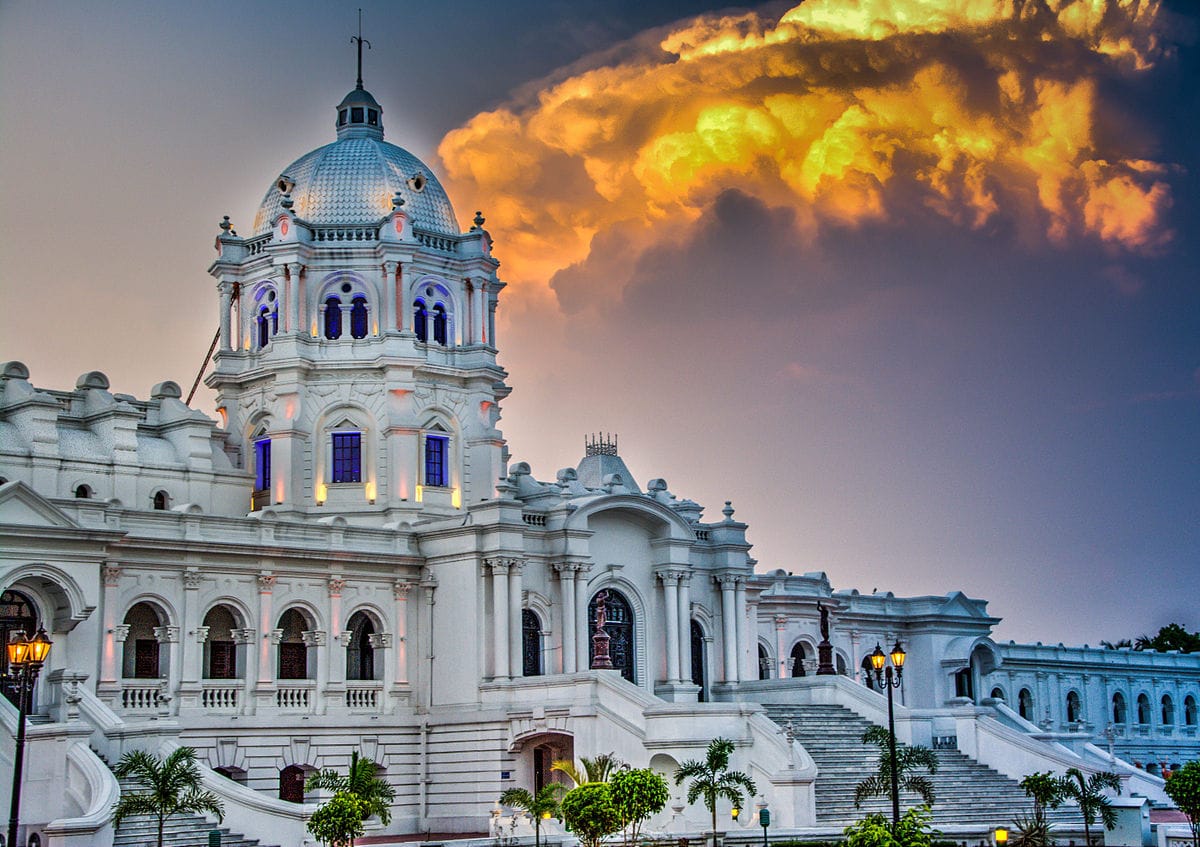
The Manikya royal palace in Agartala — Indo-Saracenic on the scale of Mysore.
The lake palace of Tripura — built on Rudrasagar Lake in 1930.
Seventh-to-ninth-century rock-cut Shaivite reliefs in the northern hills — a UNESCO tentative site.
Eighth-to-twelfth-century Hindu-Buddhist sculptural site in South Tripura.
Tripura's highest ridge — orange orchards, Mizo and Reang villages.
One of the 51 Shakti Peethas, at Udaipur.
Photography
Tripura suits photographers who want layered heritage — palaces, rock reliefs and tribal life — across short, manageable distances.
Photography expeditions →Locations to shoot
Suggested Expeditions
Related Topics
The Unakoti rock reliefs, Pilak archaeological site and the forgotten temples of South Tripura — quietly visited with local historians.
Time with Tripuri, Reang, Jamatia and Chakma families — bamboo crafts, rice-beer traditions and the Garia and Kharchi festivals.
Ujjayanta Palace in Agartala, the lake palace of Neermahal and the summer palace of Kunjaban — each a chapter in the Manikya dynasty's long history.
Private access to local performances, classical Manipuri-inflected dance traditions and cuisine sessions in heritage homes.
Frequently Asked
October to March is dry and cool. April is festival season — Garia Puja and the Unakoti mela.
No permits are required.
Plan Your Tripura Journey
Share the season, the pace and the company you are travelling with. We will design a tripura journey around it — from heritage stays to remote field camps.