Knowledge Hub
Tribes of Northeast India
More than two hundred indigenous communities across eight states.
Northeast India is the most ethnically diverse region in South Asia. More than 220 indigenous communities — Naga, Mizo, Meitei, Khasi, Garo, Bodo, Ahom, Adi, Apatani, Nyishi, Monpa, Konyak and many others — hold distinct languages, cosmologies and constitutional protections.
History & background
Migrations from the Tibetan plateau, the Irrawaddy basin and the Gangetic plains layered over each other from at least the first millennium BCE. Sixth Schedule autonomy, the Bengal Eastern Frontier Regulation (1873) and post-Independence tribal-area agreements shaped today's political map.
Geography
Highland tribes cluster in Arunachal, Nagaland, Mizoram, Manipur's hills and Meghalaya. Plains groups — Ahom, Bodo, Mishing, Rabha — live along the Brahmaputra and Barak river systems.
Cultural & ecological significance
Understanding the region begins with understanding that 'tribal' is not a synonym for uniform. Each community has its own textile grammar, farming system, judicial process and relationship to Christianity, Hinduism, Buddhism or ancestral animism.
Highlights
The essential list.
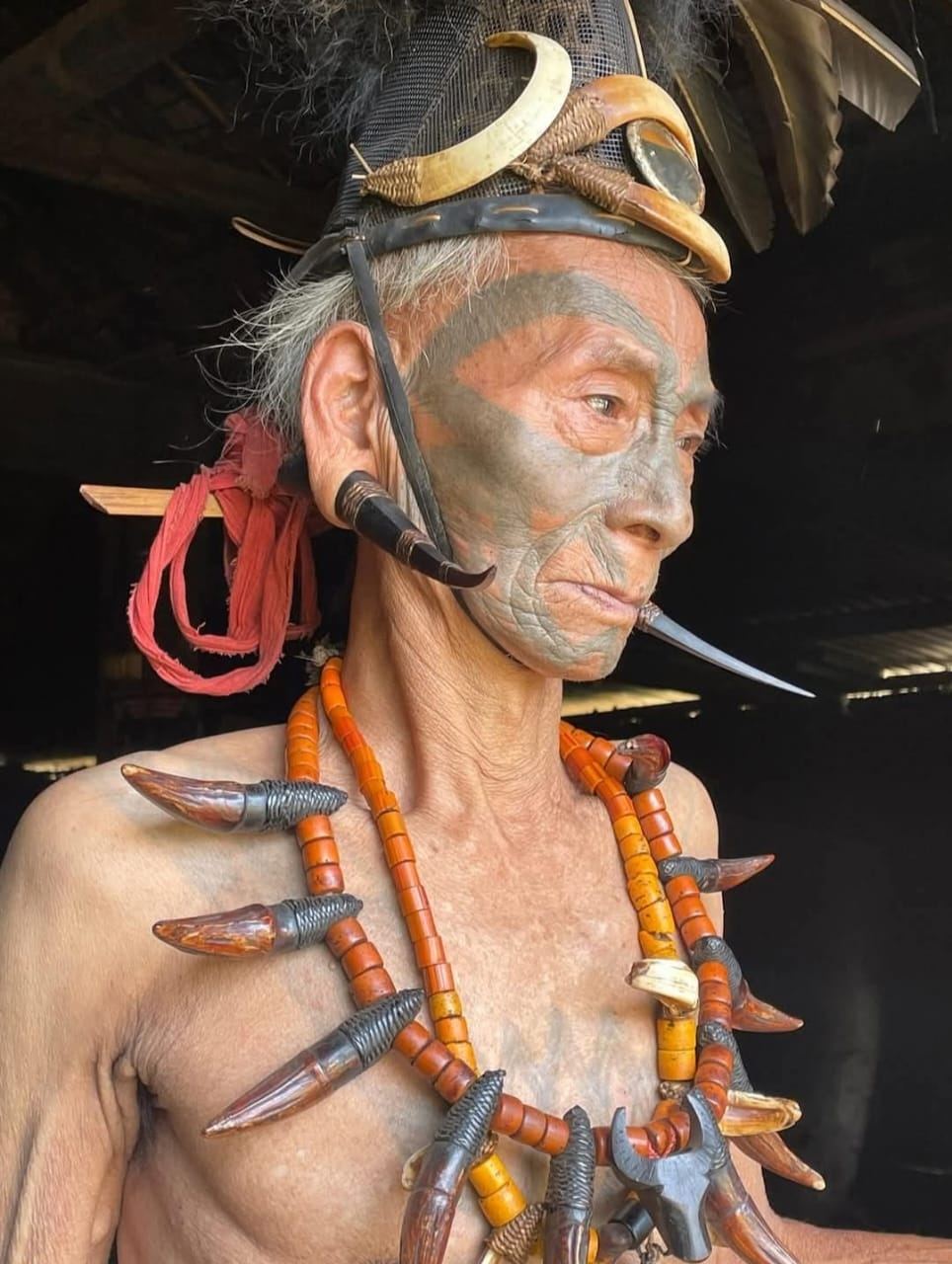
- ◆Konyak Naga — the last living tattooed headhunters
- ◆Apatani — Ziro's wet-rice agriculturalists
- ◆Monpa — Buddhist highlanders of Tawang
- ◆Khasi & Jaintia — matrilineal societies of Meghalaya
- ◆Ao, Angami, Chakhesang — the classical Naga tribes
- ◆Mishing, Bodo, Ahom — Brahmaputra valley communities
Explore in depth
Chapters within this hub
Konyak Naga
Longwa, Shangnyu, Hongphoi and the memory of the head-taking generation.
Apatani
Ziro Valley's UNESCO-nominated wet-rice culture and tattooed elders.
Monpa
The Buddhist highlanders around Tawang and Dirang.
Khasi & Jaintia
Matrilineal societies of the Meghalaya plateau.
Angami & Ao
Nagaland's warrior and Christian-modernist communities.
Best time to visit
Cultural travel is best October–April. Festival-linked visits give the deepest access; see the Festivals hub for the calendar.
How to reach
Every community can be reached with the correct combination of ILP/PAP permits and a Living Roots guide familiar with village etiquette and dialect.
Travel tips
- ·Never treat cultural visits as photography assignments. Introductions come first.
- ·Learn one greeting in the local language — it changes every encounter.
- ·Respect the difference between a public morung and a family's ancestral space.
Frequently asked
Common questions
How many tribes can we realistically meet in one trip?+
In a 12–14 day journey, three to four communities in depth is more valuable than a dozen surface visits.
Is it appropriate to bring gifts?+
Yes — but coordinate with your guide. Books, tea and school supplies work well; money and sweets do not.
Related destinations
Design your expedition
Bring this journey to life.
Living Roots designs private, expedition-led journeys around the themes on this page. Tell us your season and your interests — we will write back, slowly.