Knowledge Hub
Villages of Northeast India
The self-governing hill settlements of the eastern Himalaya.
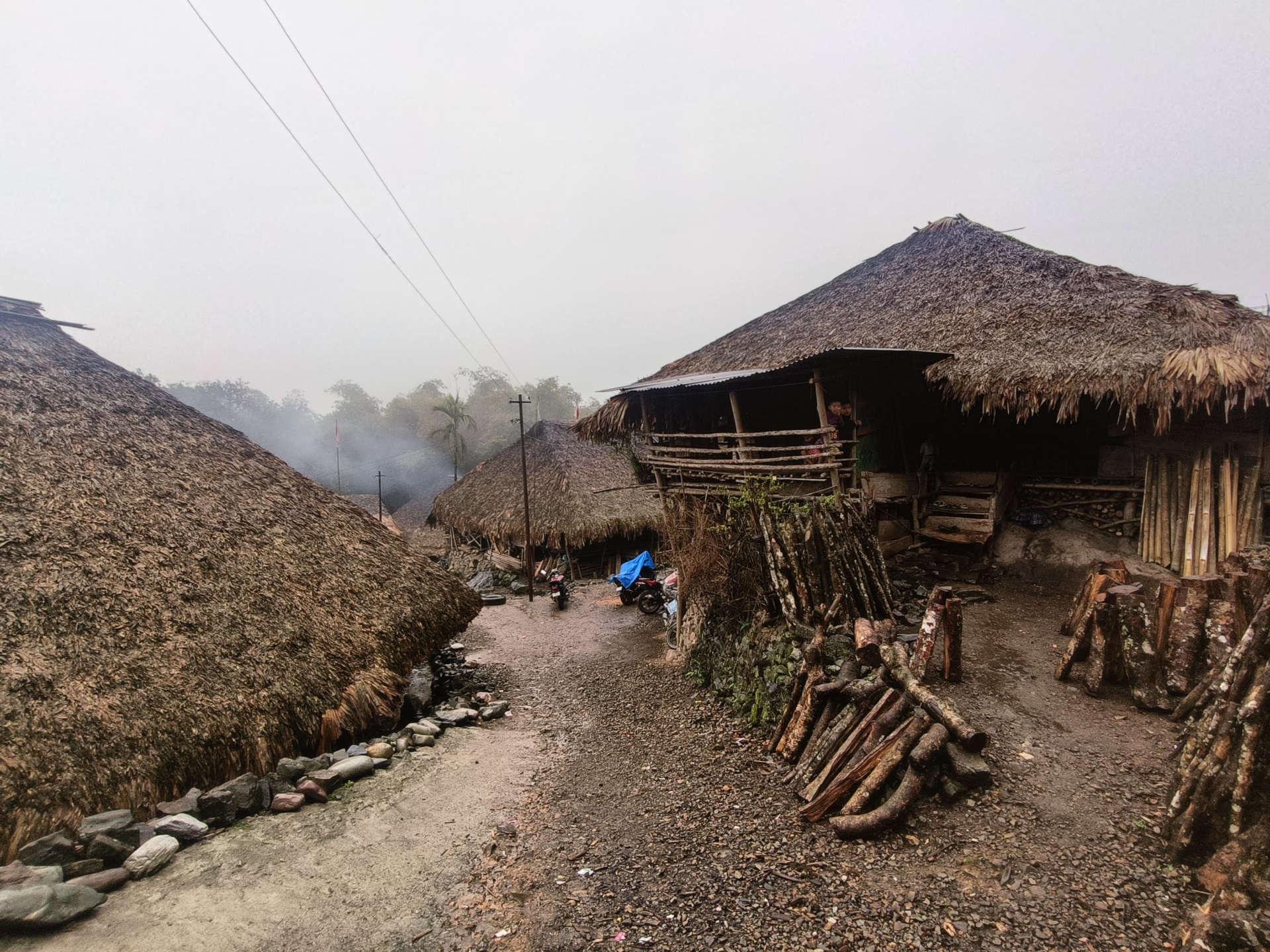
Villages are the true unit of Northeast India — each with its own dialect, morung or namghar, clan hierarchy and land agreement with the forest. From Longwa's Konyak chief-house that straddles the Myanmar border to Mawlynnong's spotless bamboo lanes, they hold what the cities have long since lost.
History & background
Most highland villages predate Indian statehood by centuries and were only lightly touched by colonial administration. Traditional councils — the Konyak Angh, the Ao putu menden, the Khasi dorbar shnong — still adjudicate land, marriage and dispute in parallel with formal panchayats.
Geography
Villages sit at every altitude between 100m (Majuli's stilt hamlets) and 3,000m (the Monpa settlements around Tawang). Terraced cultivation, bamboo architecture and orientation to a sacred grove or river are near-universal.
Cultural & ecological significance
Visiting a village is the fastest way to understand why the Northeast resists cliché. Cuisine, textile, faith and even calendar shift between one ridge and the next.
Highlights
The essential list.
- ◆Longwa — Konyak chief village on the Myanmar frontier
- ◆Mawlynnong — Asia's cleanest village, Khasi Hills
- ◆Khonoma — Angami warrior village, first green village of India
- ◆Hong — largest Apatani settlement, Ziro Valley
- ◆Majuli's stilt villages — Mishing riverine culture
- ◆Kongthong — Meghalaya's whistling village
- ◆Ziro's cluster of seven Apatani hamlets
Explore in depth
Chapters within this hub
Longwa
Konyak chief village where the Angh's house sits half in India, half in Myanmar.
Mawlynnong
The Khasi village that turned collective cleanliness into a national reputation.
Hong
The largest Apatani village in Ziro, famed for its wet-rice-with-fish agriculture.
Khonoma
The Angami village that fought the British and later banned hunting.
Majuli's Mishing hamlets
Stilt homes on the world's largest river island.
Best time to visit
October to April. Winter mornings are cold above 1,500m; carry layers. Monsoon (June–September) makes several ridge villages inaccessible.
How to reach
Every village is reached by road transfer from the nearest airport — Dimapur for Nagaland, Lilabari or Guwahati for Arunachal and Assam, Shillong for Meghalaya.
Travel tips
- ·Always take a village-recommended guide or homestay host.
- ·Photography of ancestral skulls, log drums and interior morung spaces requires explicit permission.
- ·Bring small gifts — school stationery, salt, tea — never sweets or cash to children.
Frequently asked
Common questions
Can we stay overnight in a village?+
Yes — Living Roots works with vetted community homestays in Longwa, Khonoma, Hong, Mawlynnong and Majuli.
What about hygiene and food safety?+
Homestay hosts prepare bottled/boiled water and vegetarian options on request. Bathrooms are usually shared and simple.
Related destinations
Design your expedition
Bring this journey to life.
Living Roots designs private, expedition-led journeys around the themes on this page. Tell us your season and your interests — we will write back, slowly.