George Lowe travelled the length of Arunachal Pradesh with our guide Kanak — from the orchid centre at Tippi over Sela Pass to the great monastery at Tawang, then east through Nyishi, Apatani, Hill Miri, Tagin, Galo and Adi country along the Subansiri and Siang, before crossing into Upper Assam at Dibrugarh.
Journey Overview
Fourteen days, two states and one continuous thread: the relationship between architecture, faith and landscape in the Eastern Himalaya.
The route climbed north-west from Guwahati into Monpa Buddhist country as far as Tawang, descended to Itanagar, then ran steadily east along the tribal belt — Nyishi at Yazali, Apatani at Ziro, Hill Miri around Rang, Tagin at Daporijo, Galo at Basar and Aalo, Adi at Pasighat — before ending in the tea districts of Upper Assam.
- Duration
- 14 Days
- Guide
- Kanak
- Destinations visited
- Bhalukpong · Tippi · Dirang · Sela Pass · Tawang · Thembang · Bomdila · Itanagar · Yazali · Ziro Valley · Rang · Daporijo · Basar · Aalo · Pasighat · Dibrugarh
The Journey Begins
George Lowe's fourteen days in Arunachal Pradesh began, as most Eastern Himalayan journeys do, in Guwahati. With his guide Kanak he drove north and east out of the Assam plains, watching the land fold upward into the hills that would hold him for the next two weeks.
What followed was less a sightseeing circuit than a slow reading of a region — its faiths, its building traditions, and the people who maintain both.
First Stop: Orchids at Tippi
The road left Guwahati for Bhalukpong, on the Assam–Arunachal border, and climbed a few kilometres further to the orchid centre at Tippi, where hundreds of rare species are held under glass.
It was a fitting opening. Arunachal is one of the most botanically rich states in India, and Tippi gives a compressed first sense of what grows in the valleys ahead.
Into Monpa Country: Dirang
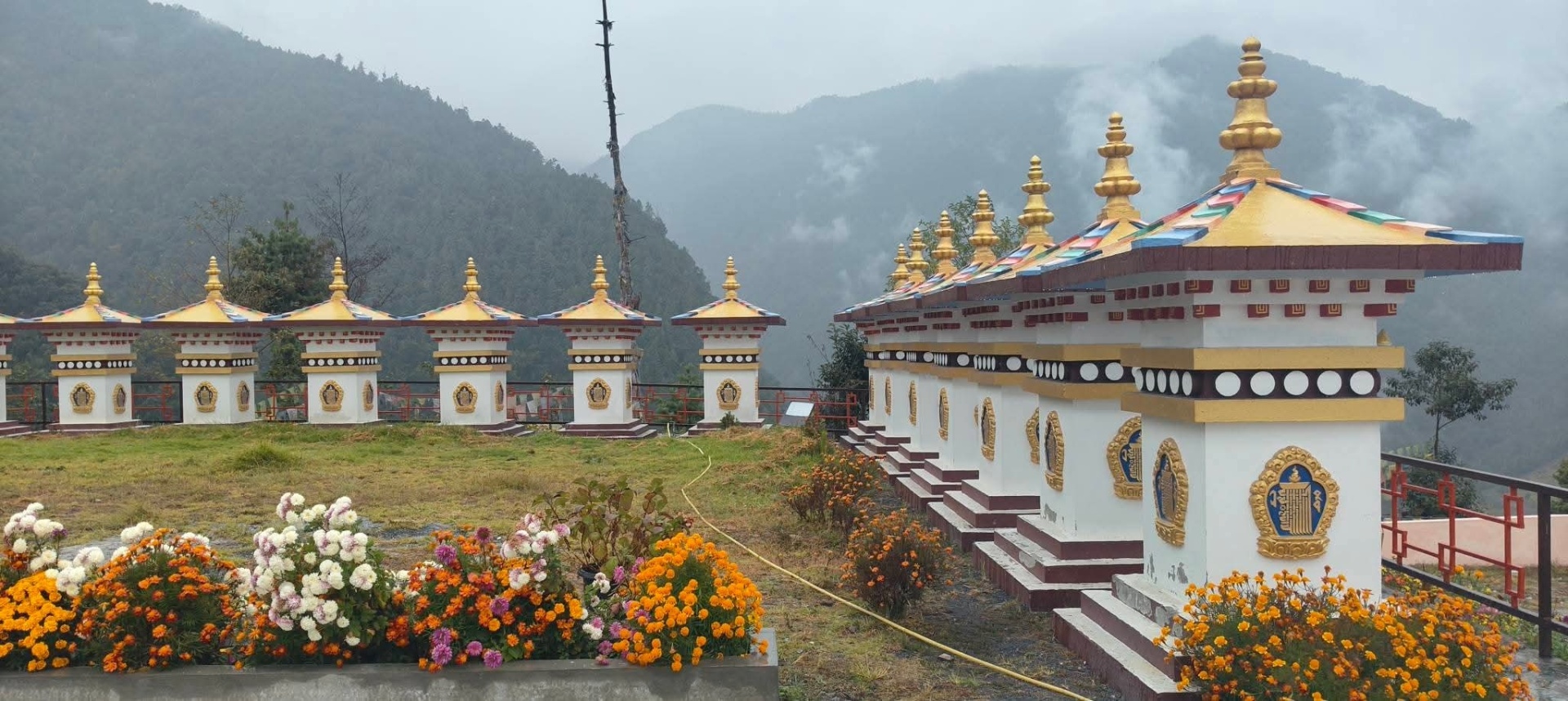
From Tippi the road climbed to Dirang, the first Monpa valley of the journey — a Buddhist community whose culture is closely tied to the Tibetan plateau across the mountains.
George walked the old Dirang dzong and the market, where wood carvings, thangka paintings and hand-woven carpets are made and sold. The Monpa are known for their devotion and for a distinctive architecture of stone, timber and flat-roofed courtyards suited to high, cold valleys.
Over Sela Pass to Tawang
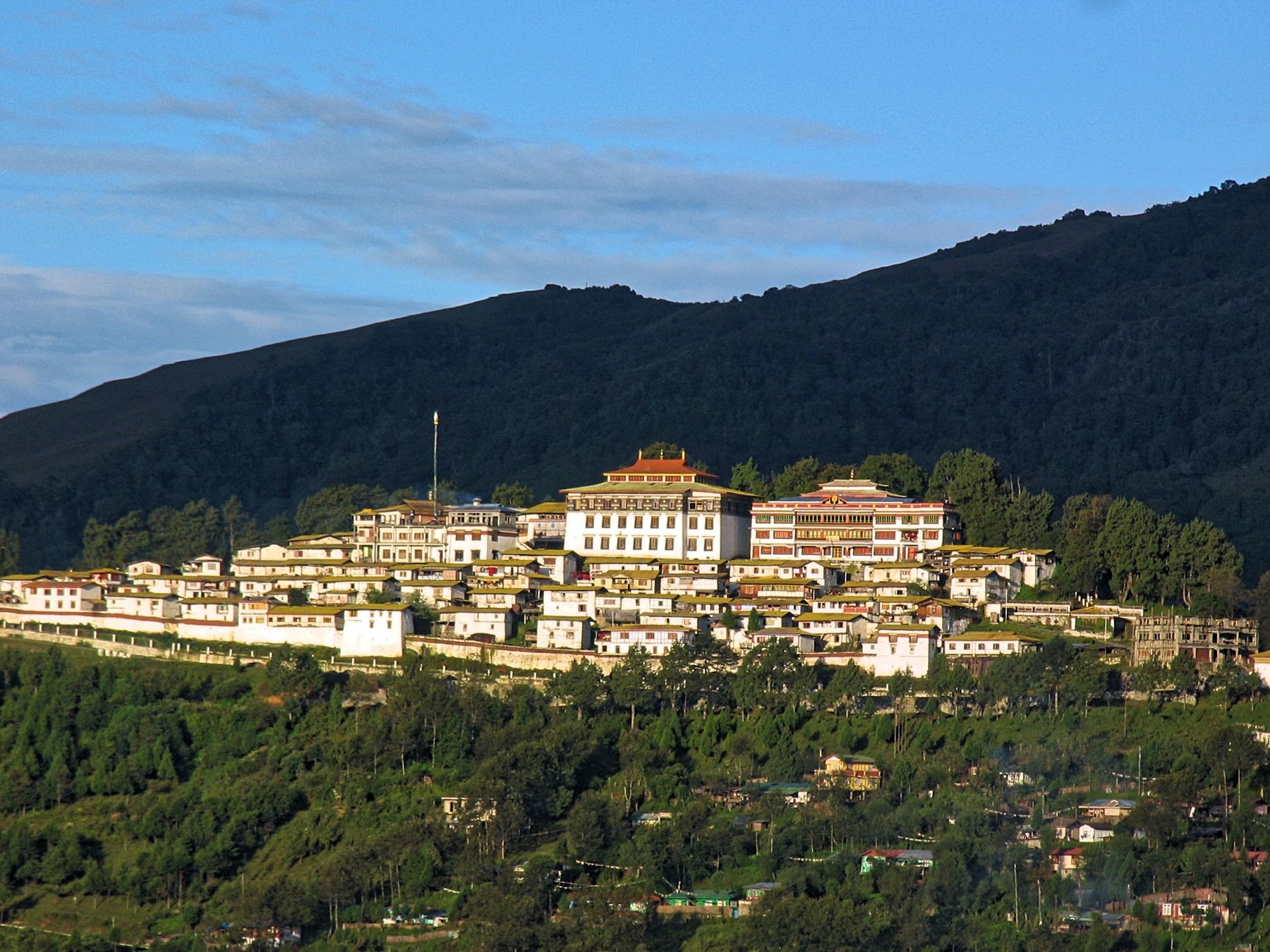
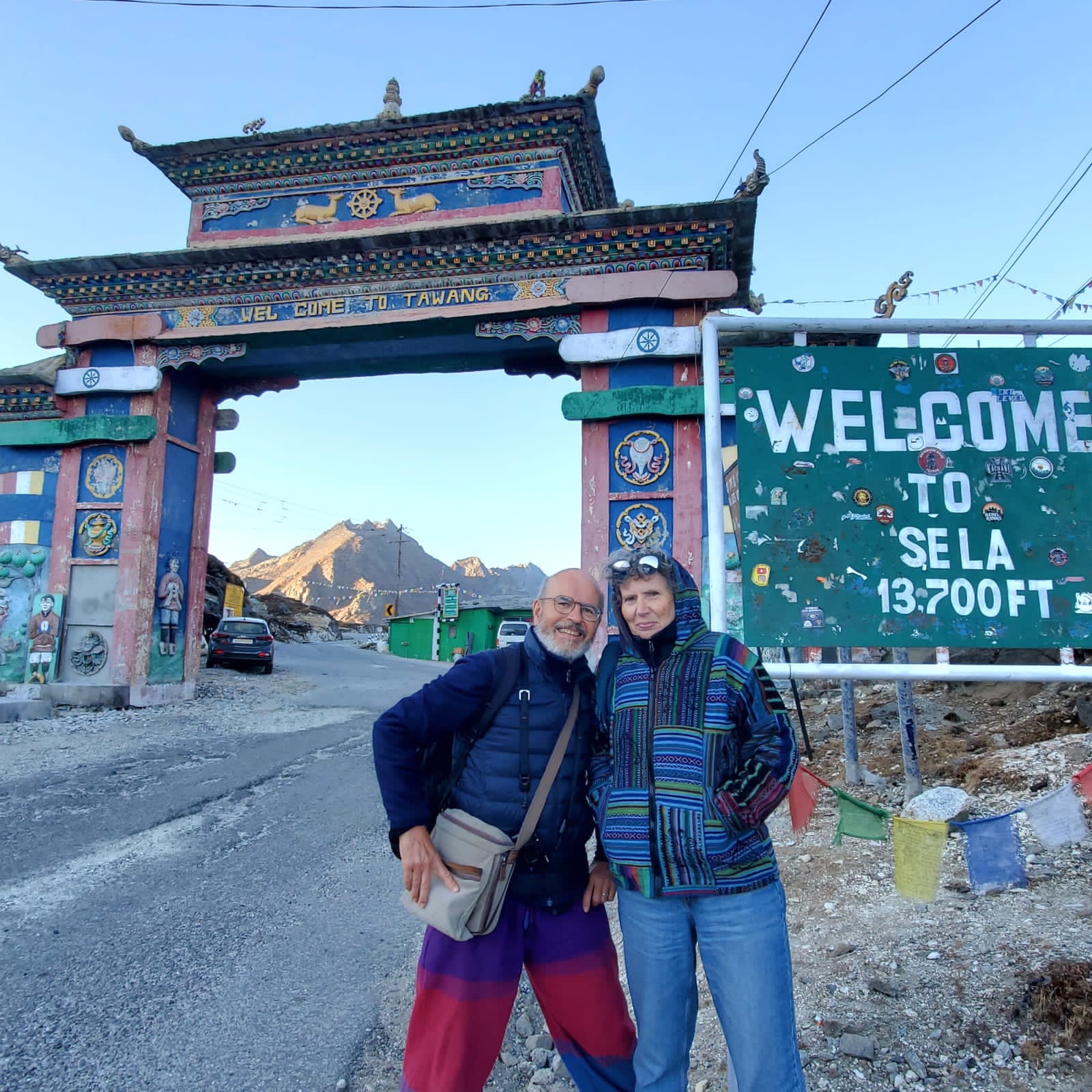
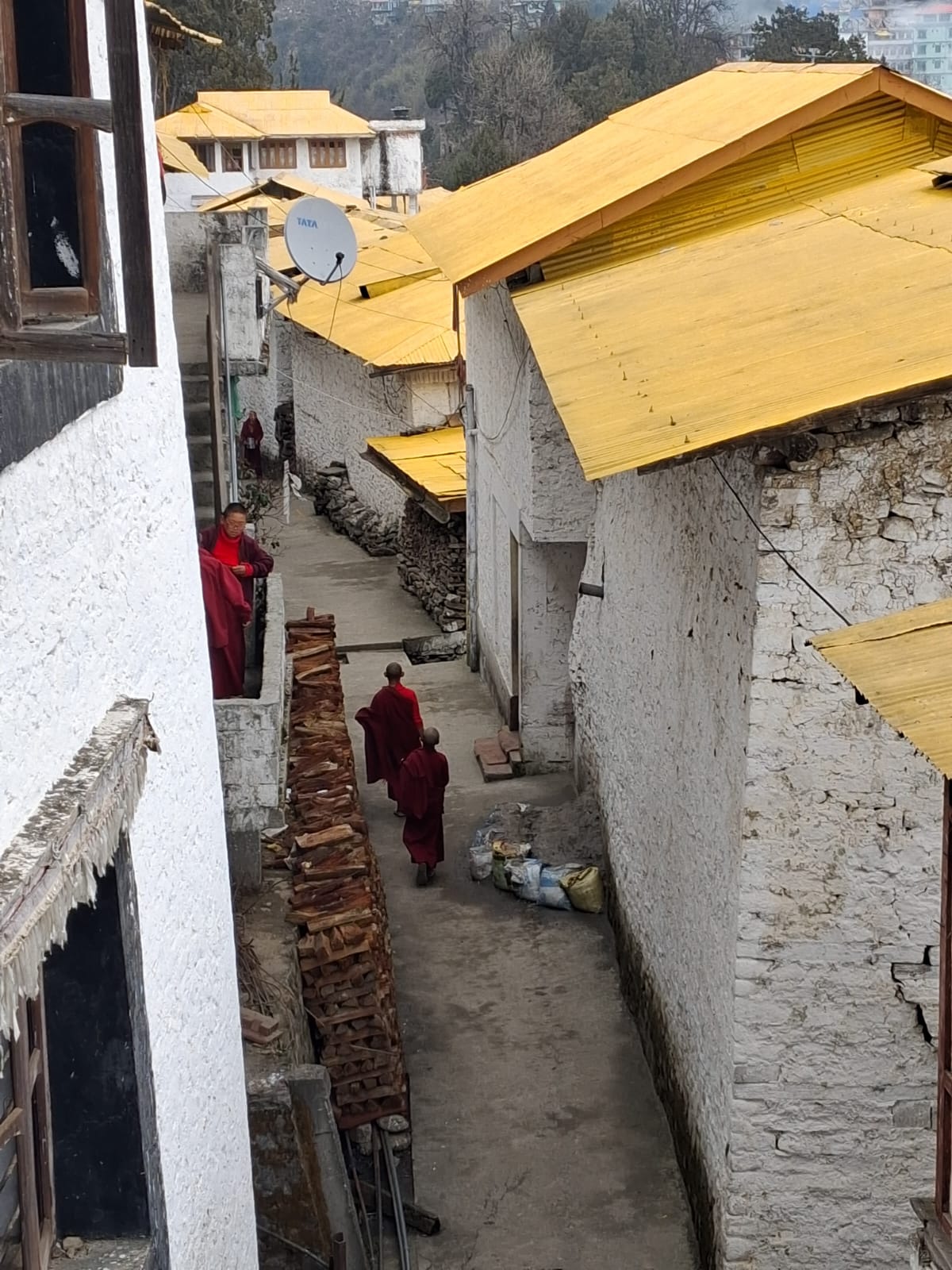
The crossing of Sela Pass, high and cold above the treeline, delivered the journey into Tawang. The monastery there was one of the high points of the expedition: founded in the seventeenth century and set above the valley, it is among the largest Buddhist monasteries in India and remains an important centre of learning.
George was struck less by its scale than by its atmosphere — the quiet of the courtyards, the rhythm of study and prayer that has continued there for four centuries. A day in Tawang took in Urgelling, birthplace of the sixth Dalai Lama, and the nunnery of Ani Gompa above the town.
Thembang and Bomdila
Returning south, the route paused at Thembang, a walled Monpa village of stone houses and old gateways, before descending to Bomdila and its monastery — the last Buddhist ground before the road turned east.
From Bomdila the journey dropped out of the high mountains and ran to Itanagar, the state capital, where the cultural map changes entirely.
Nyishi Country: Itanagar to Yazali
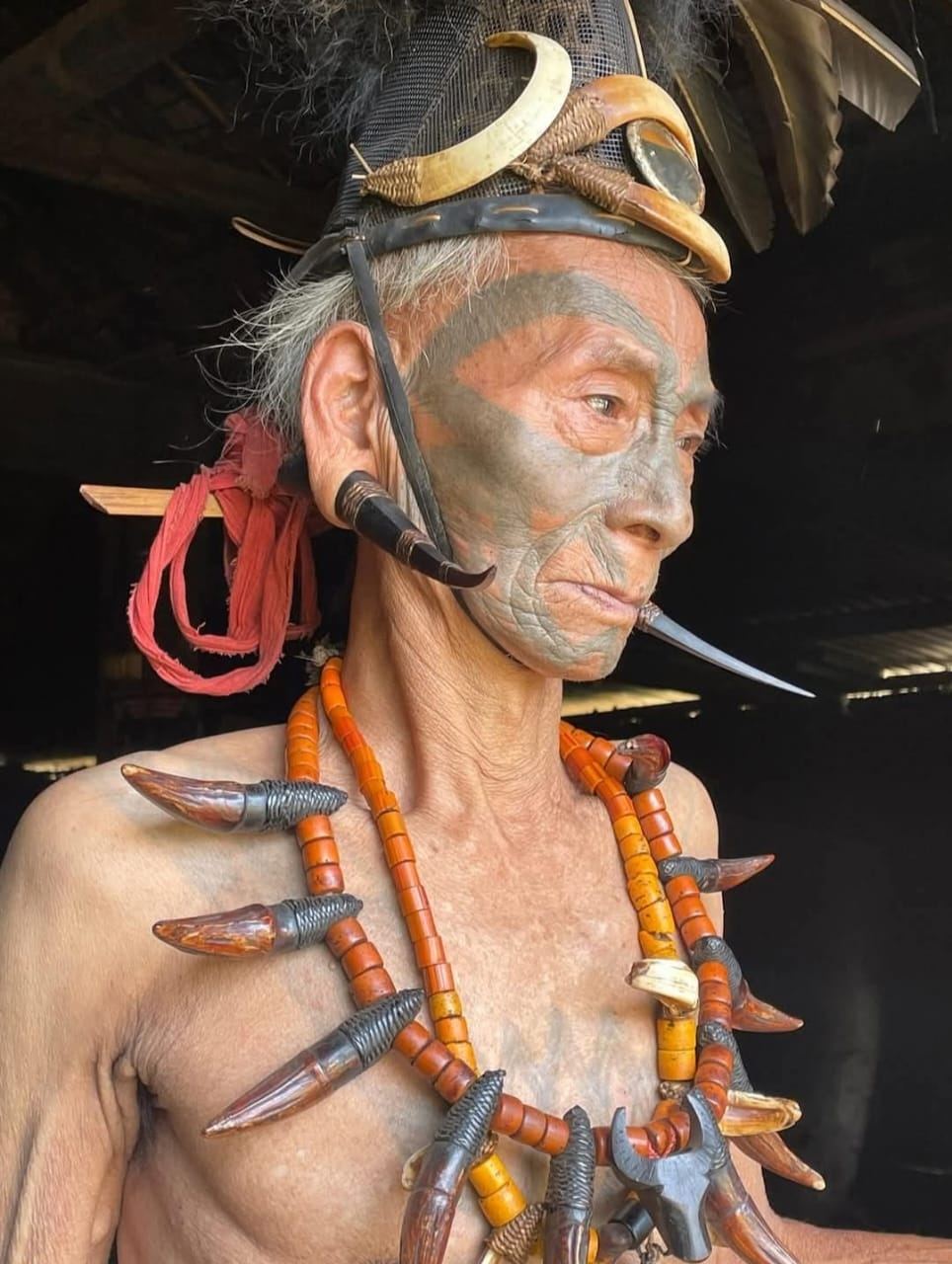
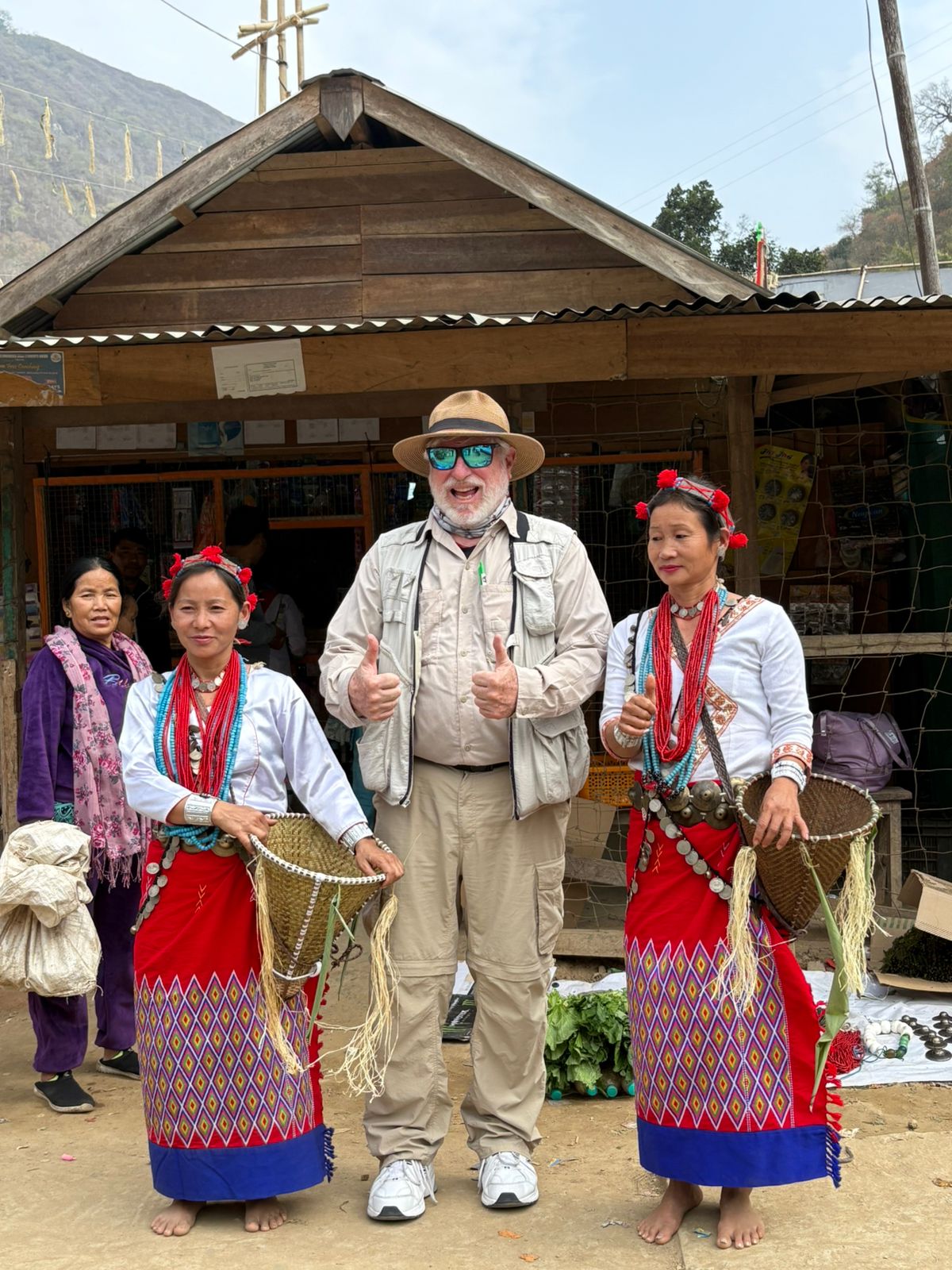
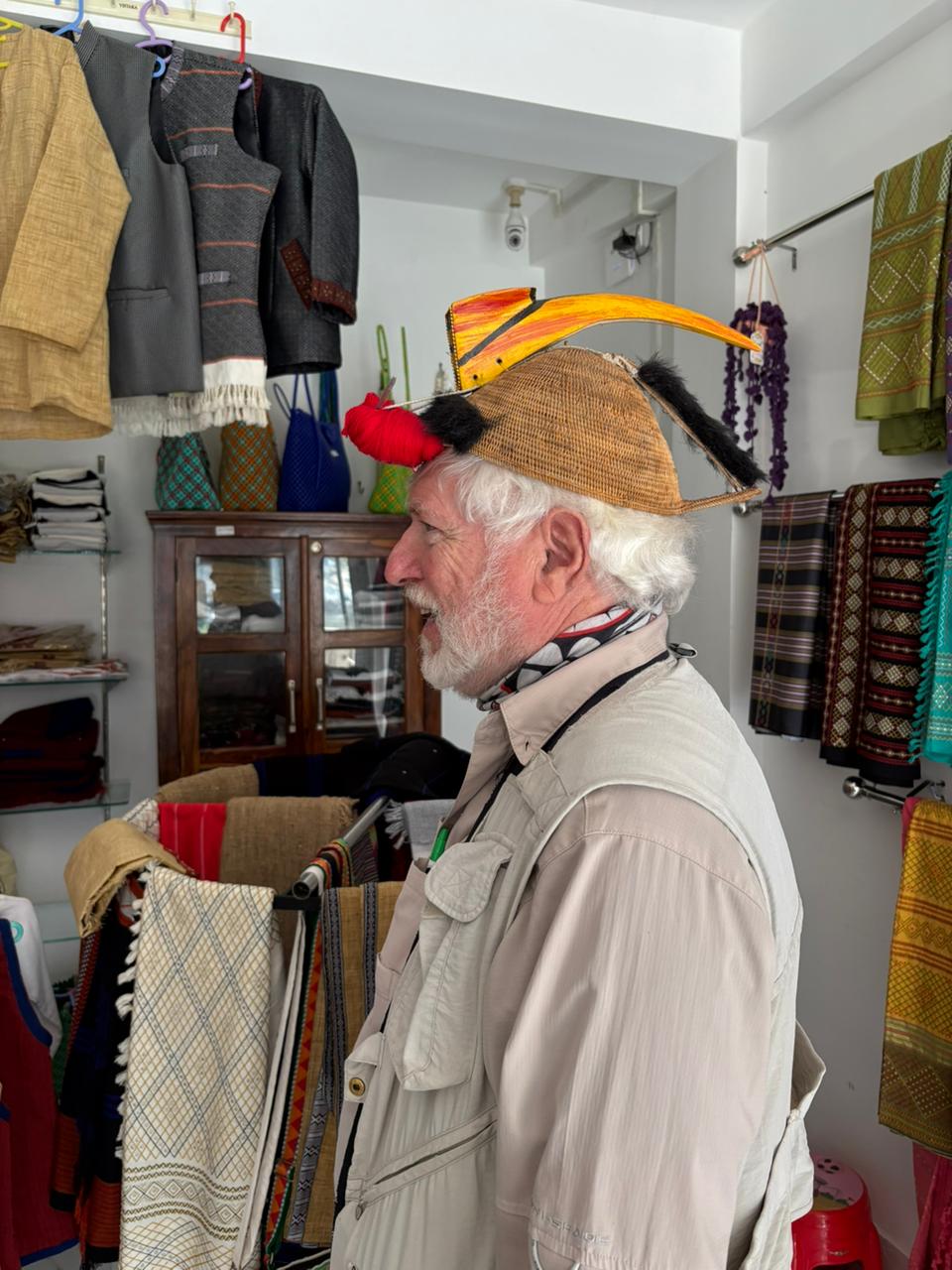
East of Itanagar begins the country of the Nyishi, Arunachal's largest community. Around Yazali George saw the long, low houses of split bamboo and cane, the ceremonial headgear worked in cane and hornbill motif, and a way of life ordered by clan rather than monastery.
The contrast with the Monpa valleys behind him was immediate — a different faith, a different building tradition, a different relationship to forest and hillside.
Exploring Ziro Valley
After the Nyishi territories the road climbed onto the high plateau of Ziro Valley, home of the Apatani people, and one of the most organised agricultural landscapes George encountered anywhere in the Eastern Himalaya.
Intricate wet-rice terraces, bamboo irrigation channels feeding field after field, and permanent settlements built to last generations contrasted sharply with the shifting hill cultivation he had seen earlier. Fish are raised in the flooded paddy alongside the rice — a single system producing two harvests from one field.
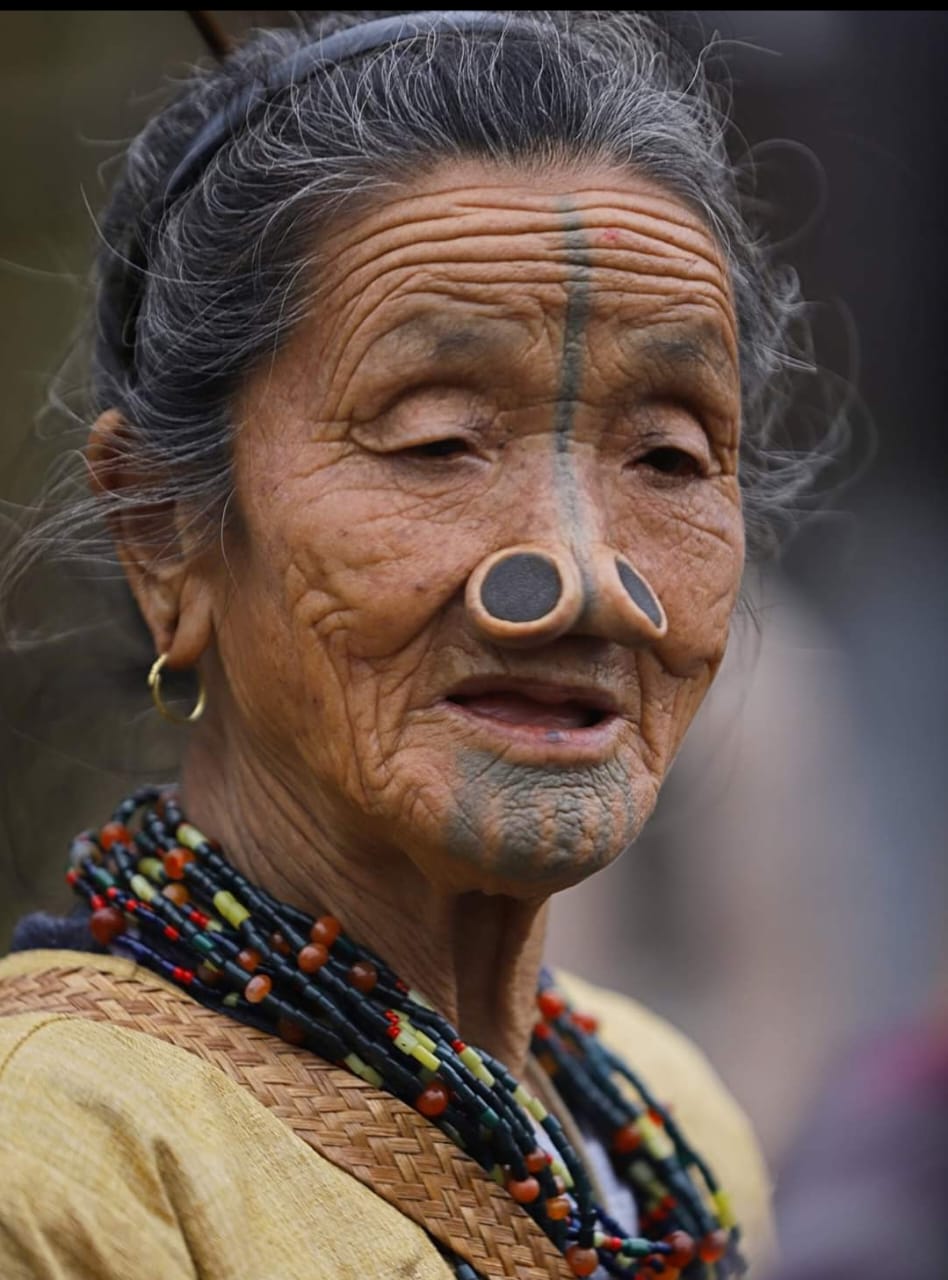
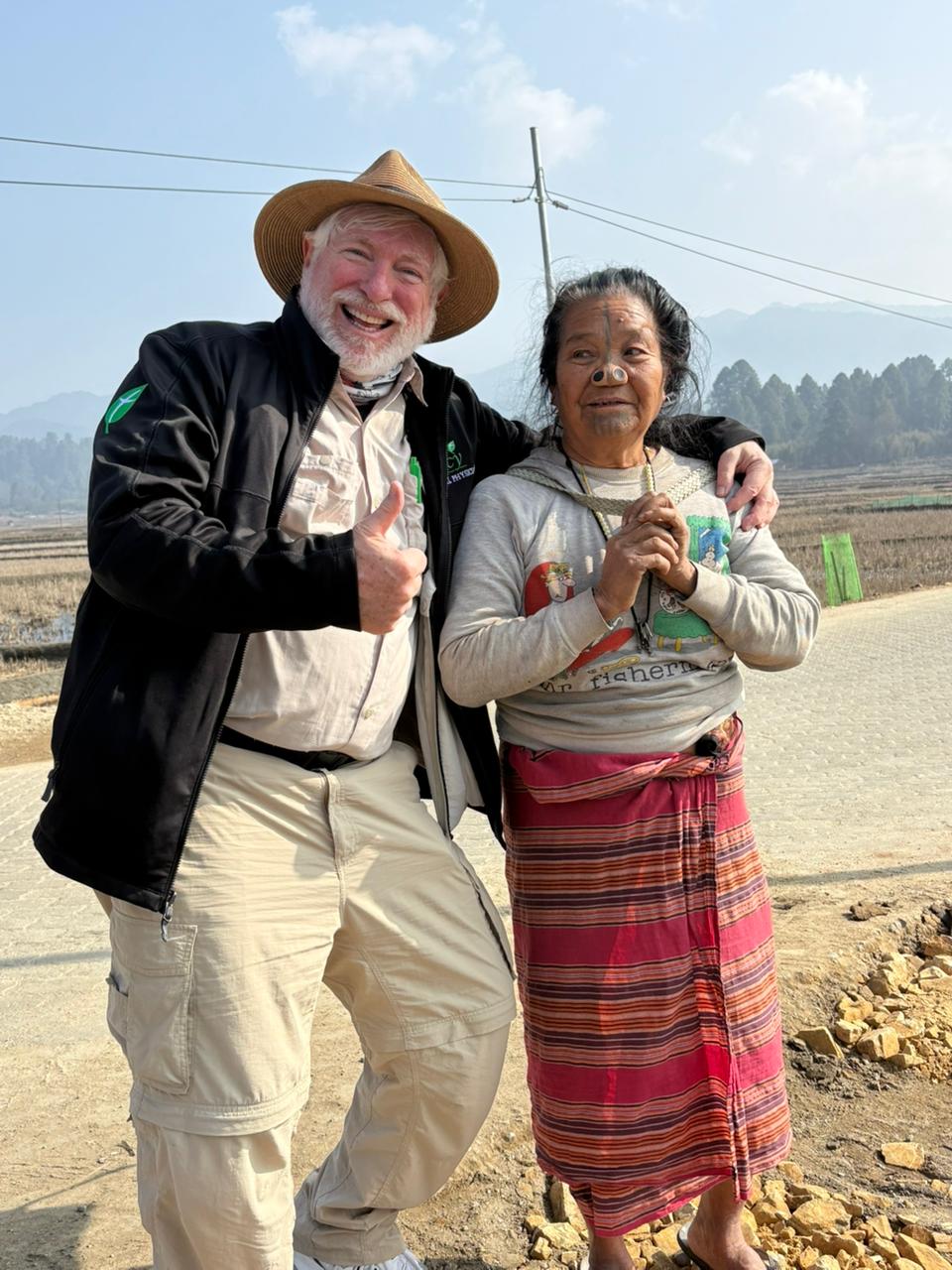
He spent his days in the Apatani villages of Hong, Hari, Bulla and Dutta: bamboo groves at the village edge, granaries set apart from the houses against fire, and elders whose faces still carry the traditional tattoos of an earlier generation. Ziro was, by his own account, the highlight of the expedition.
Hill Miri and Tagin: Rang to Daporijo
Leaving Ziro eastward, the road drops through the Hill Miri country around Rang before following the Subansiri to Daporijo, the town of the Tagin.
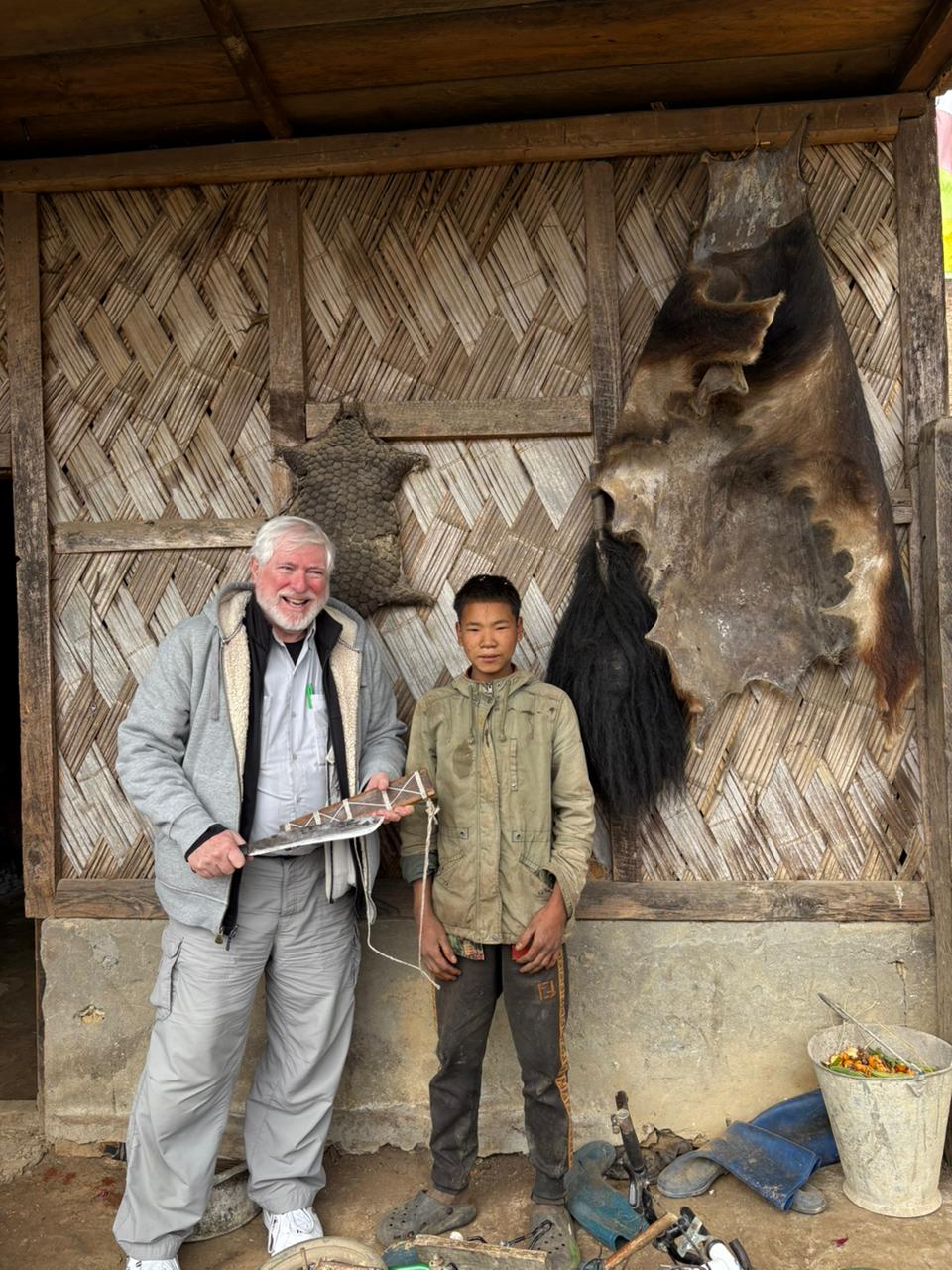
Here the houses impressed him most: long, generous structures raised on tall timber stilts, walled in bamboo, roofed in thatch and split cane — buildings shaped precisely by climate, material and skill, and rebuilt communally when they age.
Galo Villages: Basar and Aalo
From Daporijo the route continued to Basar and then Aalo, in the heart of Galo country, with days spent in Pobdi, Paya and the villages along the Siyom.
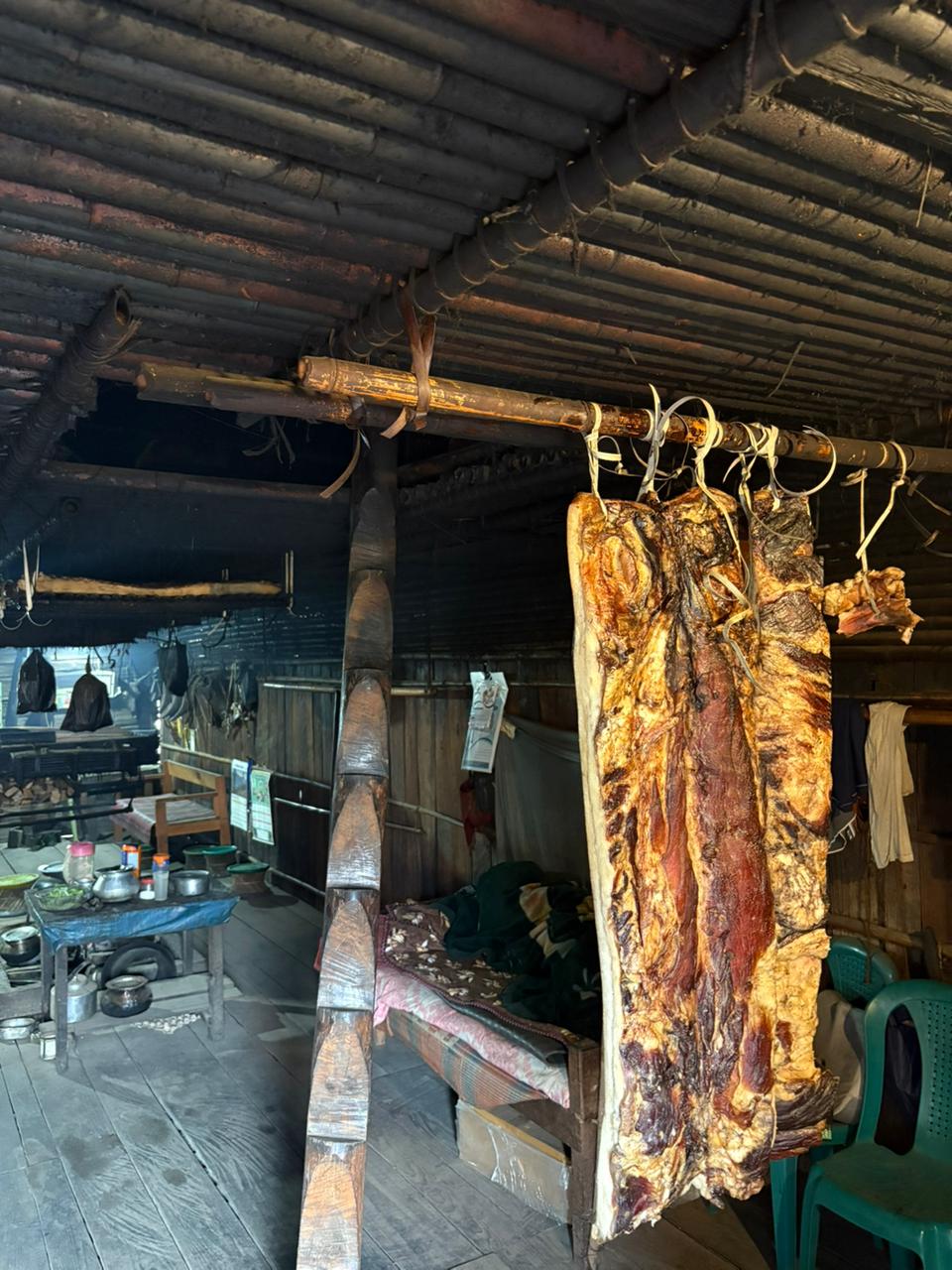
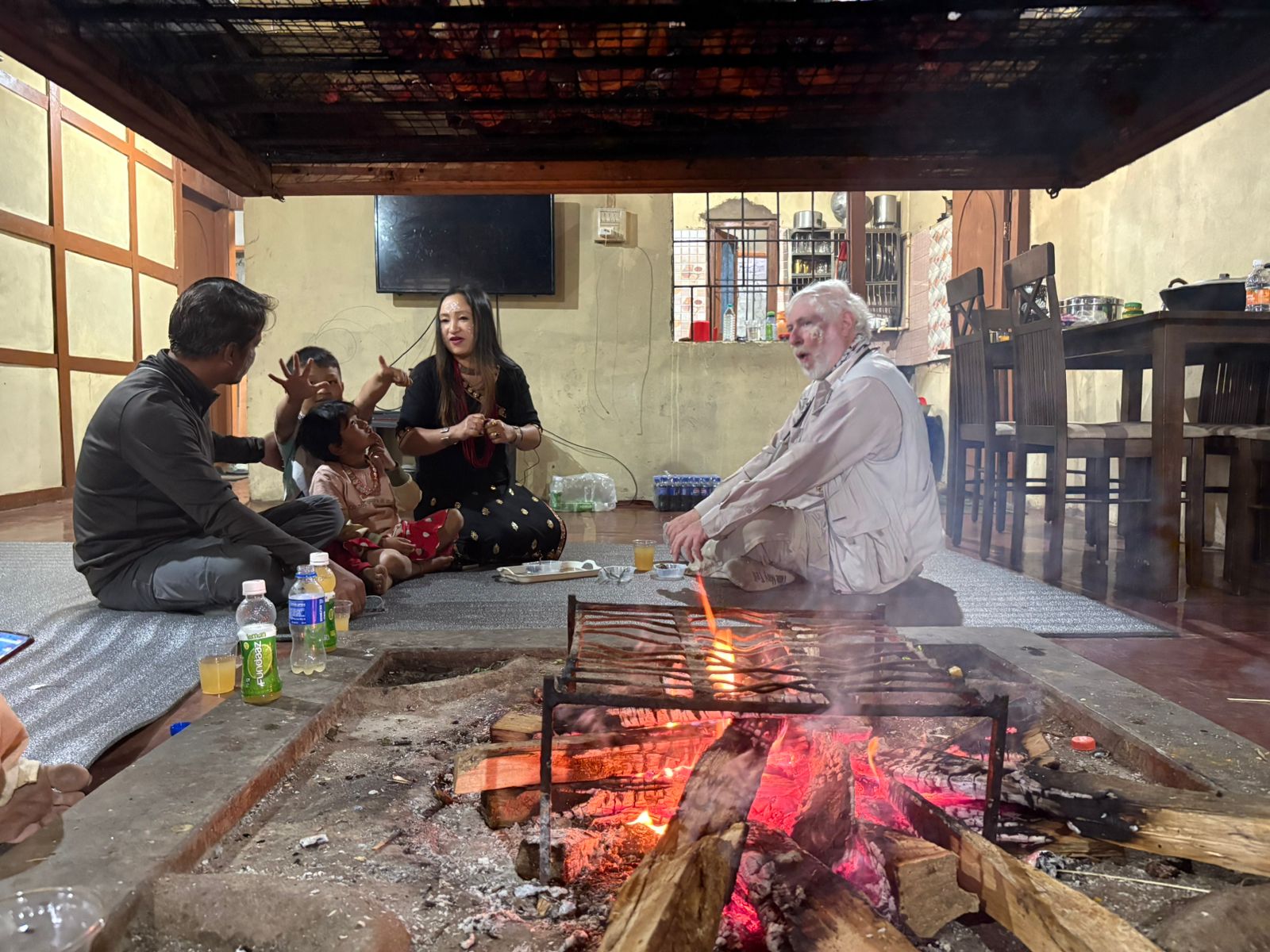
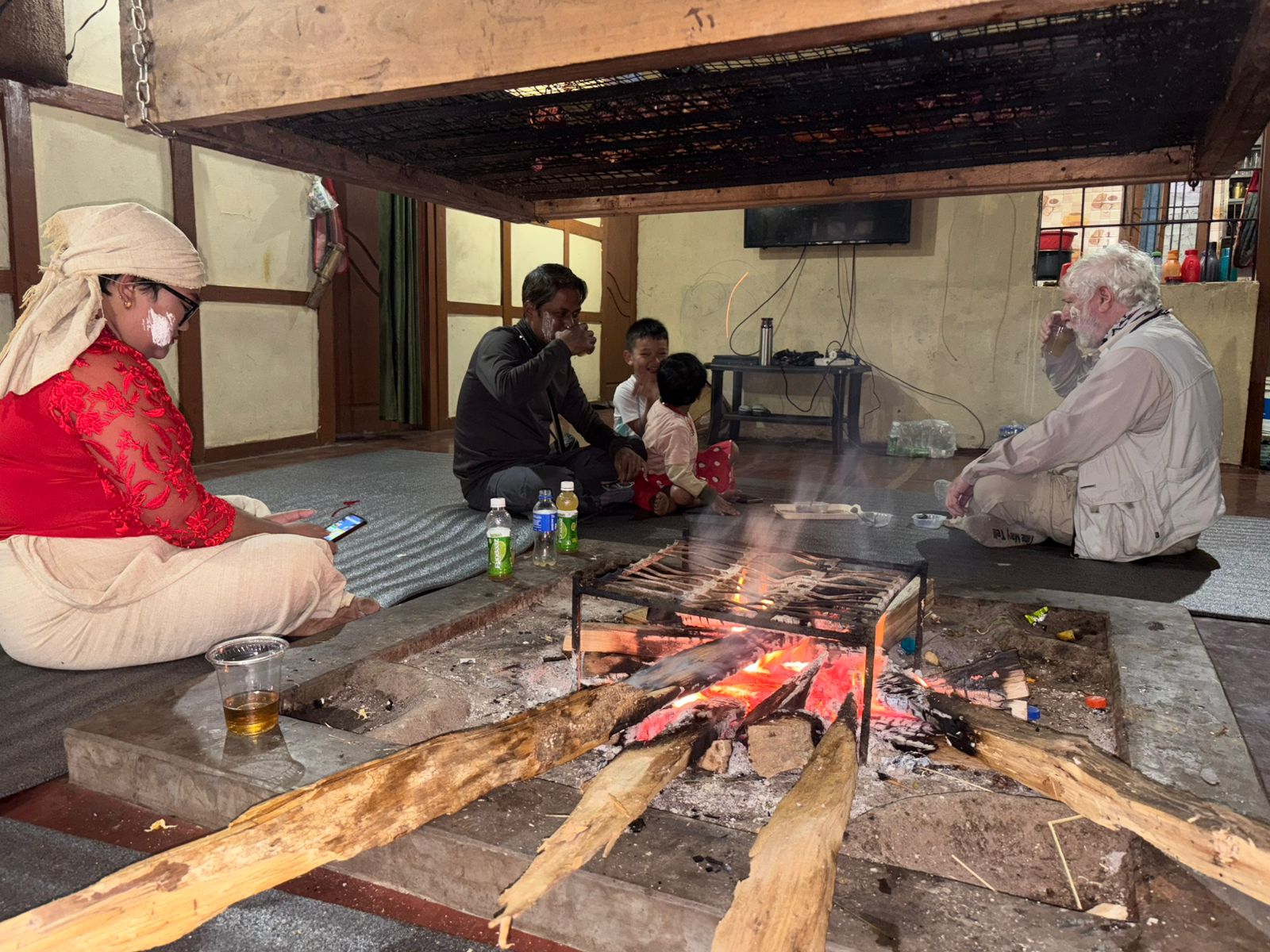
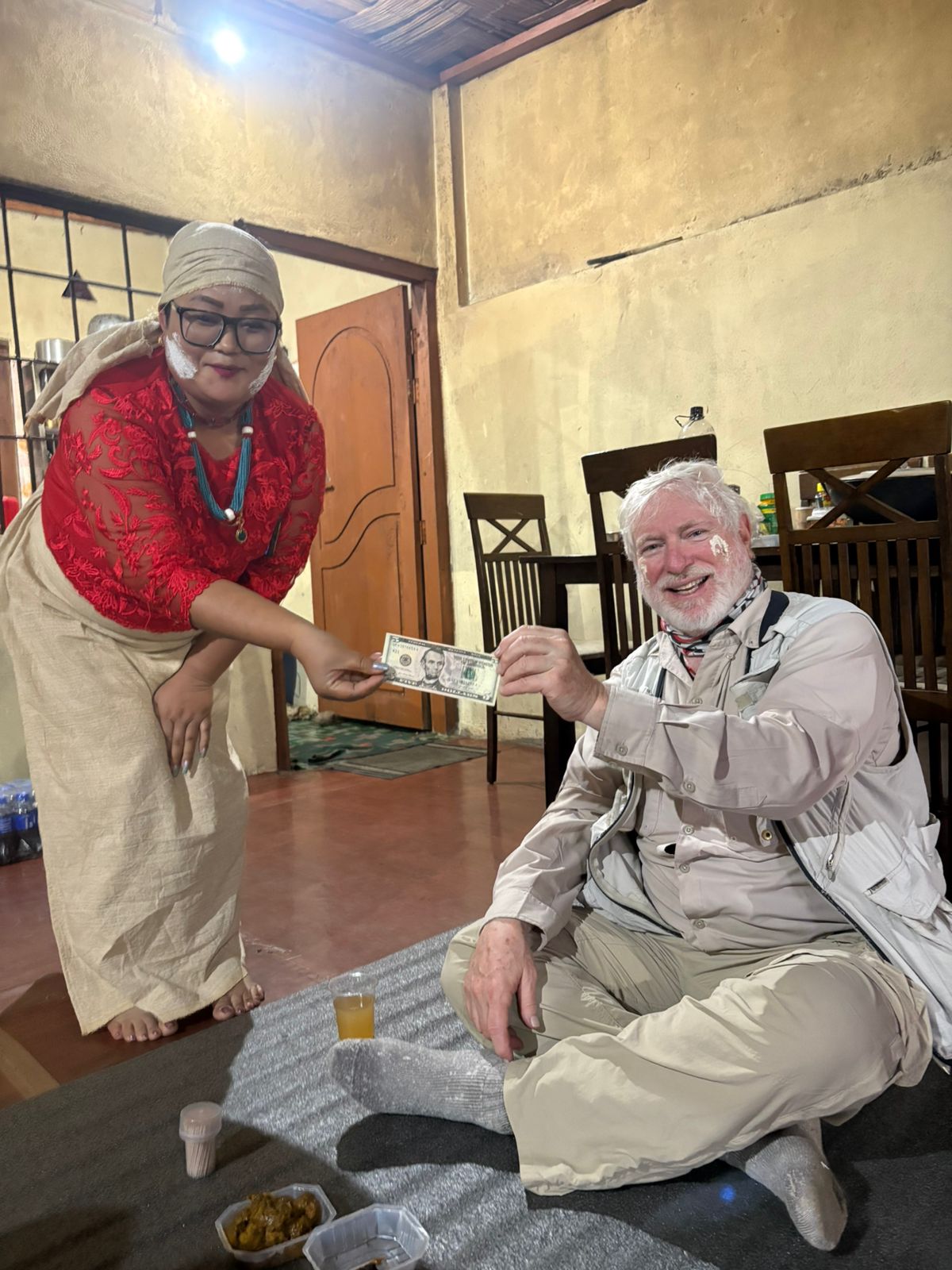
The Galo stilt house is a masterwork of bamboo joinery, with an open verandah at the front and the hearth burning at the centre of the long room. Evenings passed there — rice beer, smoked meat curing in the roof smoke, and conversation that ran late.
Adi Country: The Siang at Pasighat
Below Aalo the Siyom joins the Siang, and the river that becomes the Brahmaputra widens as it leaves the hills. Following it down to Pasighat brought George into Adi country and to the oldest town in Arunachal Pradesh.
A day here took in Adi villages, their cane suspension bridges and communal halls, and the grasslands and river islands of the Daying Ering Memorial Wildlife Sanctuary on the Siang's floodplain.
Down to Tea Country
From Pasighat the last drive crossed into Upper Assam and the tea districts around Dibrugarh.
This is tea country — estates running to the horizon. He walked a garden, followed the leaf from plucking through to processing, and saw how completely the industry has shaped the landscape and society of the upper valley.
Friendly Faces and Living History
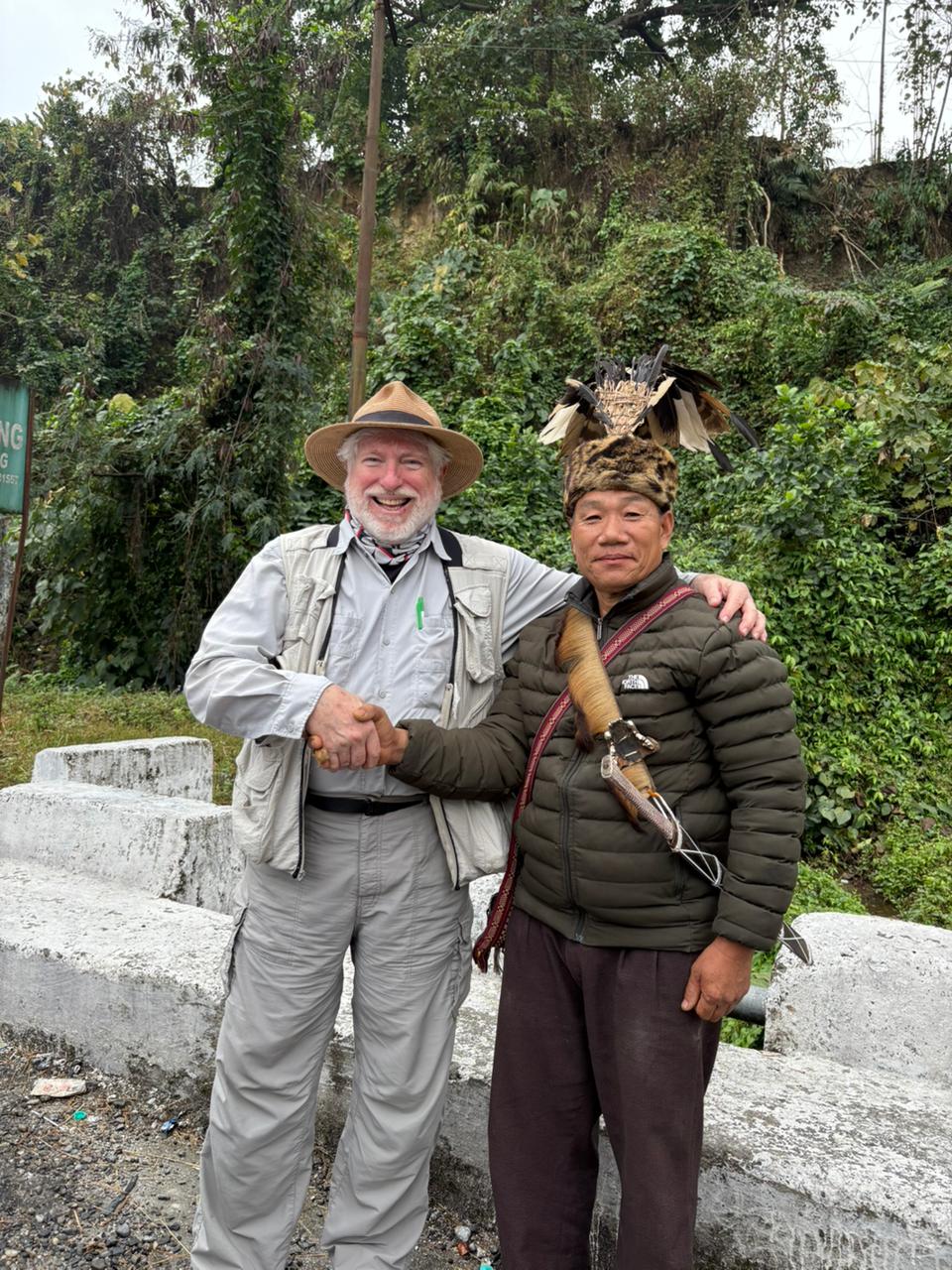
Throughout, George returned to the same observation: the warmth of the people. He found communities welcoming, curious and confident in their traditions despite considerable modern change.
Kanak, his guide, carried the journey — supplying context, history and story at each stop, and turning a route into an understanding of the region.
A Journey to Remember
At the end of fourteen days, what remained was not a list of places but a sense of continuity: monasteries still teaching, houses still built the old way, fields still farmed by methods older than record.
“My trip through Arunachal Pradesh was truly great. The beautiful places, different cultures, and friendly local people made it an amazing experience. I'm thankful to Kanak for showing me around and sharing his knowledge, which helped me understand the area's rich history.”
Route
- 01Day 1 — Guwahati → Bhalukpong (gateway to Arunachal Pradesh)
- 02Day 2 — Bhalukpong → Tippi → Dirang (orchid centre, Monpa heritage)
- 03Day 3 — Dirang → Sela Pass → Tawang (the high Himalaya)
- 04Day 4 — Tawang (monastery, Urgelling, Ani Gompa)
- 05Day 5 — Tawang → Thembang → Bomdila (walled Monpa village)
- 06Day 6 — Bomdila → Itanagar (descent to the foothills)
- 07Day 7 — Itanagar → Yazali → Ziro (Nyishi to Apatani country)
- 08Day 8 — Ziro (Hong, Hari, Bulla and Dutta villages)
- 09Day 9 — Ziro → Rang → Daporijo (Hill Miri to Tagin)
- 10Day 10 — Daporijo → Basar → Aalo (Tagin to Galo)
- 11Day 11 — Aalo (Pobdi, Paya and other Galo villages)
- 12Day 12 — Aalo → Siyom–Siang confluence → Pasighat (Galo to Adi)
- 13Day 13 — Pasighat (Adi villages, Daying Ering Memorial Wildlife Sanctuary)
- 14Day 14 — Pasighat → Dibrugarh (Upper Assam tea country, departure)
Travel Tips
- —Foreign nationals travelling to applicable protected areas of Arunachal Pradesh may require a Protected Area Permit (PAP). Living Roots assists confirmed package guests with documentation and coordinates the permit process through applicable authorised channels, subject to eligibility and government approval.
- —Roads in central Arunachal are slow — plan long driving days and treat the drive itself as part of the experience.
- —Carry layers: Tawang and Sela Pass are genuinely cold even when the Assam plains are warm.
- —Always ask before photographing people, homes or ritual objects in tribal villages.
- —Cash and offline maps matter — mobile data is unreliable beyond the district towns.
Frequently Asked Questions
How long should a tribal and monastic tour of Arunachal Pradesh be?
Fourteen days, as on this expedition, allows western Arunachal (Dirang, Tawang, Thembang, Bomdila) and the central belt east of Itanagar (Ziro, Daporijo, Aalo, Pasighat) to be combined without rushing. Shorter journeys usually cover one half or the other.
Do foreign travellers need a permit for Arunachal Pradesh?
Yes. Foreign nationals may require a Protected Area Permit and Indian nationals an Inner Line Permit. Living Roots assists confirmed package guests with documentation and coordinates the applicable process through authorised channels. Approval cannot be guaranteed in advance.
What is the best time for this route?
October to April is generally most reliable for the high passes and village travel, though conditions change year to year. We confirm timing locally before finalising an itinerary.
Which tribes are met on this journey?
Monpa in the west around Dirang, Tawang and Thembang; then, moving east, Nyishi near Yazali, Apatani in Ziro Valley, Hill Miri around Rang, Tagin at Daporijo, Galo at Basar and Aalo, and Adi at Pasighat, with Assamese tea-garden communities at the close.