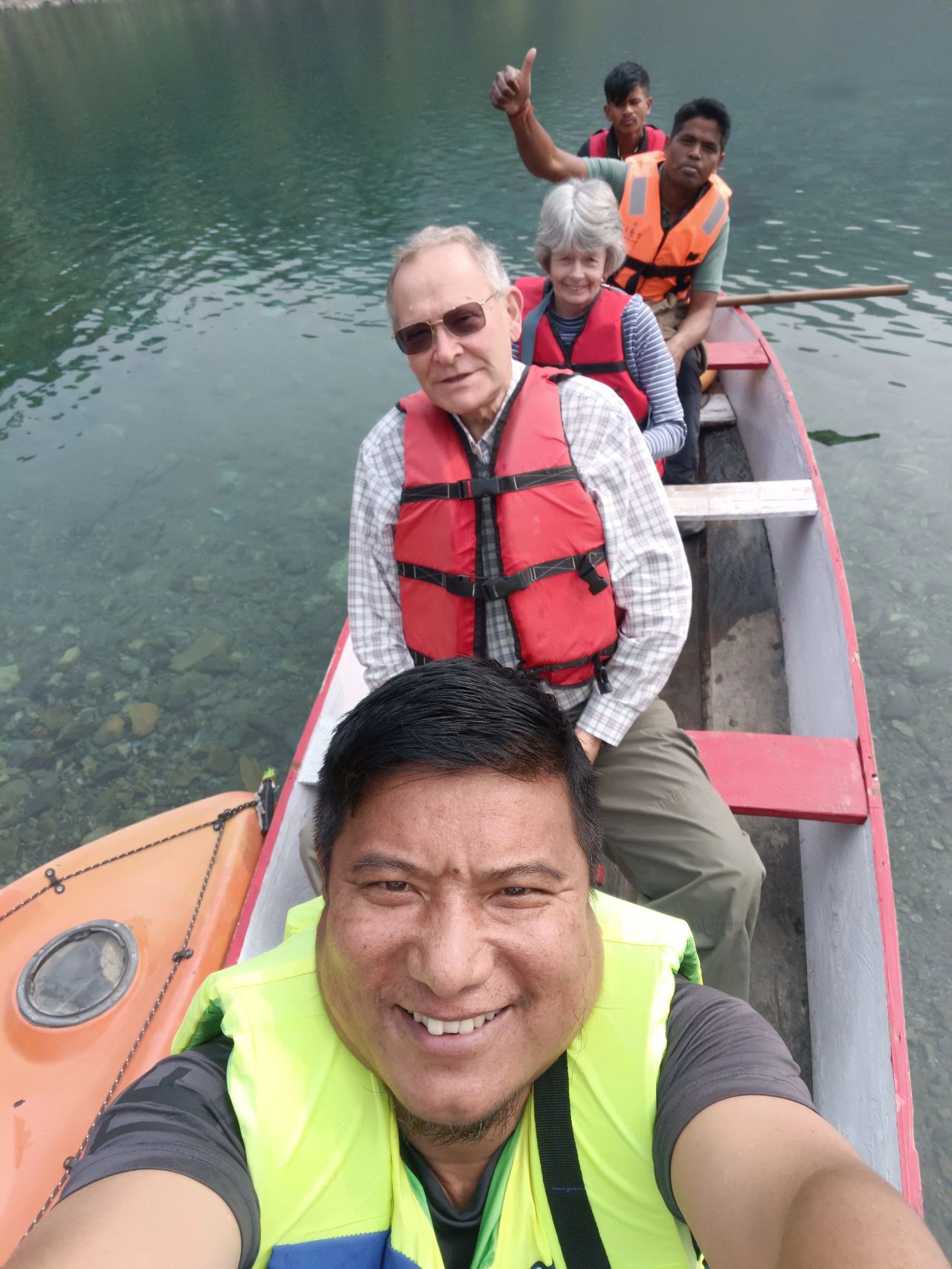
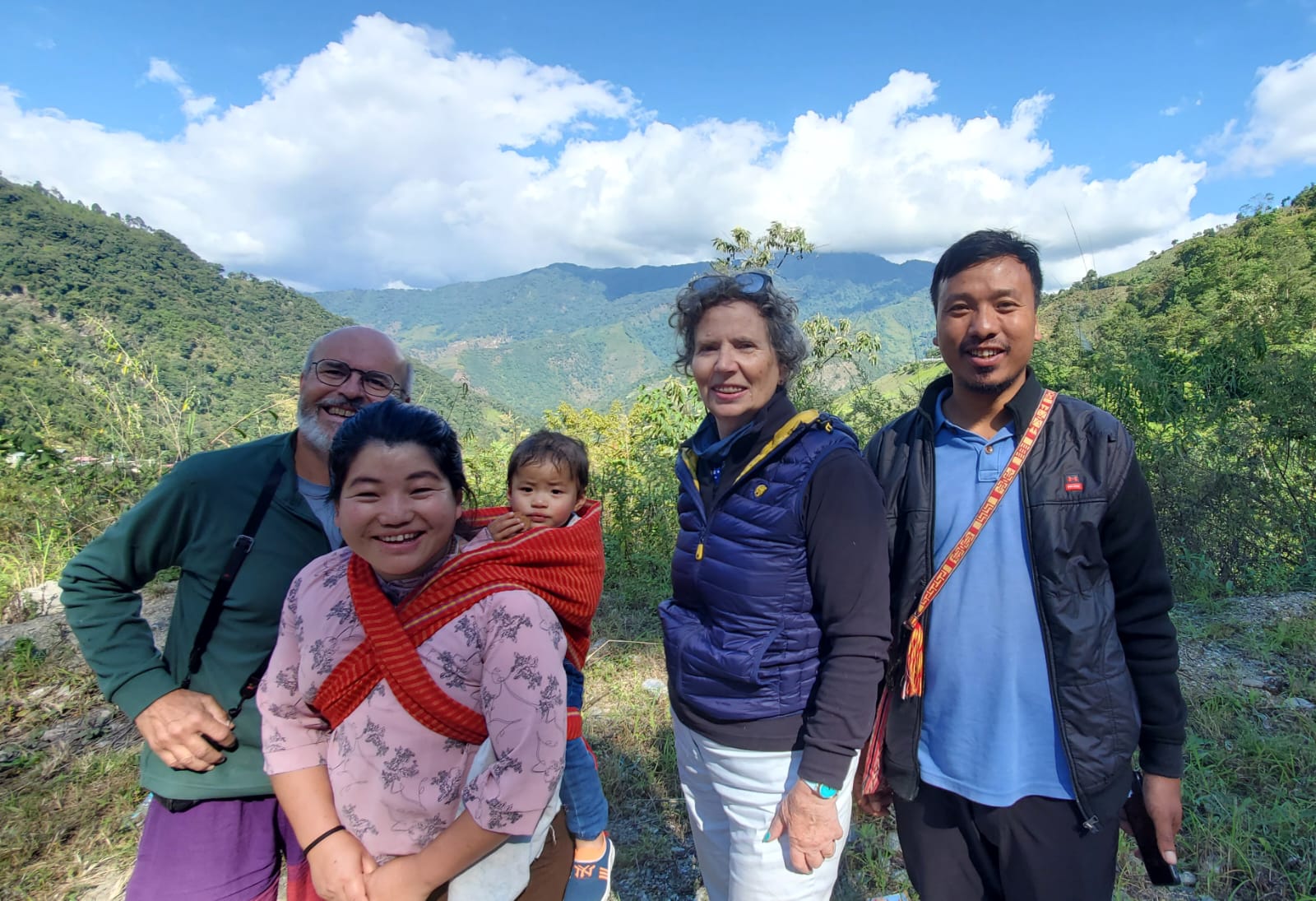
Robert and Odile travelled from France on a nineteen-day journey across Northeast India — through the mountains of Arunachal Pradesh, the river country of Assam, and finally into Nagaland, where the Hornbill Festival at Kisama became the defining chapter of the trip. Guide Pradeep introduced them to the tribes; driver Basumutary carried them safely along the long, quiet roads.
Journey Overview
Nineteen days, three states, and a deliberate arc: high Buddhist Arunachal first, then the Brahmaputra and its island monasteries, and finally the Naga hills at festival time.
The route climbed from Guwahati through West Kameng to Tawang and the Bhutan border valleys, dropped to Itanagar and the Apatani plateau at Ziro, crossed the river to Majuli, ran east to Kaziranga, and turned south-east into Nagaland for Kisama and Khonoma before flying out of Dimapur.
- Duration
- 19 Days
- Guide
- Pradeep
- Destinations visited
- Guwahati · Shergaon · Dirang · Sela Pass · Tawang · Zemithang · Bomdila · Itanagar · Ziro Valley · Majuli · Kaziranga National Park · Kohima · Kisama · Khonoma · Dimapur
Out of Guwahati and Into the Hills
The journey opened in Guwahati, the gateway city on the Brahmaputra, and turned north the same day. By the second evening the road had climbed into West Kameng and the first cold night at Shergaon — a quiet Sherdukpen village of timber houses and apple ground, far enough from the plains that the air changes completely.
From there the drive to Dirang ran through orchards and small monastery villages, with the Sela range standing over the valley. Pradeep set the pattern early: stop often, talk to people, never rush a village.
Over Sela Pass to Tawang
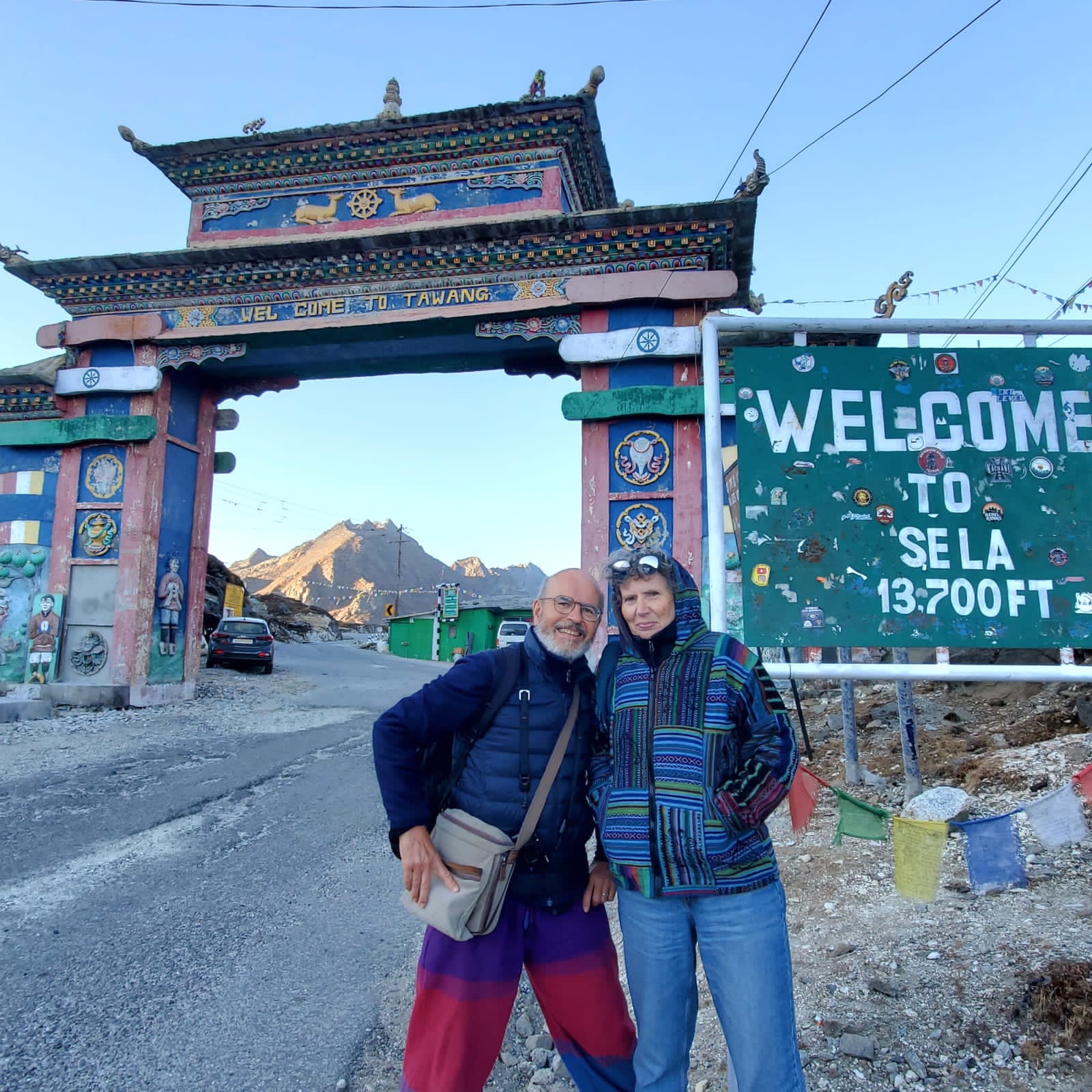
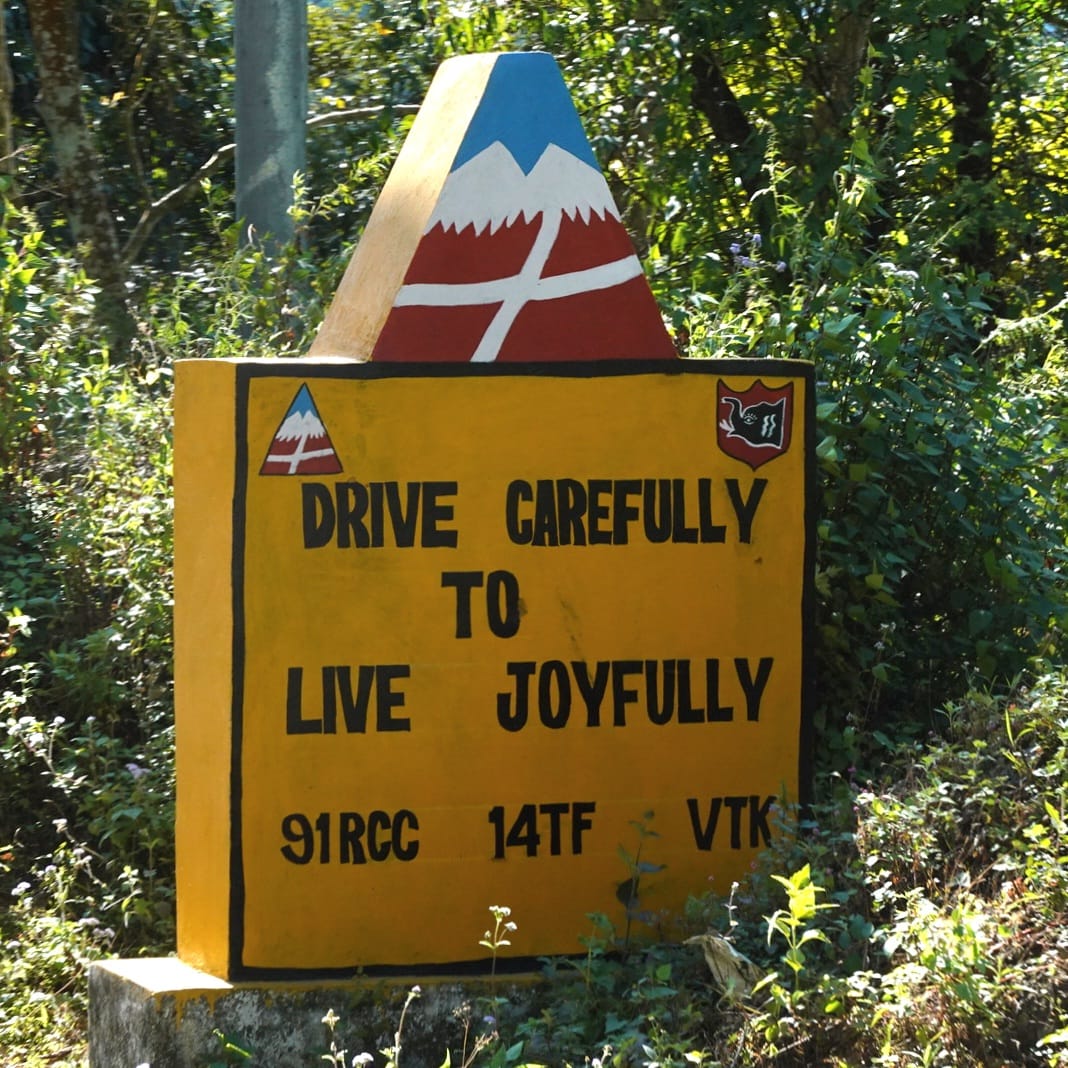
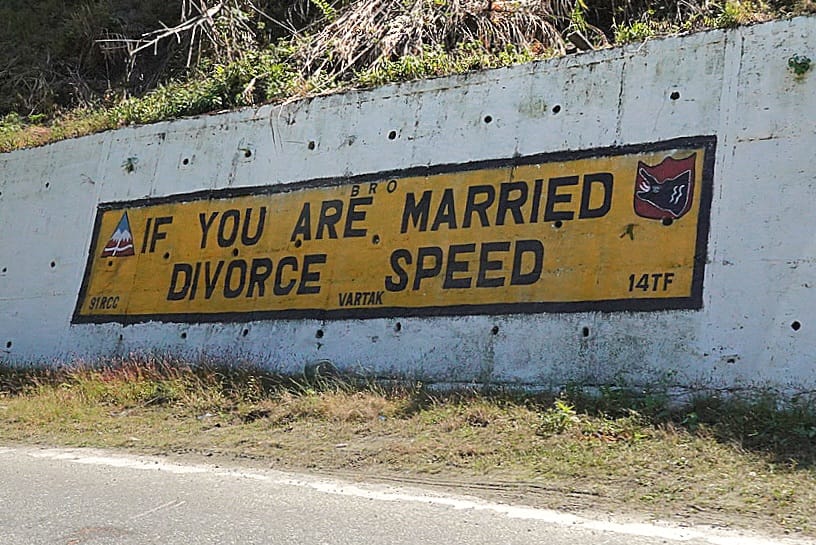
Sela Pass at 4,170 metres is the threshold of Monpa country — treeless, cold, strung with prayer flags, and marked by the painted gate that welcomes travellers to Tawang. Robert and Odile crossed it in clear morning light and descended into the great Buddhist town near the Bhutan border.
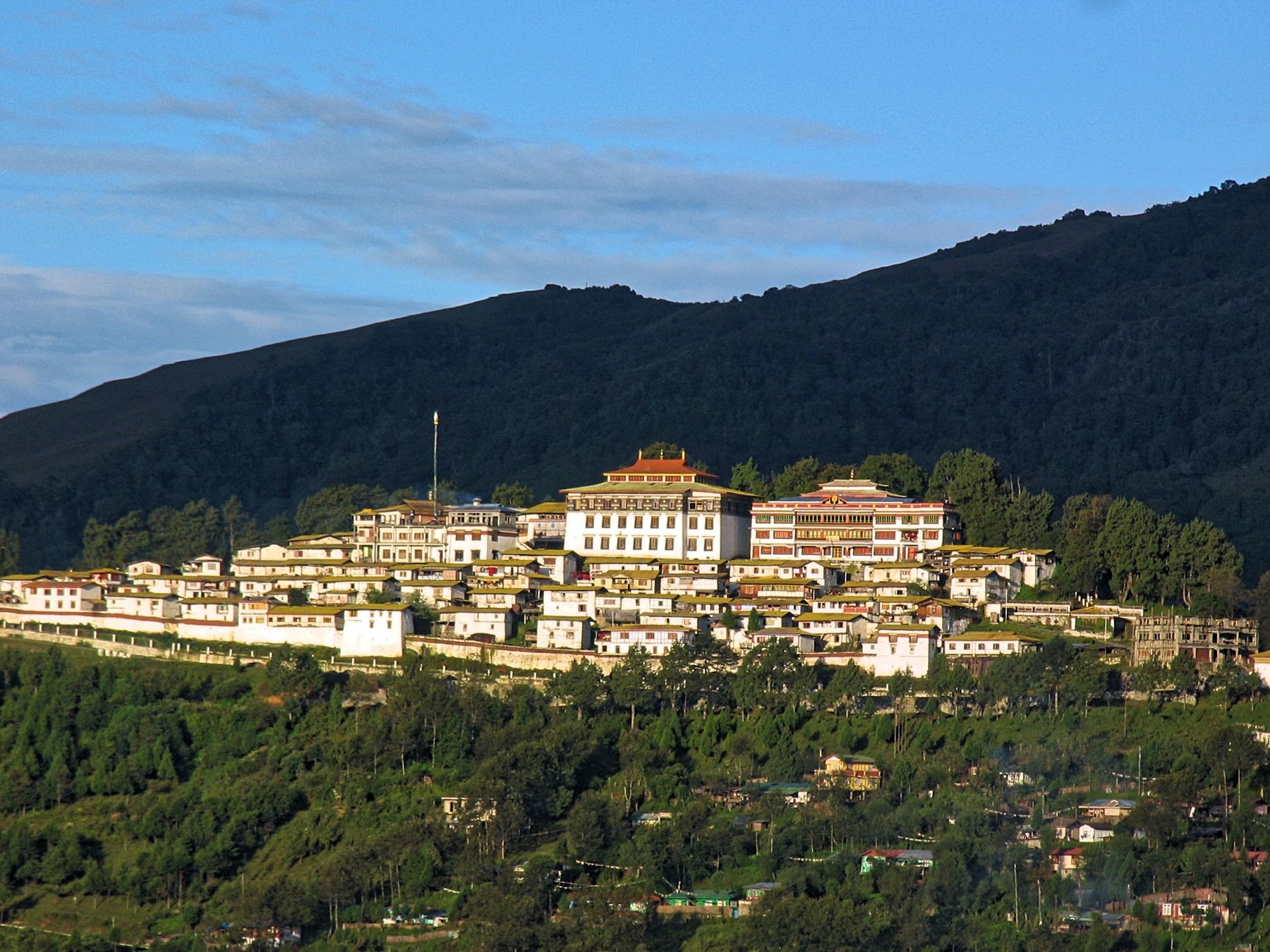
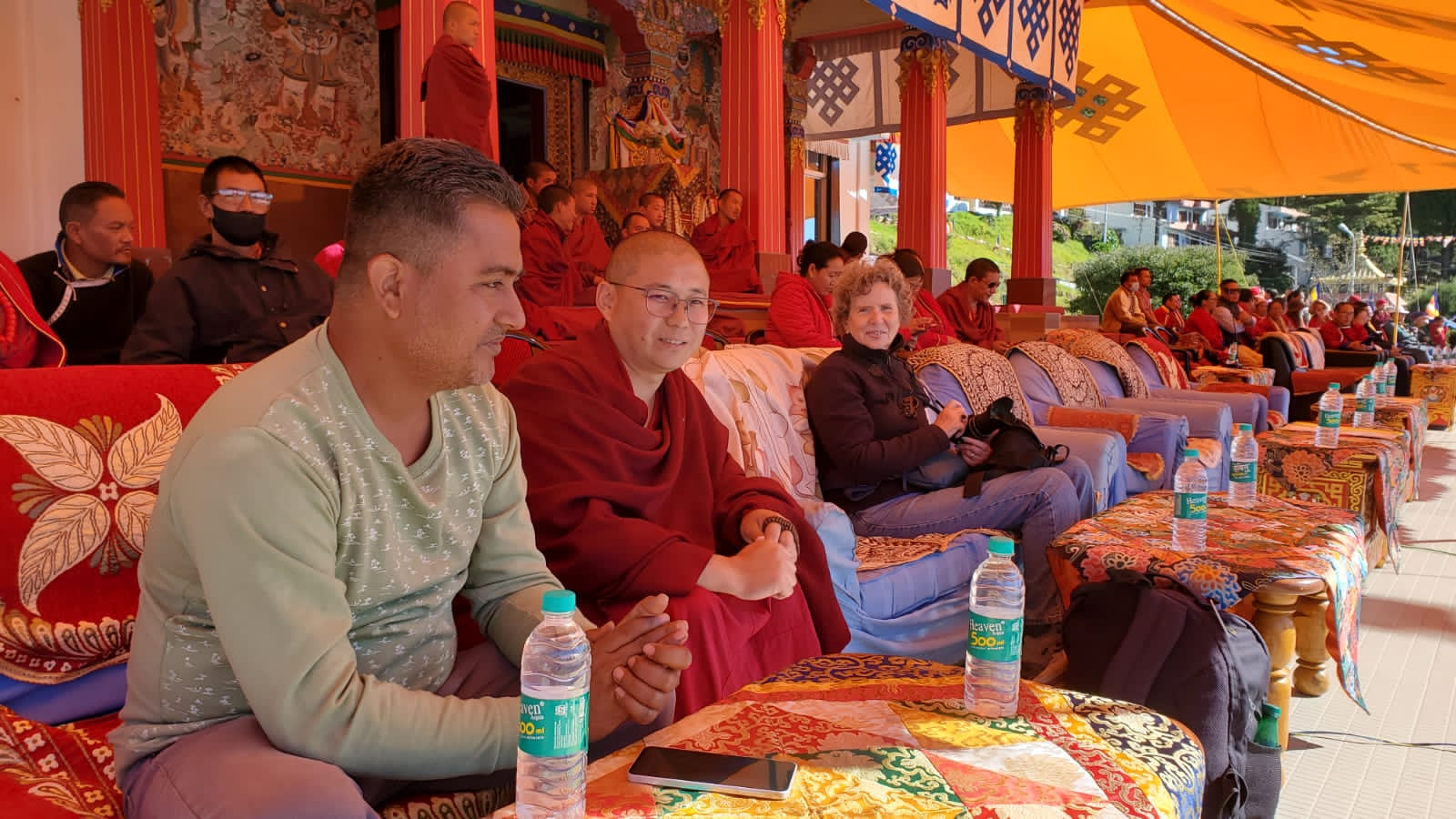
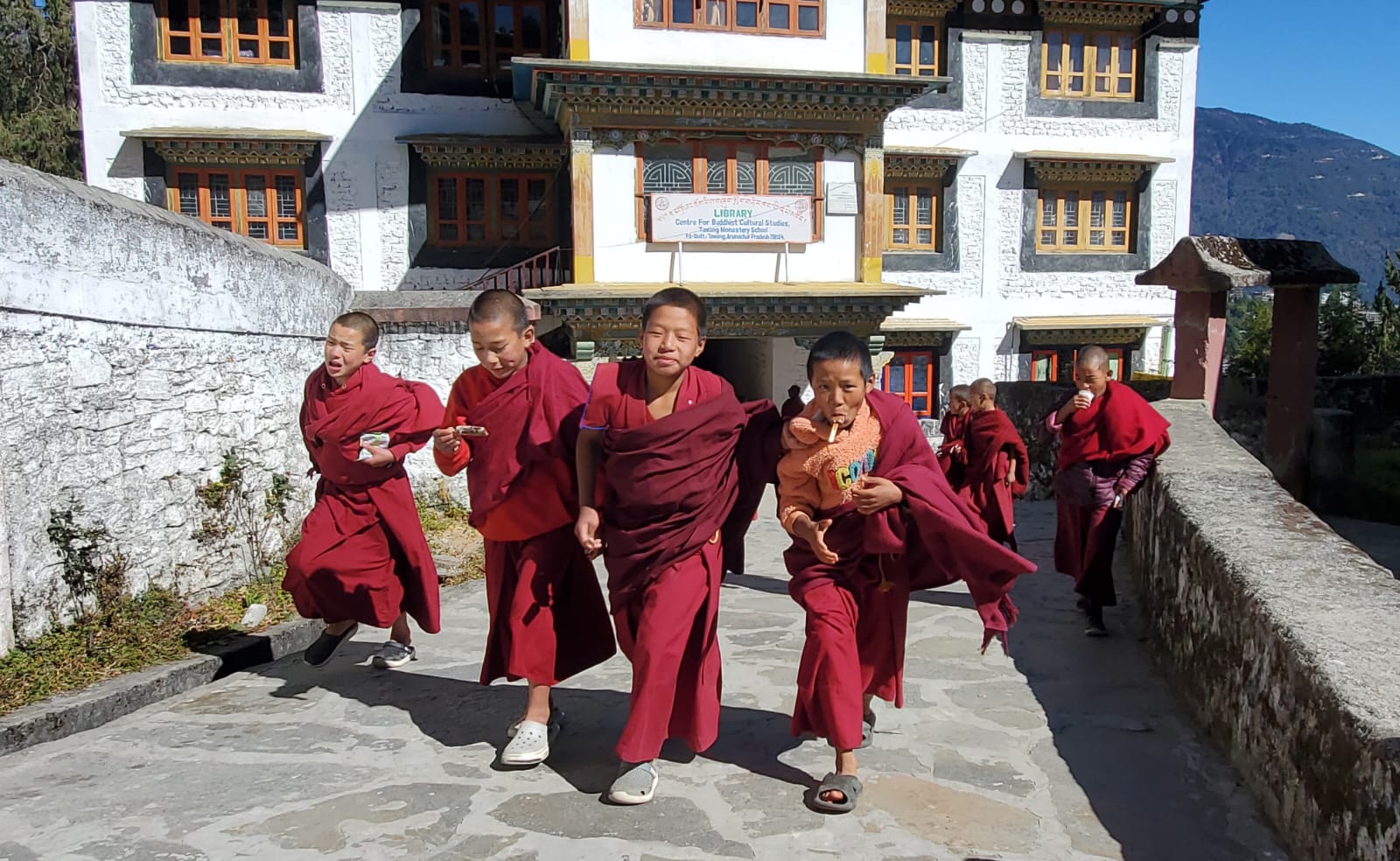
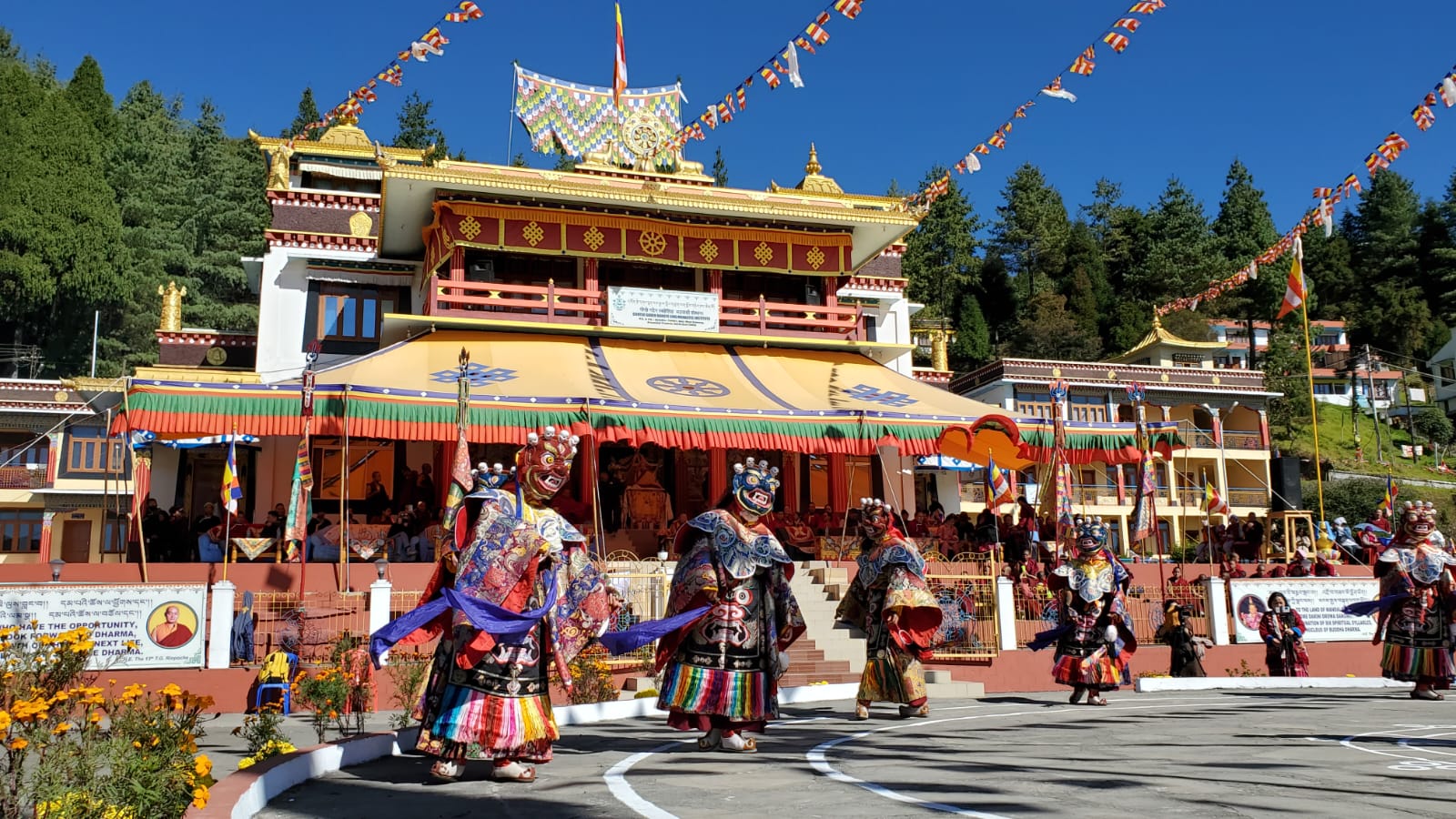
Tawang Monastery, the largest in India, held the following day: the giant gilded Buddha in the assembly hall, the school where novices spill out of class in maroon robes, and the old lanes of the town below. They also sat through a masked cham dance in the monastery courtyard — brocade costumes, wrathful masks, and half the town on the benches beside them.
Zemithang: The Quiet Border Valley
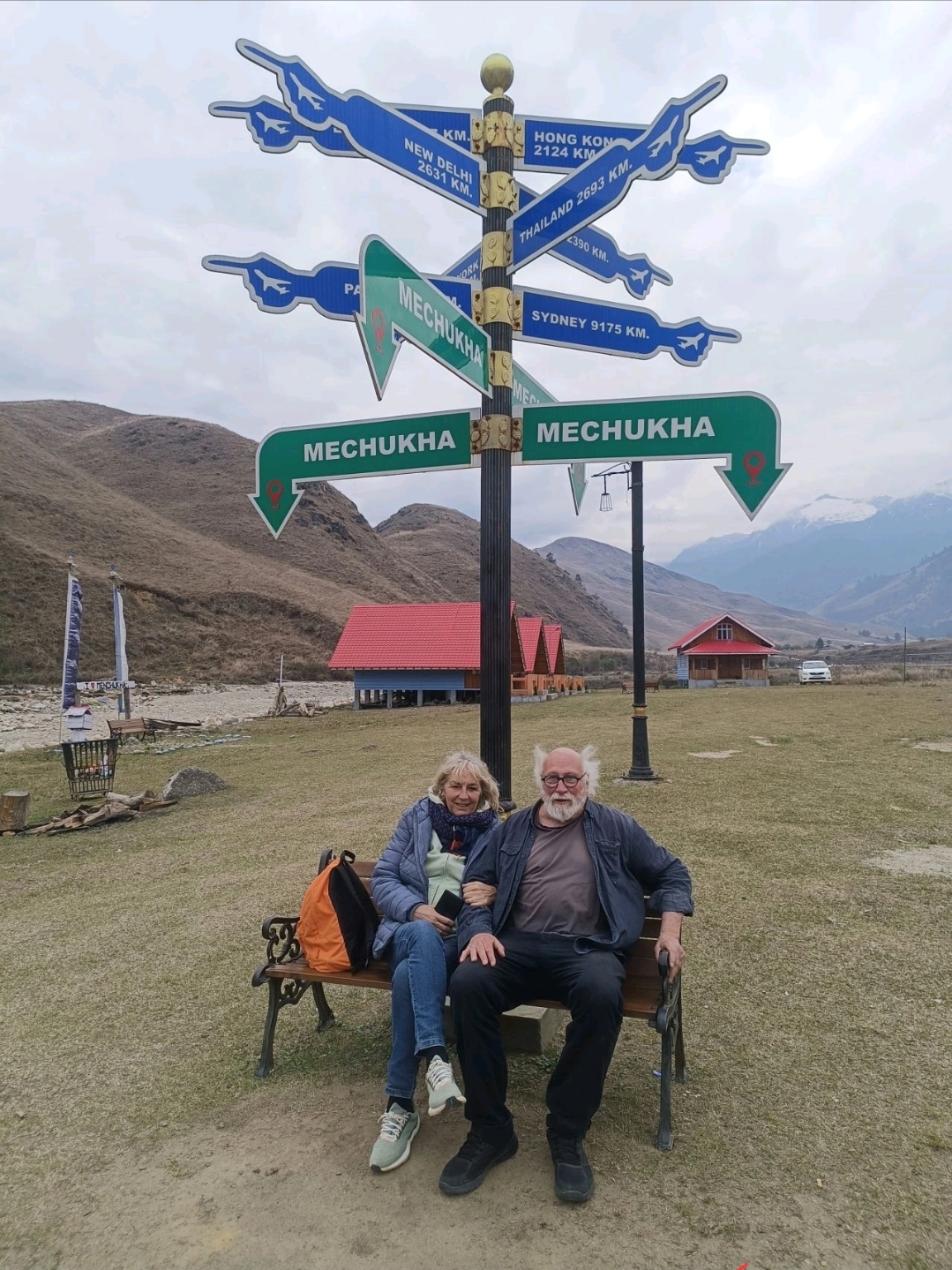
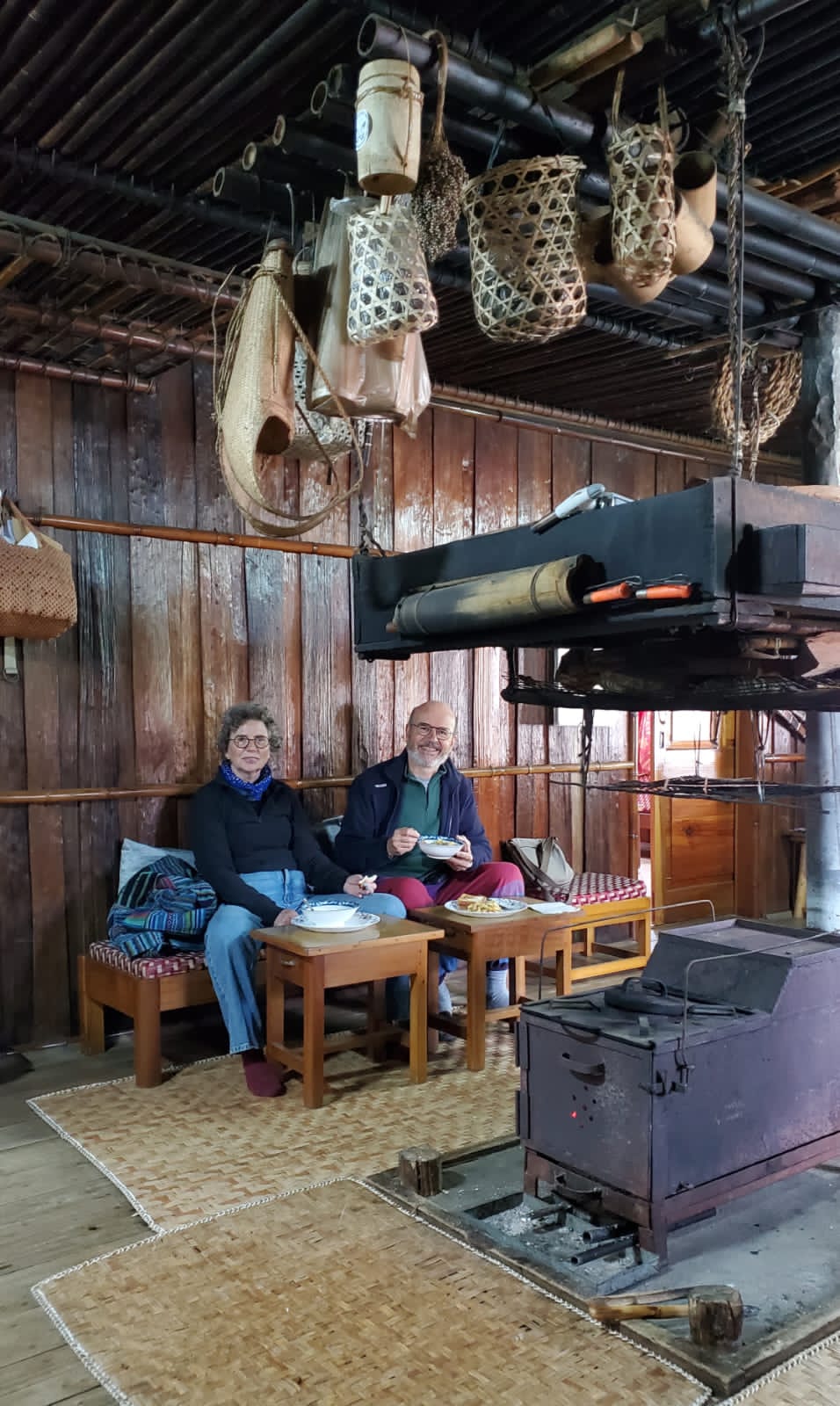
A day's excursion north from Tawang took them to Zemithang, a border valley of scattered Monpa villages along the Nyamjang Chu. There is little to see in the guidebook sense and a great deal to notice: prayer flags over the river, an old stupa, black-necked cranes wintering on the flats in some years, and almost no traffic.
It was the quietest day of the nineteen, and the one they mentioned most afterwards.
Down Through Bomdila to the Apatani Plateau
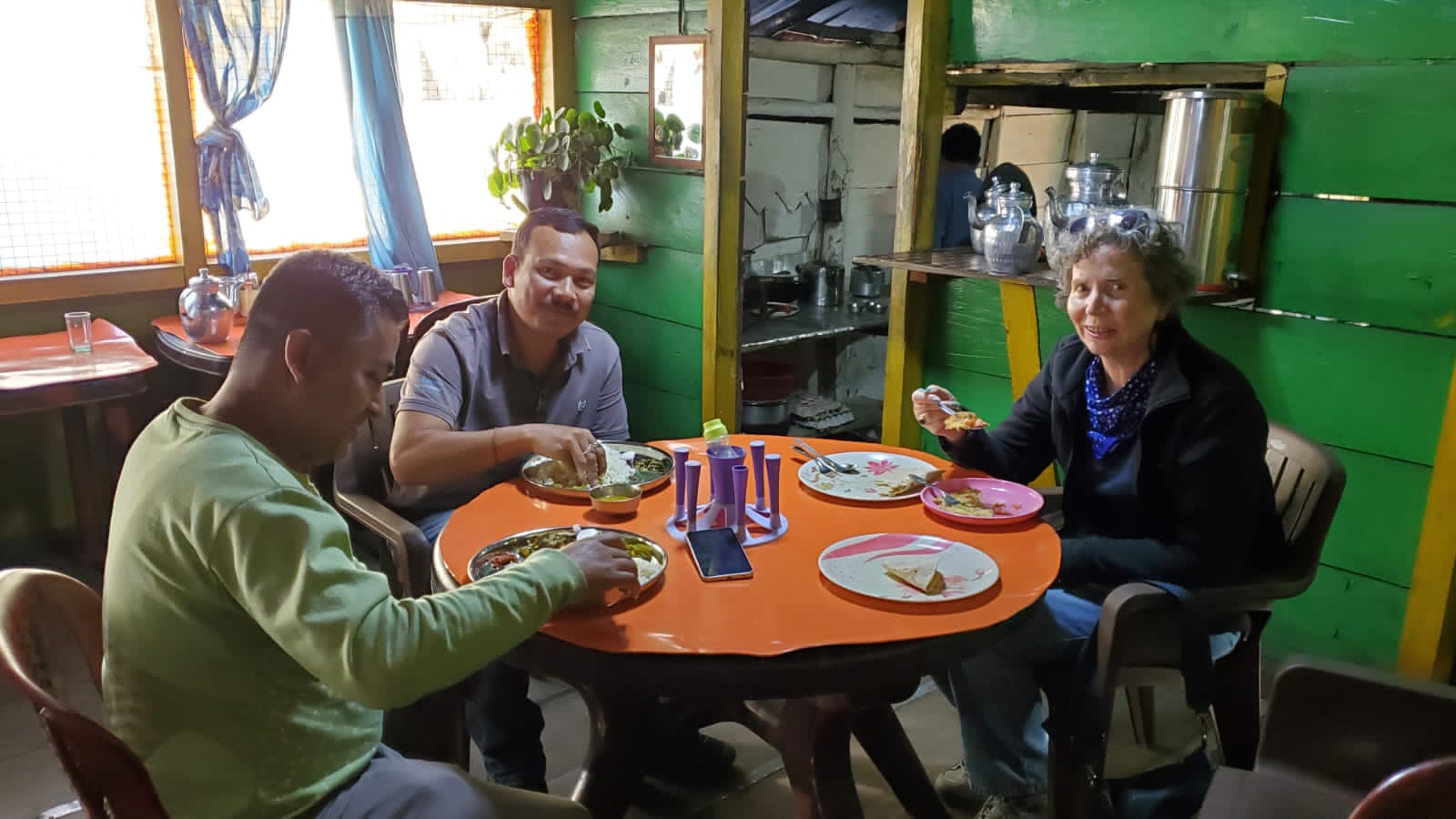
Back over Sela to Bomdila, on its pine ridge, then a long descent to Itanagar and the foothills. East of the capital the cultural map changes: Buddhist valleys give way to the clan-ordered world of the Nyishi and, higher up, the Apatani.
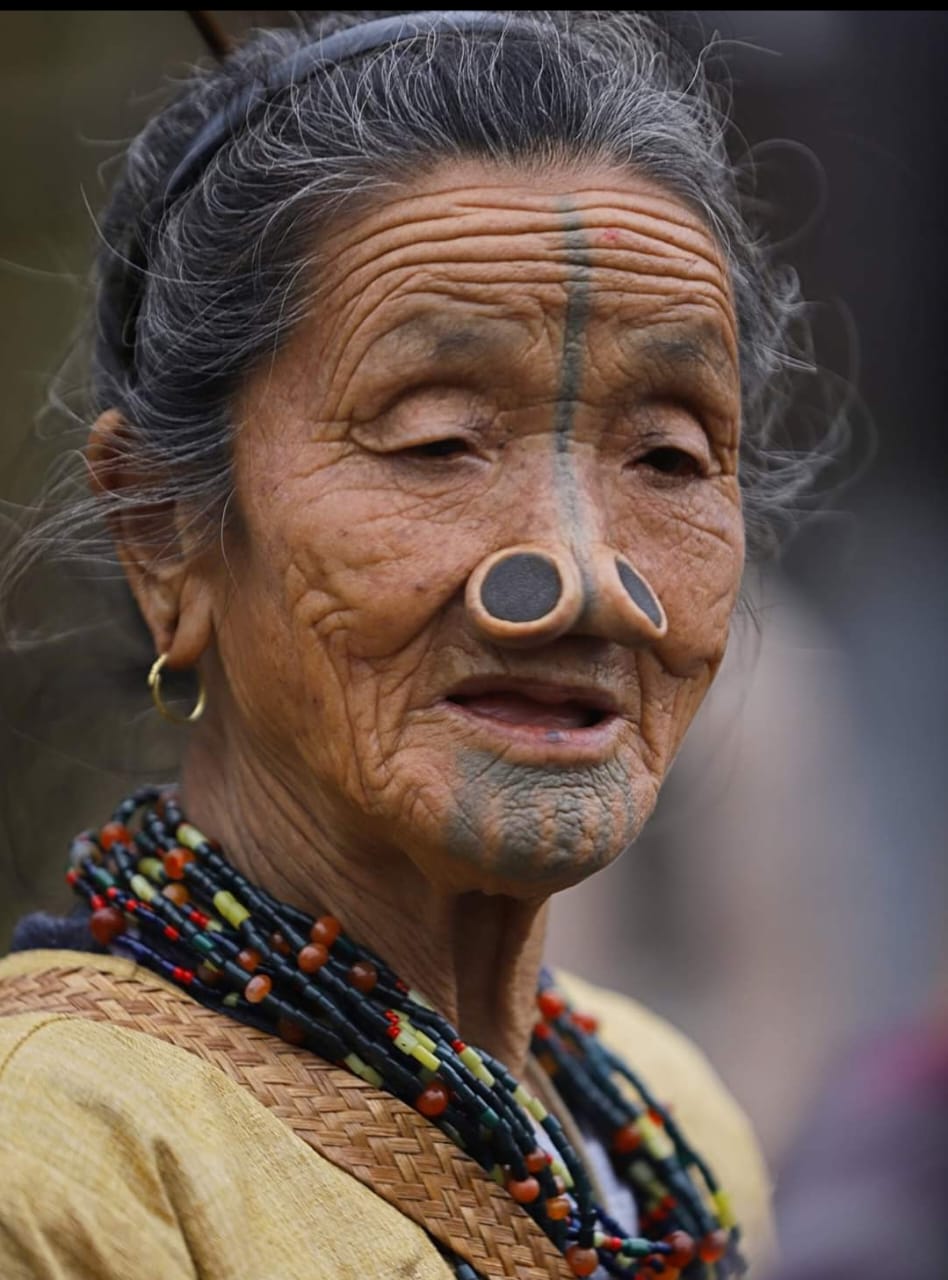
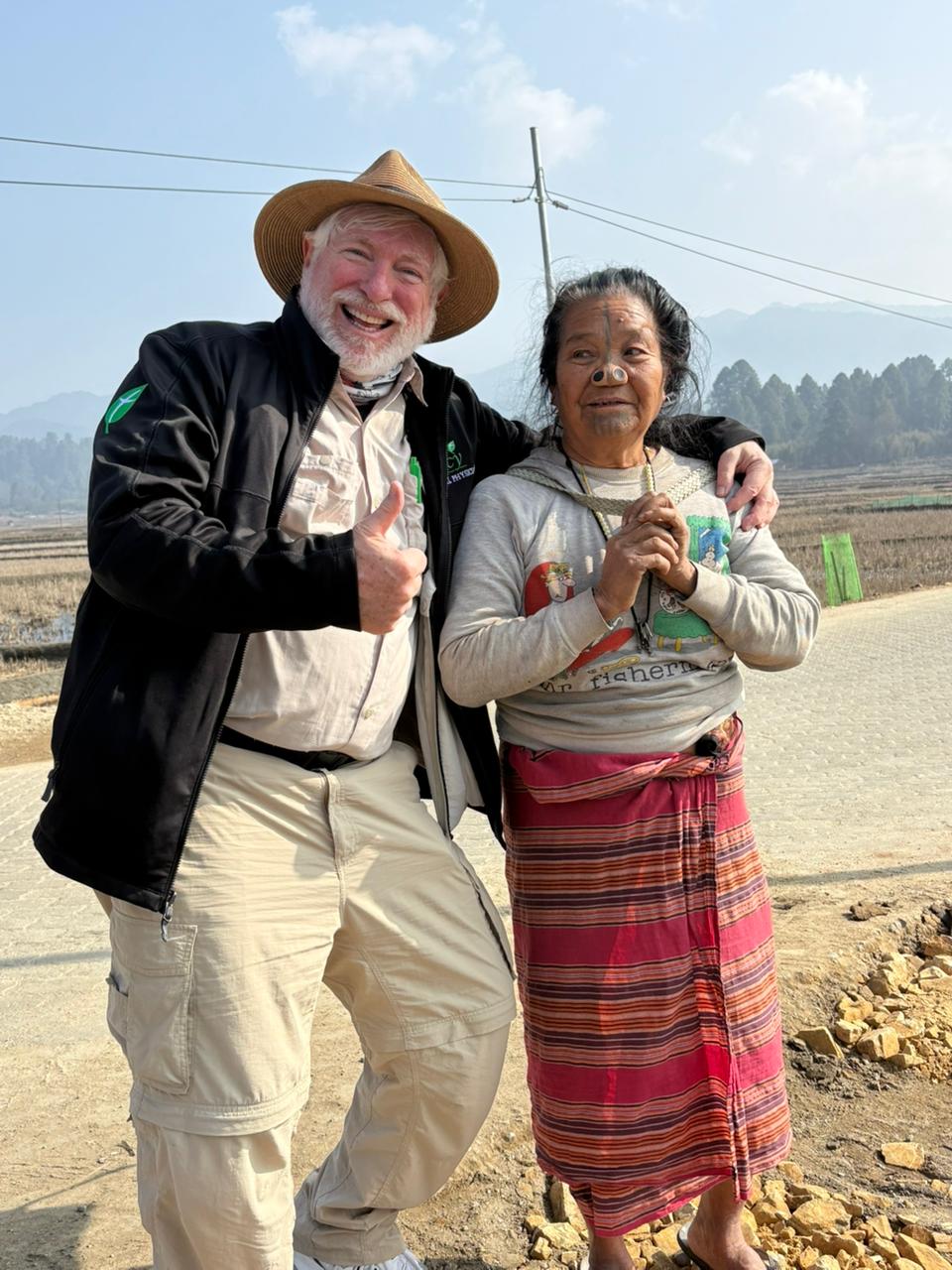
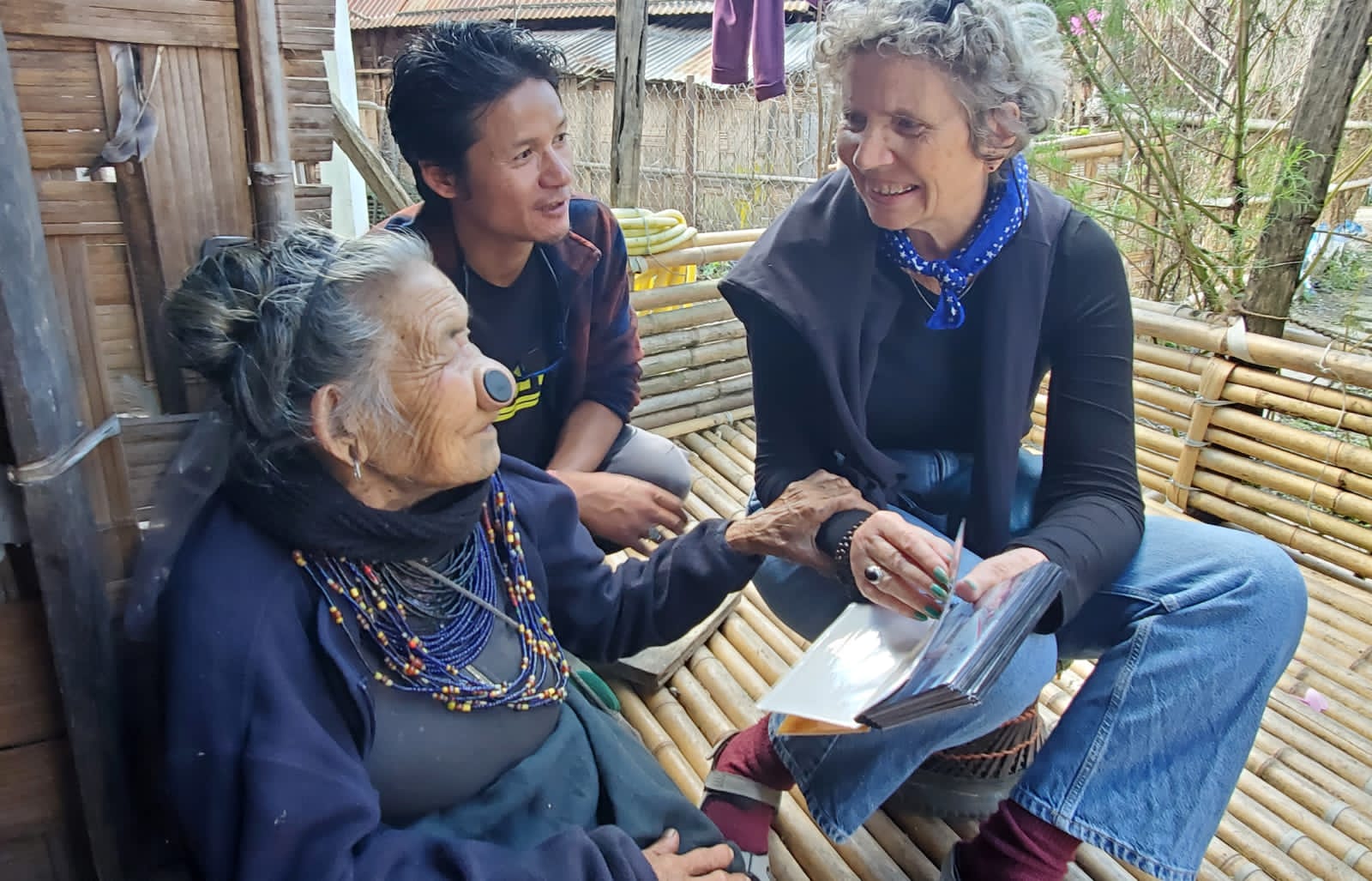
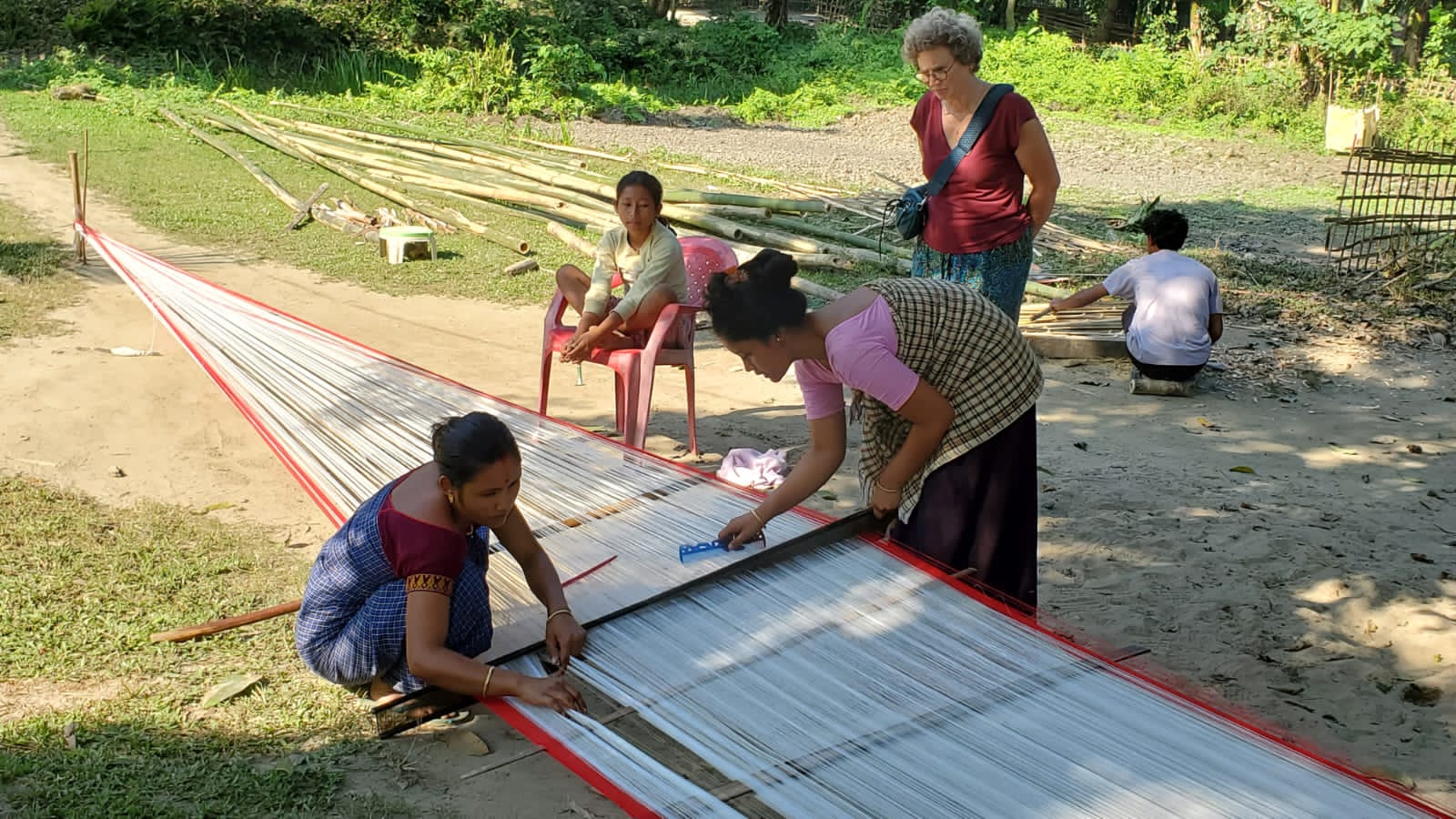
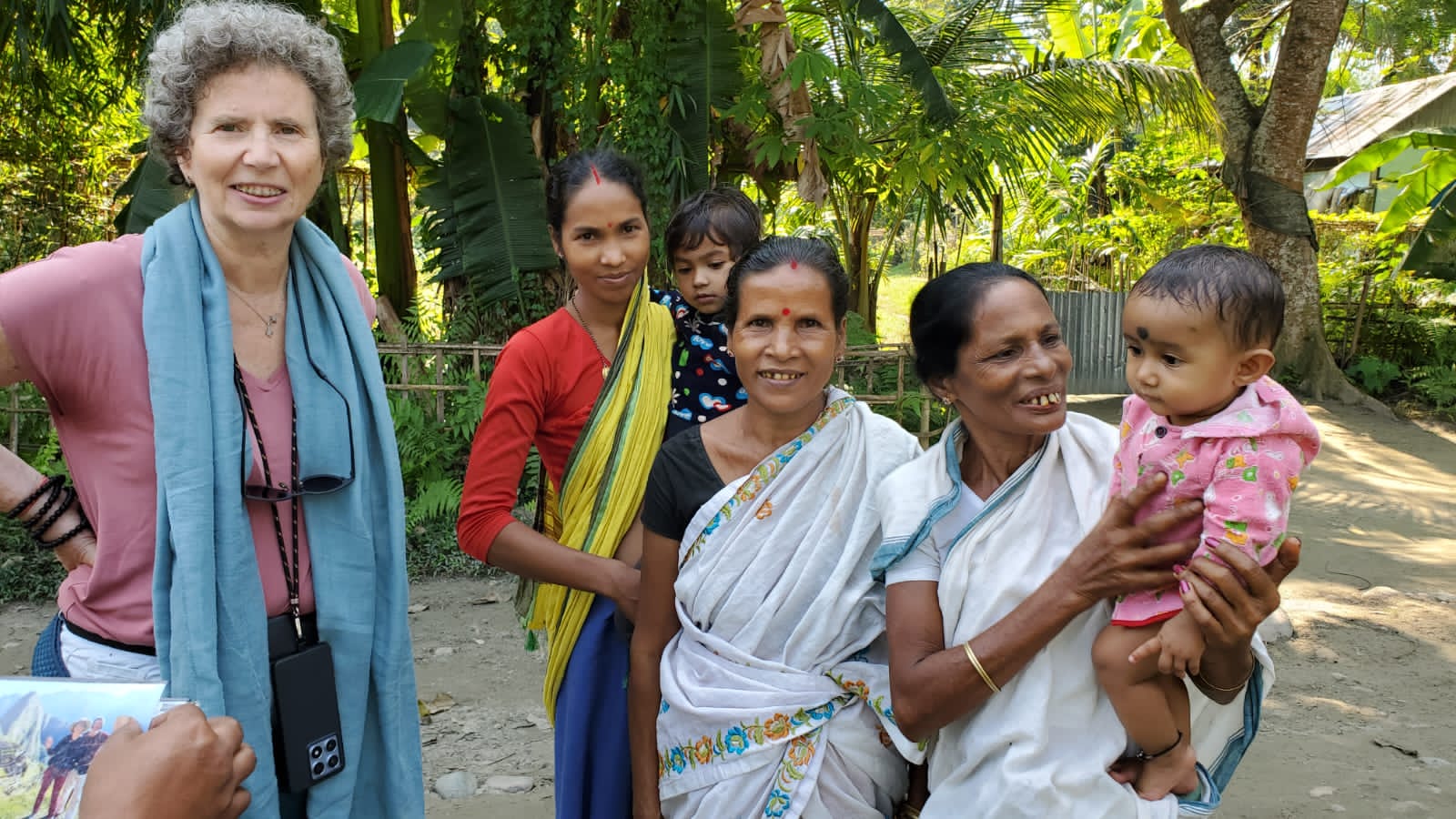
Ziro Valley took two days. Wet-rice terraces fed by bamboo channels, fish raised in the flooded paddy alongside the rice, granaries set apart from the houses against fire, and the villages of Hong, Hija and Bamin-Michi. Odile spent a long afternoon on a bamboo verandah with an elderly Apatani woman — nose plugs, bead necklaces, and a book of photographs passed slowly back and forth while Pradeep translated.
The River: Majuli
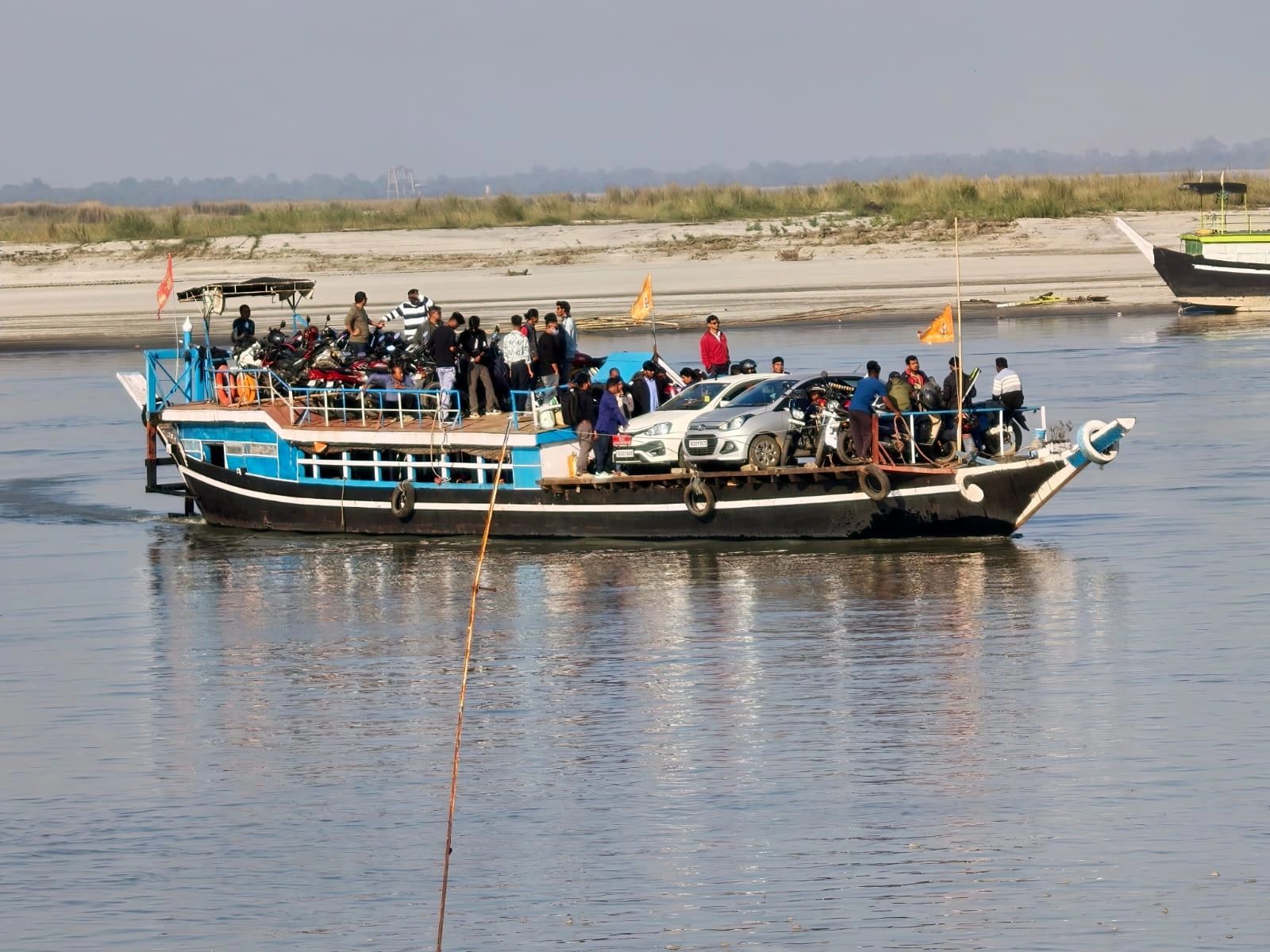
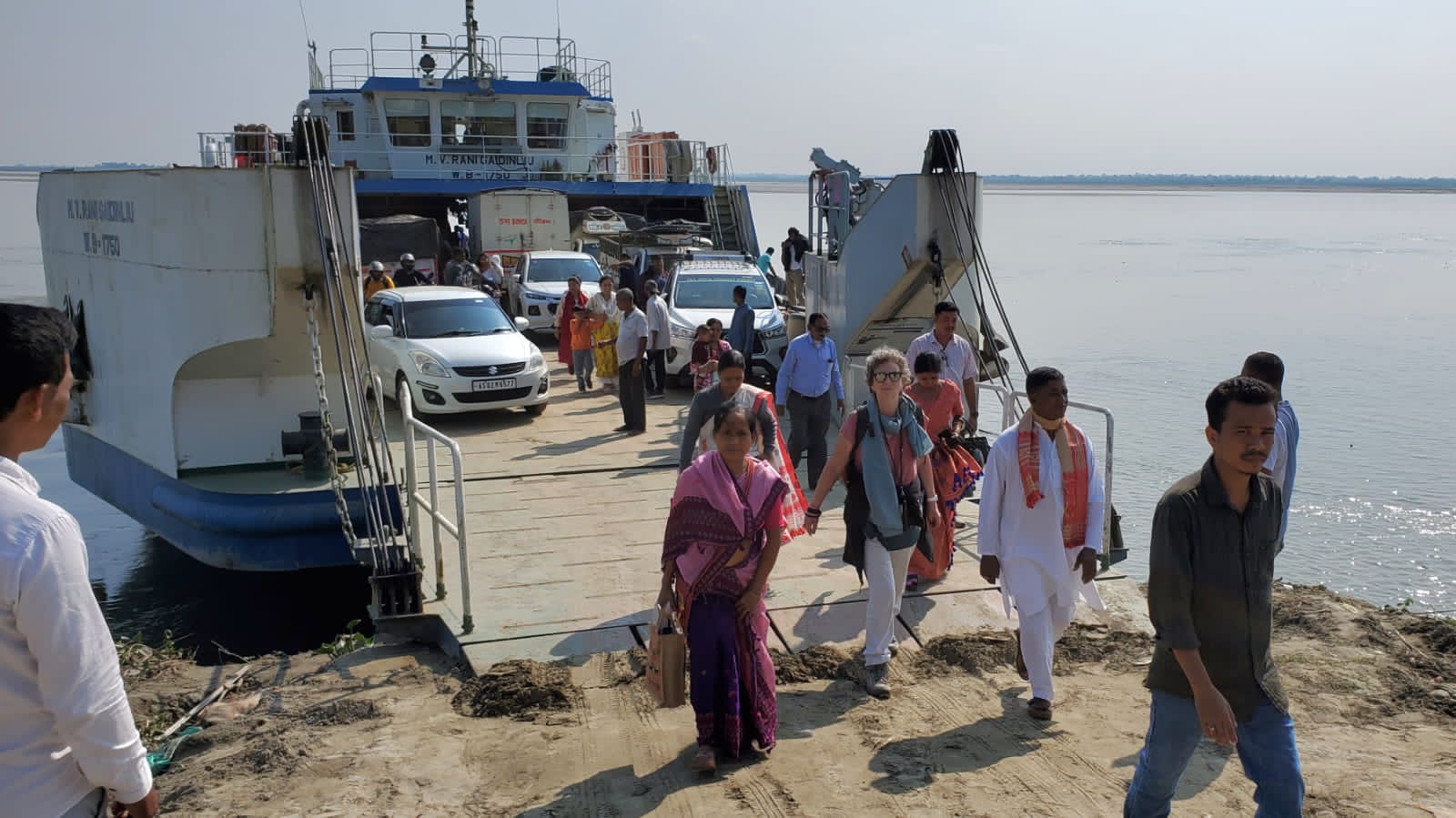
From Ziro the road drops to the Brahmaputra and the ferry to Majuli, the largest inhabited river island in the world. The crossing itself is part of it — vehicles, traders and pilgrims walking down the ramp onto sand.
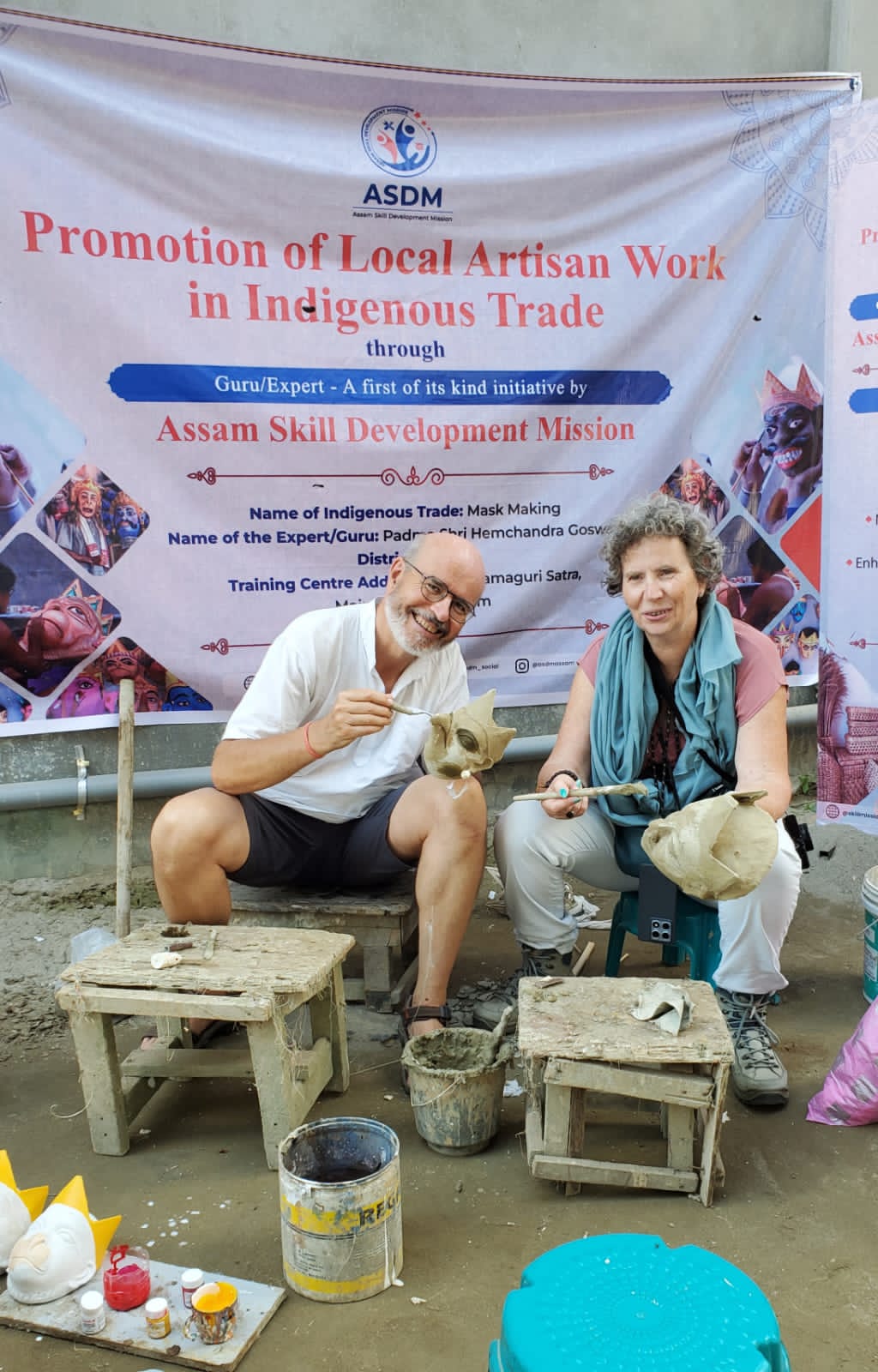
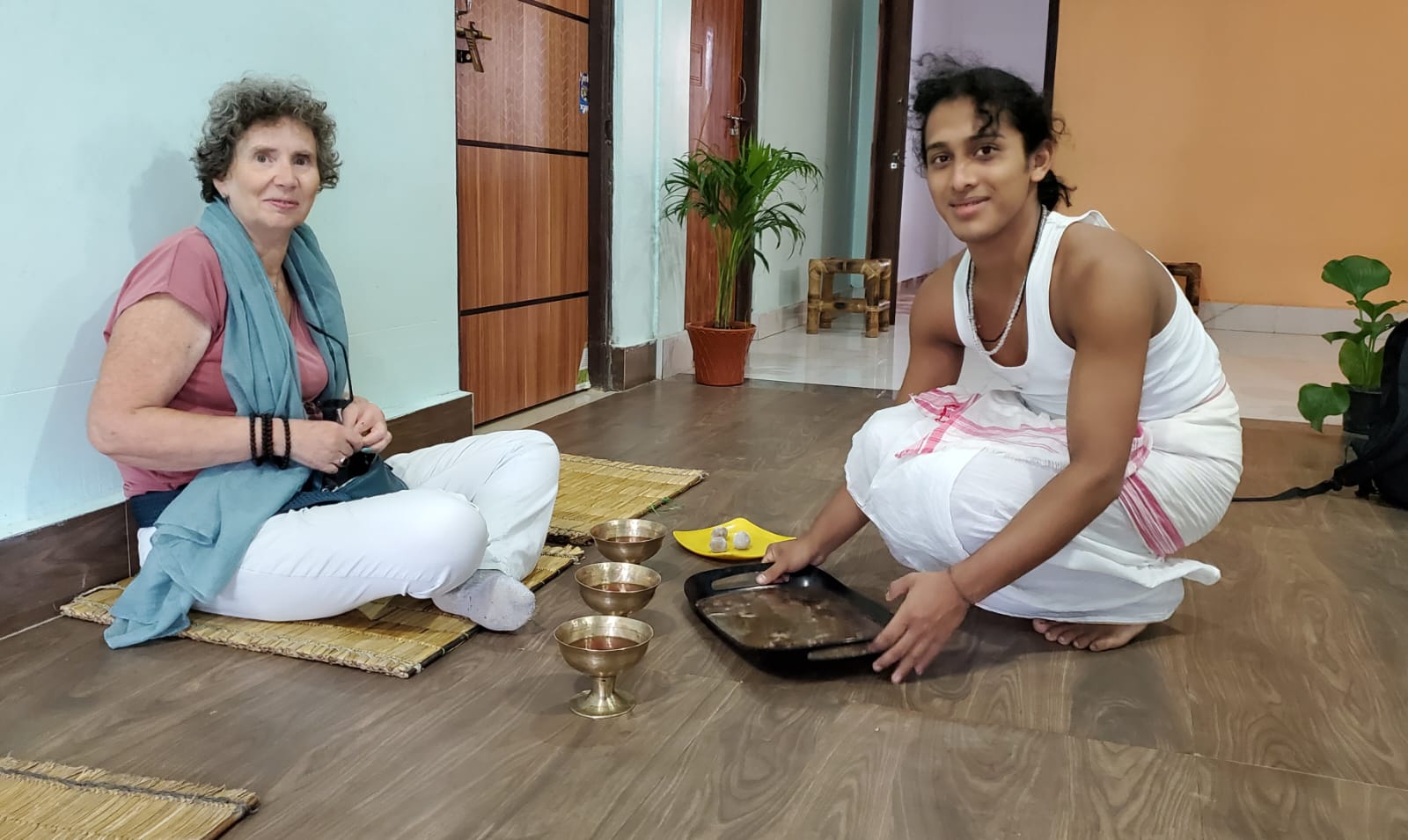
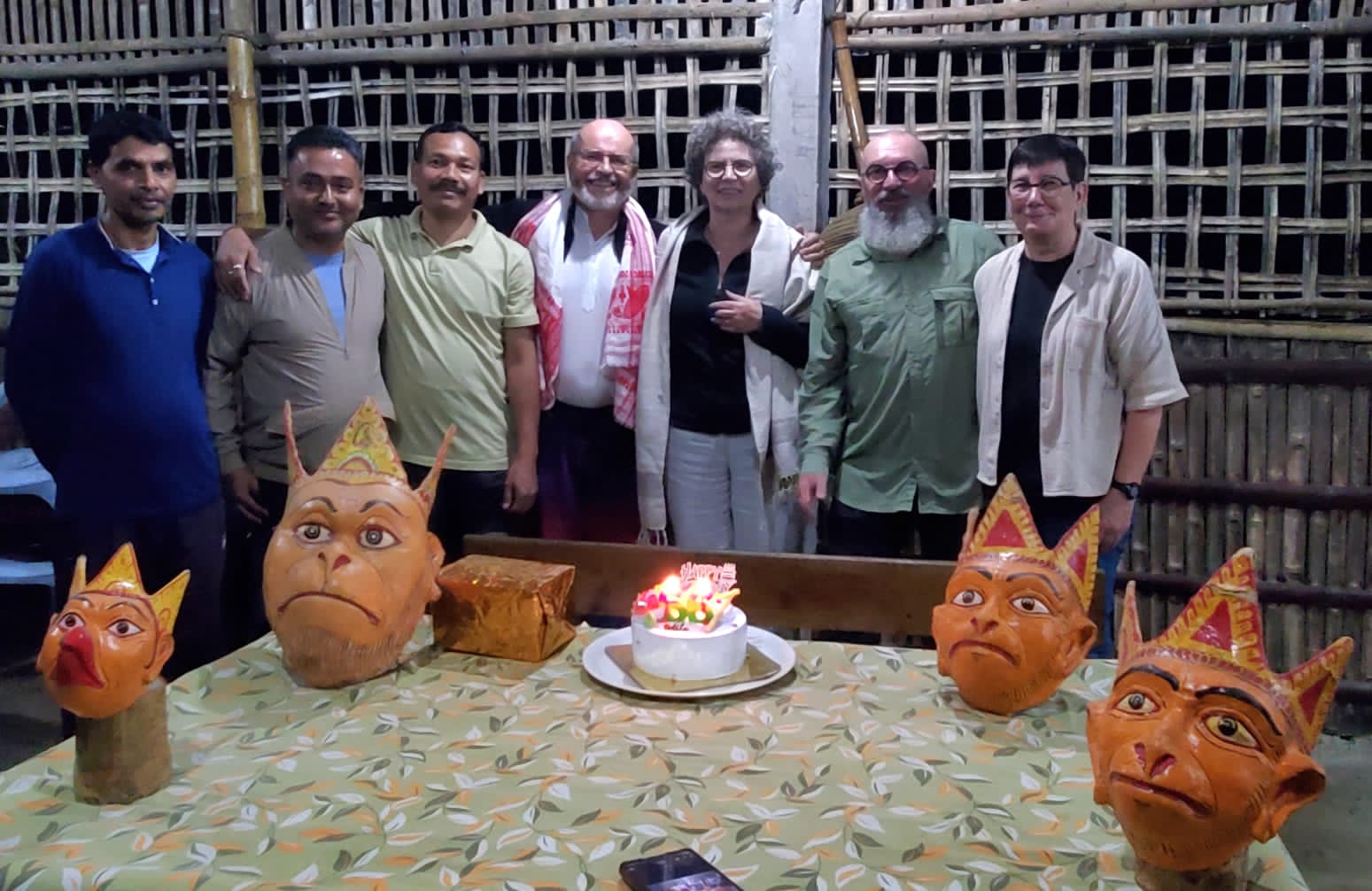
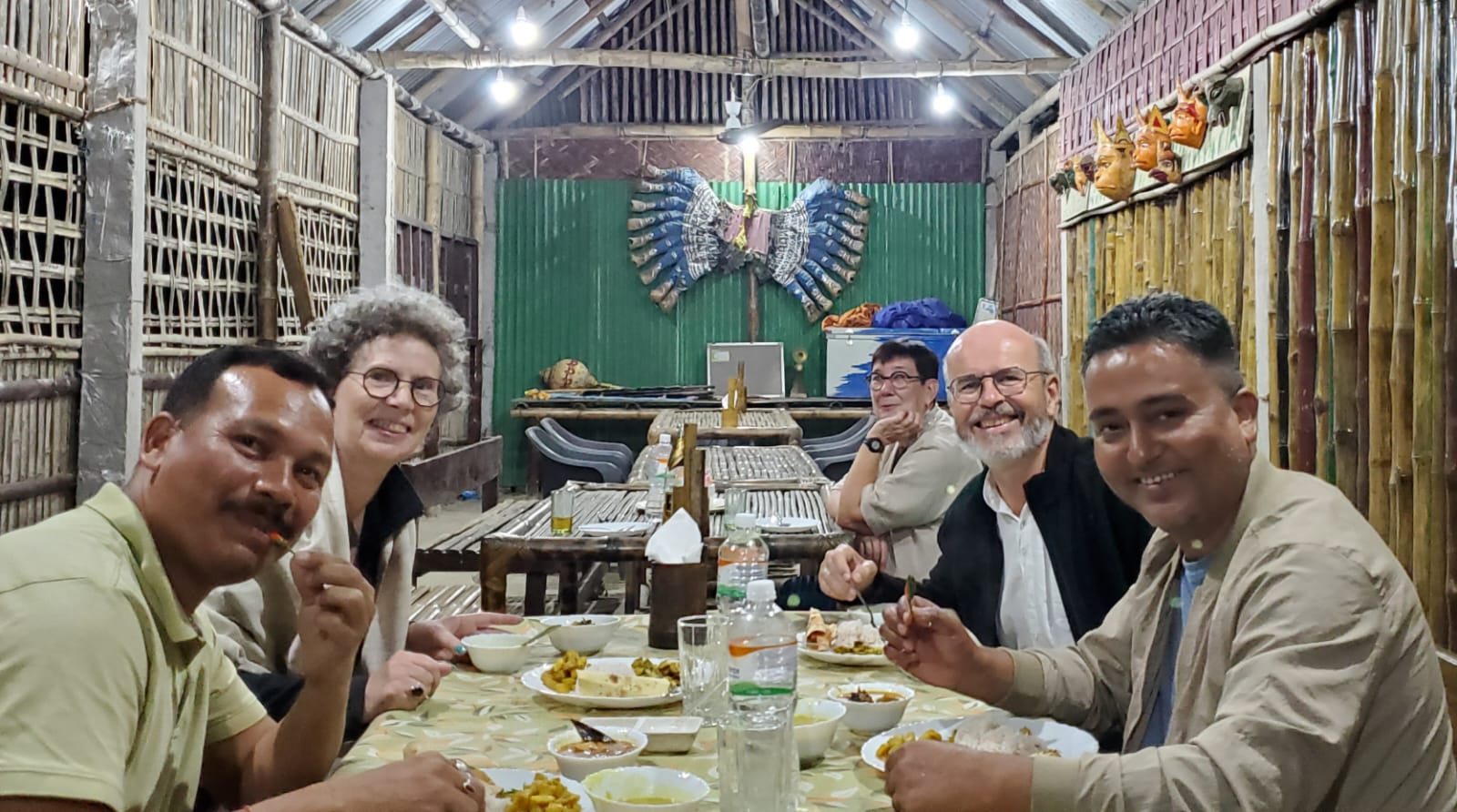
Majuli is the heartland of Assam's Vaishnavite satras, monastic communities founded in the sixteenth century. At Samaguri Satra, the mask-making workshop, Robert and Odile were handed bamboo frames, clay and brushes and made a fair mess of two masks. At Kamalabari and Auniati they watched monk-dancers rehearse. An unplanned birthday was marked that night with a cake in a bamboo hall, four painted masks looking on.
Kaziranga: Grassland and Rhino
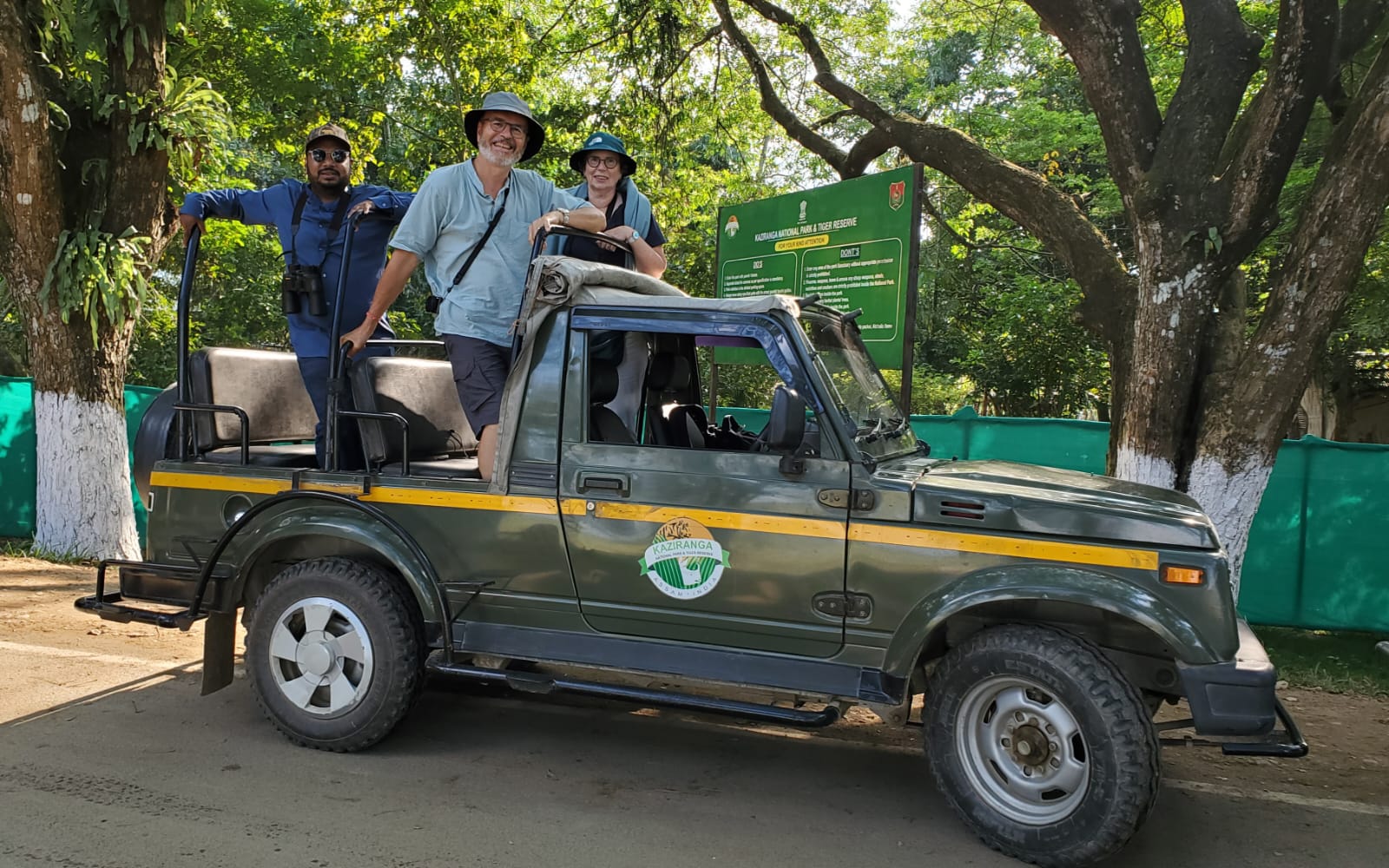
The ferry back to the mainland led east along the Brahmaputra to Kaziranga National Park, a UNESCO World Heritage site and the stronghold of the greater one-horned rhinoceros.
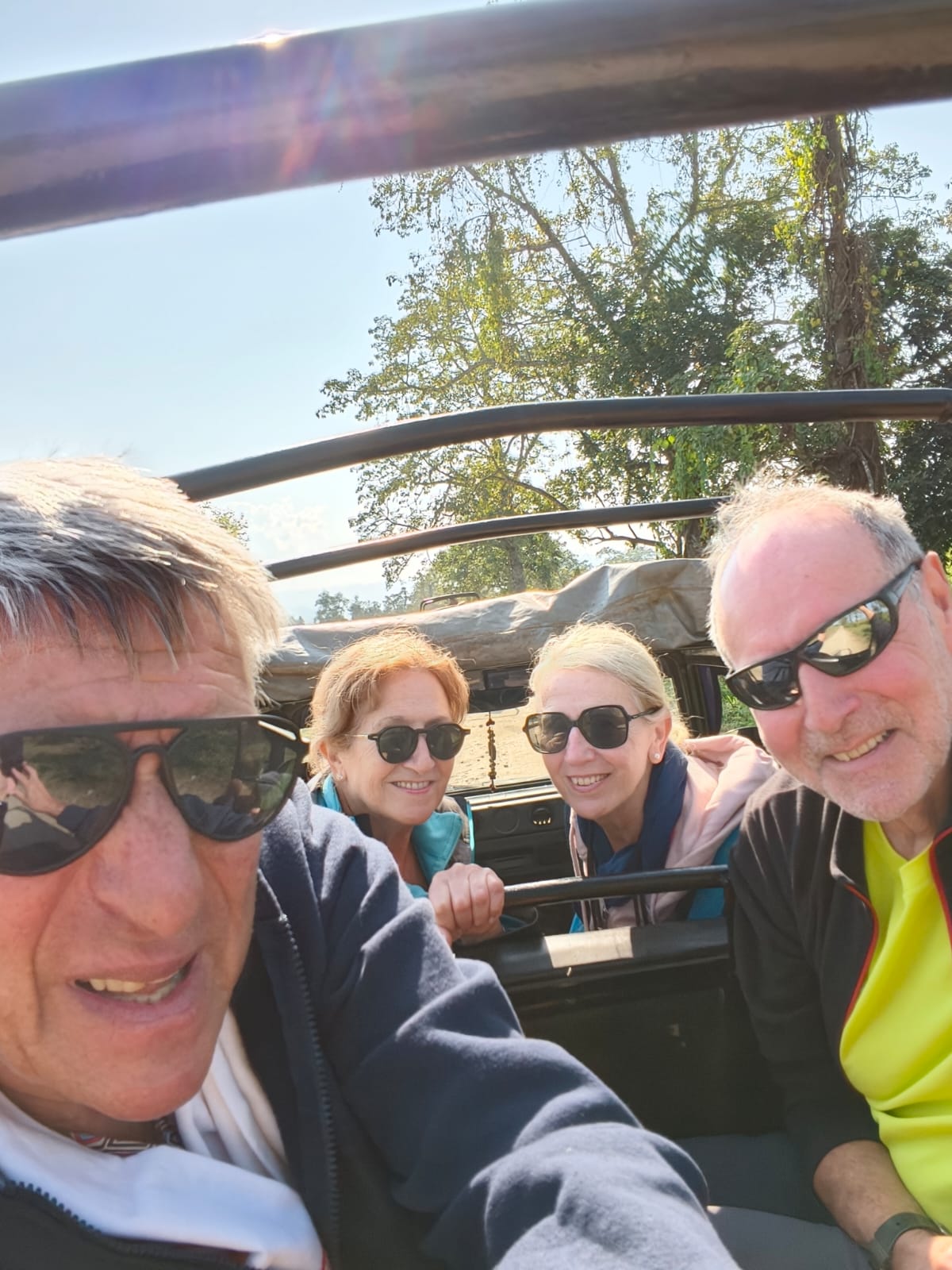
Two days there, at an unhurried pace: morning jeep safaris through the elephant grass and wetland, rhinos at close range, wild elephants, water buffalo and swamp deer, and Pallas's fish eagles over the beels. A second day in the park, deliberately slower than the first, was the right decision.
Into Nagaland: Kisama and the Hornbill Festival
The long drive south-east crossed into Nagaland and climbed to Kohima, in the Angami hills. The next day was the reason the itinerary ended here: the Hornbill Festival at Kisama Heritage Village.
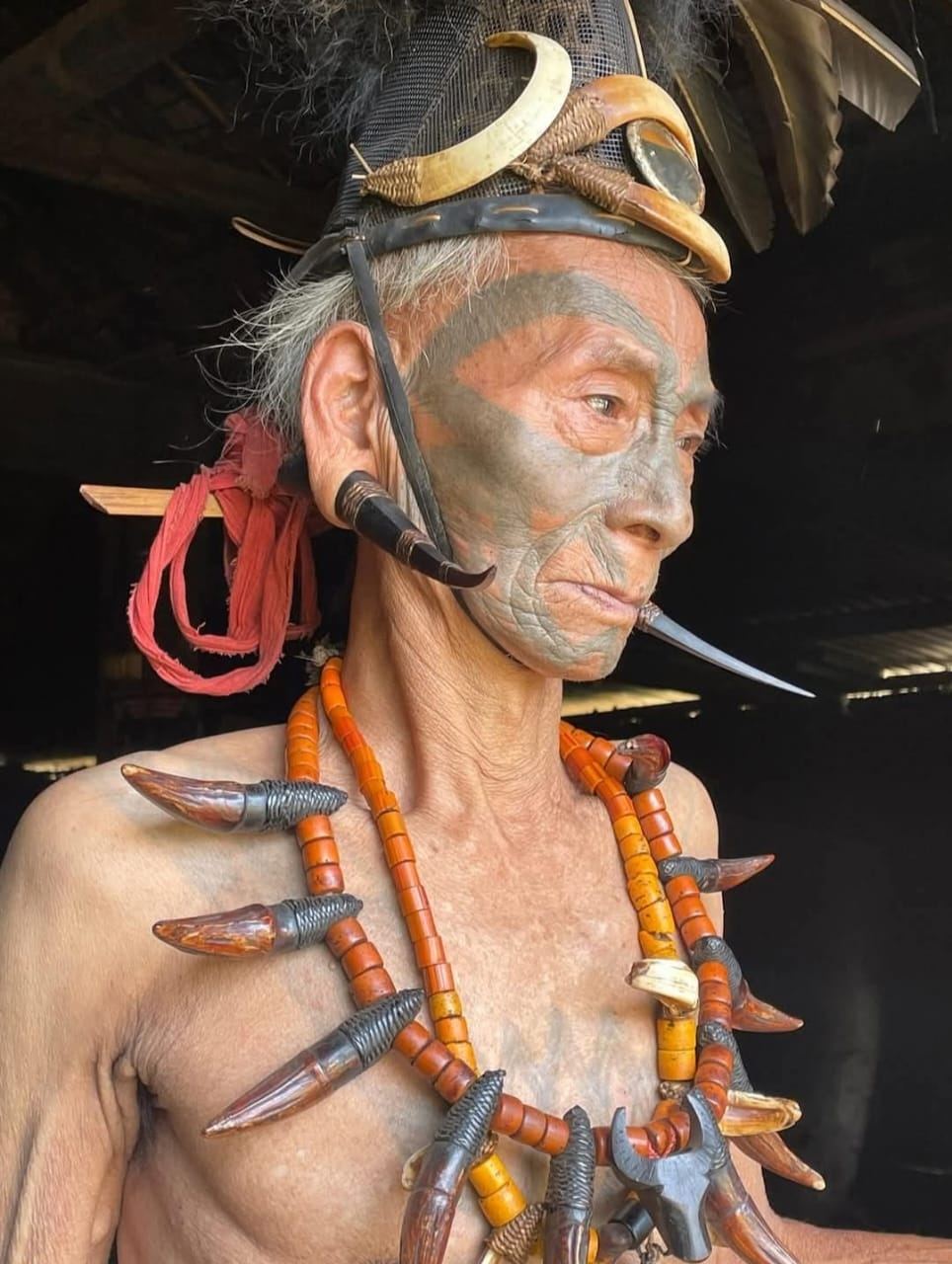
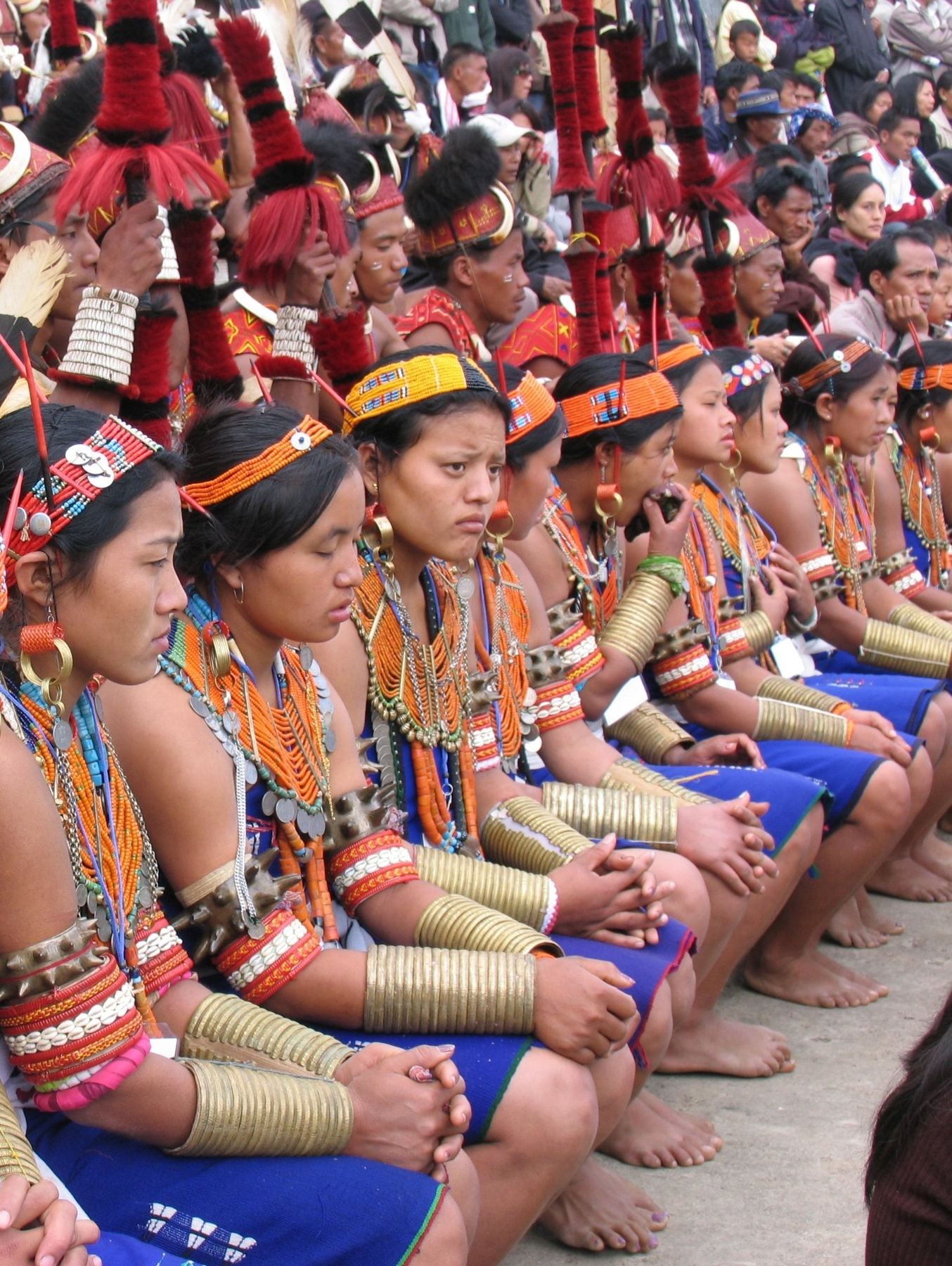
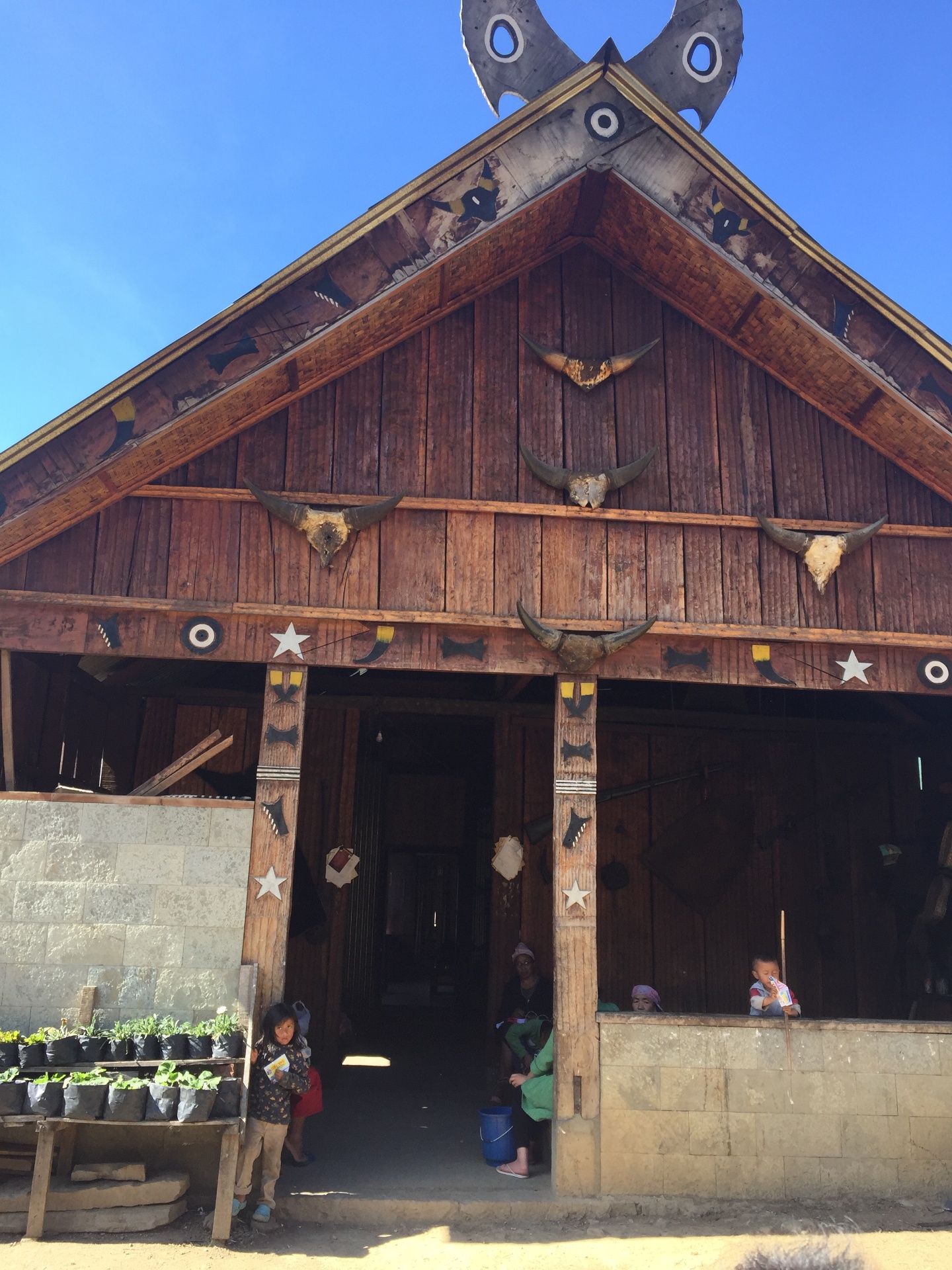
Seventeen tribal morungs stand around the arena, each a full-scale traditional house built and staffed by its own community. The day ran from arena performances — log drums, war dances, chanted songs — through the morungs themselves, where rice beer, smoked pork and conversation are offered to anyone who sits down, and on to the craft stalls and the extraordinary faces of the elders. It became, as they put it afterwards, the defining chapter of the trip.
Khonoma and the Road Out
The last full day began in Khonoma, the Angami warrior village west of Kohima — terraced fields down the hillside, stone gateways, and a community that declared its own conservation area and gave up hunting on its land.
The afternoon descended to Dimapur, and on the nineteenth morning they flew out. Nineteen days: two high passes, one river island, one national park, one festival, and a very large number of cups of tea.
Pradeep and Basumutary
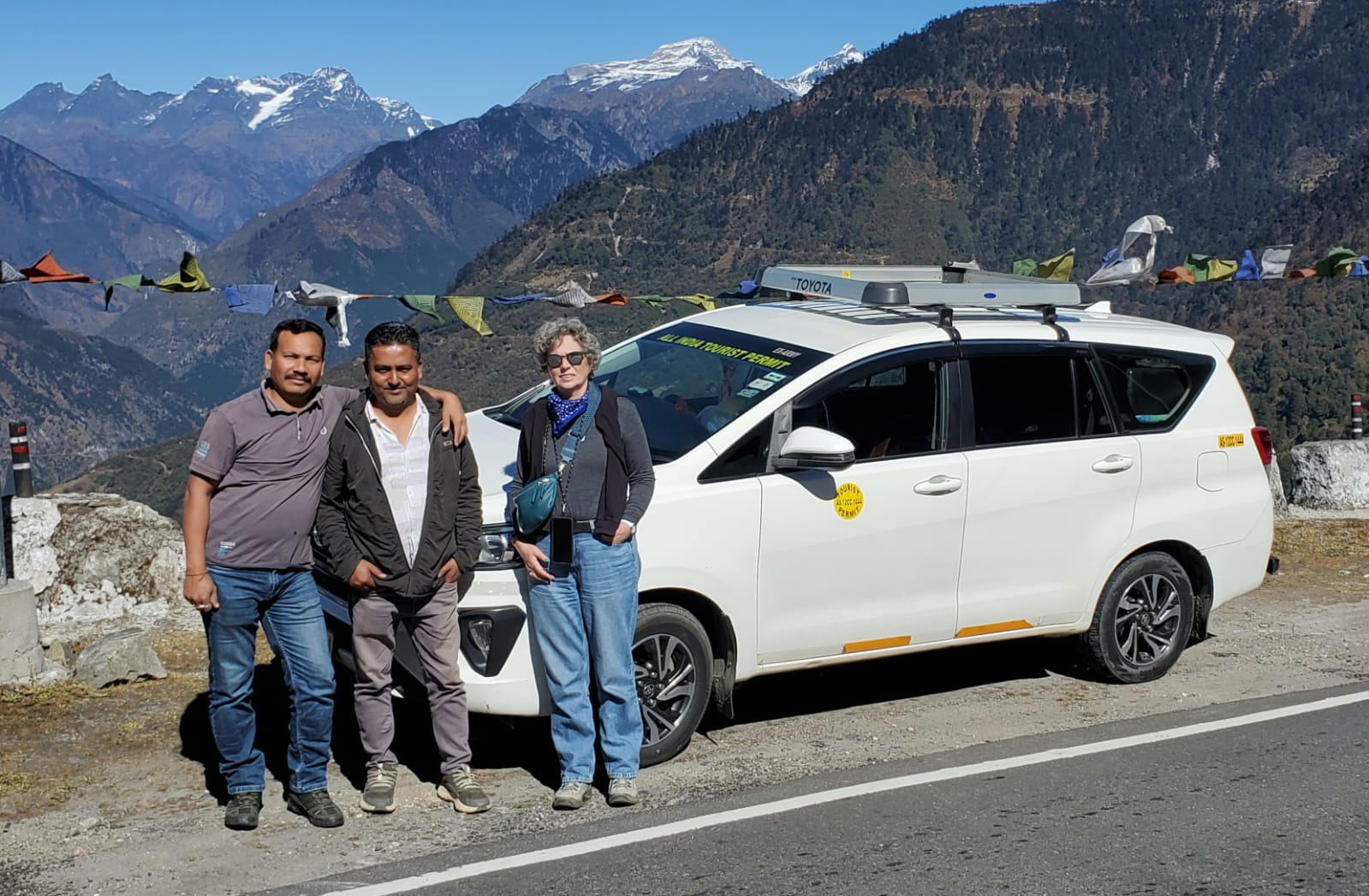
Two people carried this journey. Pradeep, their guide, opened the doors — the introductions in Apatani villages, the translation on the verandah, the sense of what was happening in a monastery courtyard or a Naga morung.
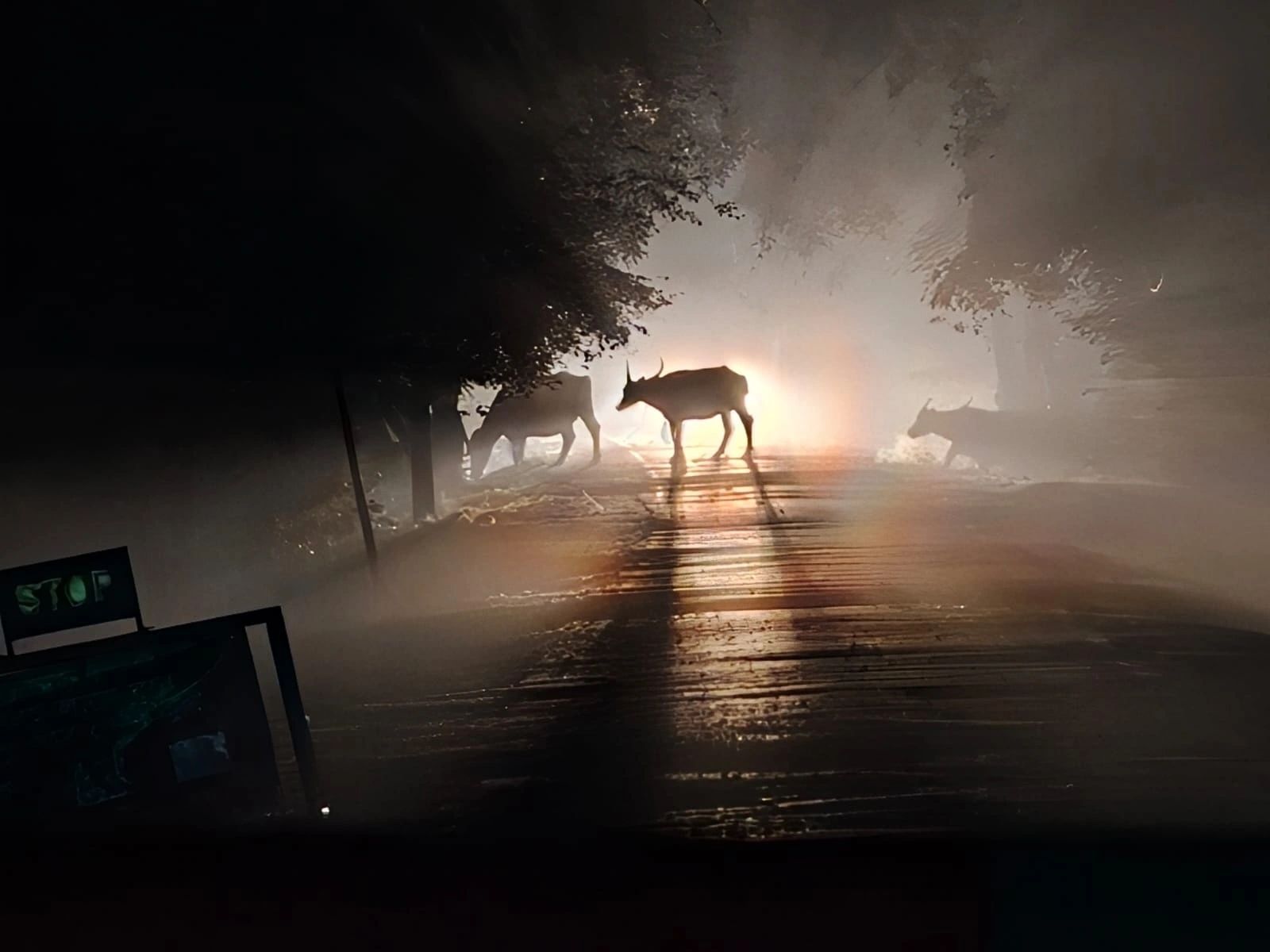
Basumutary drove every kilometre of it, over Sela twice, through the Ziro switchbacks and down into Nagaland, calmly and without incident. On roads like these, that is not a small thing.
“Nineteen days and not one wasted. The mountains of Arunachal, the river at Majuli, the rhinos at Kaziranga — and then Hornbill, which we will never forget. Pradeep opened every door for us and Basumutary got us there safely on roads we would not have attempted alone.”
Route
- 01Day 1 — Arrival in Guwahati (gateway to Northeast India)
- 02Day 2 — Guwahati → Shergaon (climb into the West Kameng hills)
- 03Day 3 — Shergaon → Dirang (apple orchards and monastery villages)
- 04Day 4 — Dirang → Tawang (over Sela Pass, 4,170m)
- 05Day 5 — Tawang (monastery, giant Buddha, old town lanes)
- 06Day 6 — Zemithang excursion (Monpa border valley, Nyamjang Chu)
- 07Day 7 — Tawang → Bomdila (back over Sela to the pine ridge)
- 08Day 8 — Bomdila → Itanagar (descent to the plains)
- 09Day 9 — Itanagar → Ziro Valley (into Apatani country)
- 10Day 10 — Ziro Valley (Hong, Hija and Bamin-Michi villages)
- 11Day 11 — Ziro → Majuli (Brahmaputra ferry to the river island)
- 12Day 12 — Majuli (Samaguri, Kamalabari and Auniati satras)
- 13Day 13 — Majuli → Kaziranga National Park
- 14Day 14 — Kaziranga (morning jeep safari)
- 15Day 15 — Kaziranga (a second, slower day in the park)
- 16Day 16 — Kaziranga → Kohima (into the Angami hills)
- 17Day 17 — Hornbill Festival, Kisama Heritage Village
- 18Day 18 — Kohima → Khonoma → Dimapur
- 19Day 19 — Departure from Dimapur
Travel Tips
- —Foreign nationals must follow the current permit and registration requirements for Arunachal Pradesh and Nagaland. Living Roots assists confirmed package guests with documentation and coordinates the applicable process through authorised channels before travel.
- —Book the Hornbill Festival leg early — Kohima accommodation for the first week of December fills months ahead.
- —Sela Pass is genuinely cold and can close briefly in bad weather; carry proper layers even if Assam is warm.
- —Majuli runs on ferry timings, not clock timings. Keep the crossing days flexible.
- —Always ask before photographing people, homes or ritual objects — in the morungs at Kisama as much as in Apatani villages.
Frequently Asked Questions
When is the Hornbill Festival held in Nagaland?
The Hornbill Festival takes place annually at Kisama Heritage Village near Kohima in the first week of December. Exact dates are announced by the state each year, so we confirm them before finalising an itinerary.
Can Arunachal Pradesh, Assam and Nagaland be combined in one trip?
Yes, and nineteen days is a comfortable length for it. Shorter versions usually drop either the Tawang leg or Majuli; the drives between the three states are long, so cutting days without cutting places is not advisable.
What permits do foreign travellers need on this route?
Foreign nationals must follow the current permit and registration requirements for Arunachal Pradesh and Nagaland; Assam requires no special state permit. Living Roots assists confirmed package guests with documentation and coordinates the applicable process through authorised channels.
Is Kaziranga worth two days?
On this journey it was. A second morning allows a different range at a slower pace, which usually produces better sightings of elephants, swamp deer and raptors than a single rushed safari.